Understanding fire risks matters because most fire tragedies are predictable. Many workplace and home fires follow the same patterns: a heat source meets fuel, smoke spreads faster than expected, and people lose time due to confusion. Knowing hazards early helps you remove them before a fire starts. In this blog, we provide a concise and to-the-point answer to the question, “Why is Understanding the Risks and Hazards Associated With Fires Important?” along with a detailed explanation for better understanding.
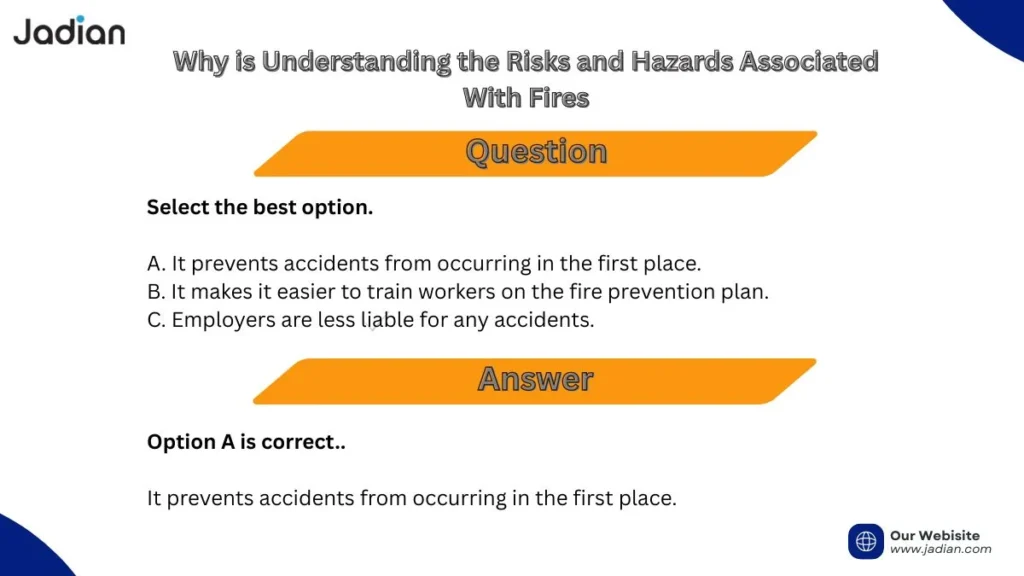
Understanding the risks and hazards associated with fires important because it prevents accidents from occurring in the first place.
When people understand fire behavior, they make safer daily choices. They stop overloading power strips. They store chemicals correctly. They keep exits clear. They also recognize that smoke is often the biggest killer, not flames.
Fire risk awareness also improves decision-making during emergencies. People who understand hazards tend to:
- Evacuate earlier instead of “checking” the fire first.
- Avoid opening doors that feel hot.
- Stay low under the smoke.
- Close doors behind them to slow fire spread.
In a workplace, understanding risks supports compliance and safety culture. It helps teams build better training, better inspections, and better emergency action plans. It also reduces business downtime after an incident.
What are fire risks and fire hazards, and how are they different?
A fire hazard is something that can cause a fire or make it worse. A fire risk is the likelihood that the hazard will lead to harm, plus how severe the harm could be.
This difference matters because you cannot manage what you do not define. Fire safety planning becomes clearer when you separate “what could burn” from “how likely it is to hurt people.”
Examples of hazards (things that cause or worsen fires)
- Faulty wiring and exposed cables
- Cooking equipment and grease buildup
- Flammable liquids stored near heat
- Blocked electrical panels
- Poor housekeeping and clutter
- Smoking areas without controls
Examples of risks (likelihood and impact)
- A storeroom full of cardboard next to a heater is high risk.
- A small amount of paper in an office may be at lower risk.
- A chemical storage cabinet without ventilation can be a high risk.
- A workshop with welding and poor supervision is higher risk.
A good fire safety approach looks at both. It fixes hazards and lowers risks through controls, training, and maintenance.
How do fires start, spread, and become deadly so quickly?
Fires can go from “small” to “unmanageable” in minutes. The key takeaway is that heat, smoke, and toxic gases spread faster than most people expect, especially in enclosed spaces.
A fire needs three elements, often shown as the fire triangle:
- Heat
- Fuel
- Oxygen
If you remove one element, you can often prevent or stop a fire. But in real life, modern materials can make fires burn hotter and produce more toxic smoke. Many plastics release dangerous gases. Some furnishings burn fast and drip flames.
Why is smoking so dangerous?
Smoke reduces visibility, irritates the lungs, and can cause unconsciousness quickly. People often underestimate smoke hazards because they focus on flames. Smoke inhalation is the chief cause of most deaths.
Smoke hazards include:
- Poor visibility, and exits are difficult to locate
- Poisonous gases such as carbon monoxide
- Smoke layers on the heat next to the ceilings
- Panic and disorientation
Why does fire surprise people?
Fires spread through:
- Convection (or rising of hot gases)
- Radiation (heat traveling through space)
- Conduction (heat transfer in materials)
Smoke can be moved quickly by open doors, open stairwells, and ventilation systems . In many fatalities, smoke inhalation is the main cause. This is why compartmentation and closed doors are so important.
What common fire hazards should workplaces and homes watch for?
Most fire hazards are routine. They come from electricity, heat-producing equipment, poor storage, and human behavior. Fire safety improves when people treat these as daily operational risks, not rare events.
Electrical hazards
Electrical issues are a major cause of fires. Watch for:
- The extension cords and overloaded outlets
- Daisy-chained power strips
- Broken ropes and hanging plugs
- Warm or smouldering odors
- Lack of approved chargers and adapters
Regular inspection, labeling, and maintaining electrical panels in good condition are also good practices.
Cooking and kitchen hazards
The high-hazard areas are kitchens. Risks increase with:
- Hoods and filters accumulate grease
- Unattended cooking
- Cloth towels near burners
- Improper use of deep fryers
- Housekeeping in the vicinity of heat sources
Kitchen fire safety typically relies on rigorous routines, cleaning schedules, and employee training.
Flammable liquids and chemicals
The following are highly flammable products:
- Solvents and fuels
- Aerosols
- Paint thinners
- Certain cleaning agents
Control measures include:
- Appropriate containers and labelling
- Approved flammable storage cabinets
- Isolation of sources of ignition
- Spill control and ventilation
- Clear disposal processes
Hot work (welding, grinding, cutting)
Hot work is a very common cause of industrial fire. Controls should include:
- Hot work permits
- Fire watch procedures
- Clearing combustibles from the area
- Having extinguishers ready
- Post-work monitoring, since fires can start later
Housekeeping and storage
Clutter increases both fuel load and evacuation risk. Key issues include:
- Storing boxes in hallways
- Blocking exit routes
- Packing materials near heaters
- Waste buildup near equipment
Good housekeeping is one of the simplest and most effective fire safety strategies.
Why does understanding fire hazards reduce injuries, deaths, and damage?
Knowledge changes behavior. When people understand fire hazards, they prevent ignition, detect danger earlier, and evacuate faster. Each of those steps saves lives.
Faster and safer evacuation
People who understand hazards are more likely to:
- Know primary and secondary exits.
- Avoid elevators during a fire.
- Move toward designated assembly points.
- Help others without taking unsafe risks.
They also understand that “waiting for instructions” can be deadly if smoke is spreading.
Better prevention through routine controls
Risk understanding leads to better daily habits:
- Turning off equipment properly
- Keeping exits and stairs clear
- Reporting damaged cords early
- Following storage rules for flammables
Prevention is usually cheaper than recovery. Even a small fire can cause huge losses through smoke damage, sprinkler discharge, and business interruption.
Less panic during emergencies
Panic often comes from uncertainty. Training based on real hazards reduces confusion. People act faster when they already know what to do.
What fire safety controls should every workplace consider?
Fire safety works best when you layer controls. You prevent ignition, detect smoke early, slow the spread, and support quick evacuation. No single tool covers everything.
1) Prevention controls
- Electrical safety checks and load limits
- Equipment shutdown procedures
- Strict chemical storage rules
- Hot work permits and supervision
- Smoking controls and designated areas
2) Detection and alerting controls
- Smoke detectors and heat detectors
- Manual pull stations
- Audible and visible alarms
- Monitoring and testing schedules
3) Suppression controls
- Fire extinguishers suitable for the fire class
- Sprinkler systems were required
- Fire blankets in specific areas
- Fixed systems for kitchens (where applicable)
4) Containment controls
- Fire doors and self-closing mechanisms
- Compartmentation (walls and barriers)
- Proper sealing of cable penetrations
- Clear rules about keeping doors closed
5) Evacuation controls
- Marked and illuminated exit signs
- Emergency lighting
- Clear exit route criteria and maintenance
- Assembly points and headcounts
- Emergency action plan drills
What are the main classes of fire, and why does that matter?
Using the wrong extinguisher can make a fire worse. Fire safety training must teach people what type of fire they are dealing with before they act.
Fire classes vary by region, but commonly include:
- Class A: ordinary combustibles (wood, paper, cloth)
- Class B: flammable liquids (gasoline, solvents)
- Class C: energized electrical equipment
- Class D: combustible metals (magnesium, sodium)
- Class K (or F): cooking oils and fats
A simple rule is that if you are unsure, evacuate and call emergency services. Extinguishers are for small, early-stage fires when the exit is clear.
Why are emergency action plans and exit routes critical to fire safety?
Equipment does not save lives on its own. Planning and movement save lives. A fire safety program must include an emergency action plan (EAP) and strict exit route standards, because people need a safe path out.
What a strong Emergency Action Plan (EAP) includes
A practical EAP usually covers:
- How to report a fire
- Alarm procedures
- Evacuation routes and maps
- Assembly points
- Roles, such as floor wardens
- Procedures for assisting people with mobility needs
- How to account for everyone
- Training and drill schedules
The EAP should be clear and easy to follow. It should be updated when layouts, staffing, or operations change.
Why exit routes must be controlled tightly
Exit routes are only useful if they work under stress, smoke, and low visibility. Strict criteria help ensure:
- Routes are not blocked by storage.
- Doors open easily and in the correct direction.
- Lighting works during power loss.
- Signs are visible.
- People can move quickly without confusion.
These details matter because evacuation time is often the difference between a close call and a fatality.
How can inspections and maintenance prevent fire incidents?
Fire safety fails quietly. Systems degrade over time. Maintenance and inspections keep your controls reliable, especially when you need them most.
Common inspection areas include:
- Electrical panels and wiring
- Fire doors and door closers
- Exit lights and emergency lighting
- Alarm systems and detector testing
- Fire extinguisher condition and access
- Housekeeping and storage areas
- Equipment that produces heat
Even simple problems, like a missing extinguisher pin or a blocked exit sign, can become major issues during a real emergency.
Why must fire extinguishers be routinely maintained?
Fire extinguishers must be routinely maintained because they are mechanical devices that can fail, lose pressure, or become unusable without obvious signs. Fire safety depends on the extinguisher working instantly, and maintenance ensures it will operate correctly.
Routine maintenance also ensures:
- The extinguisher type matches the hazard area.
- Pressure is within the safe range.
- The nozzle and hose are not blocked.
- The pin and tamper seal are intact.
- The unit is not damaged, corroded, or expired.
- The extinguisher is accessible and not hidden.
An unmaintained extinguisher can create false confidence. People may attempt to fight a fire and lose time, only to find it does not work.
How does Jadian software help manage field service management for fire safety work?
Fire safety programs often fail due to missed tasks, poor tracking, and inconsistent documentation across sites.
Best field service management software like Jadian helps teams plan, assign, track, and prove completion of safety-critical work, including inspections and maintenance.
In many organizations, fire safety involves recurring work:
- Fire extinguisher inspections
- Alarm and detector checks
- Emergency light testing
- Fire door checks
- Risk assessments and corrective actions
- Site audits and compliance reporting
Jadian software supports field service management by helping teams:
- Schedule recurring inspections and preventive maintenance.
- Assign jobs to technicians with clear instructions.
- Track job status across many sites in one place.
- Take pictures, signatures, and notes on-site.
- Produce audit and compliance service reports.
- Minimized missed visits, reminders, and workflow dispatch.
- Maintain a record of completed work and outstanding issues.
This improves fire safety because it turns “we should do it” into “it is tracked, verified, and repeatable.” It also makes it easier to show evidence during inspections, client reviews, or regulatory audits.
Example: how a fire extinguisher inspection workflow can look
- A recurring inspection job is scheduled for each location.
- A technician is assigned and dispatched.
- The checklist is completed on-site.
- Photos and notes are uploaded for any defects.
- A follow-up job is created for replacements or repairs.
- A service report is stored for compliance records.
Read More >> Top 10 Field Service Management Software Guide
What is a simple fire risk assessment checklist you can use?
A basic checklist helps you find preventable problems early. Checks should be made regularly and in writing to improve fire safety.
The following is a checklist that you may use practically:
Fire risk assessment quick checklist
- Are escape points available and open?
- Do the exit signs and emergency lights work?
- Do fire doors close and not stay open?
- Do electrical cords have proper conditions?
- Is the use of outlets and power strips safe?
- Are flammables put in the correct storage and labelling?
- Are ignition sources contained about combustibles?
- Does it have visible, present, and up-to-date extinguishers?
- Do employees receive training on evacuation?
- Do we have drills and recordings of the drills?
Common corrective actions
- Remove storage from corridors and stairwells.
- Replace damaged cords and ban unapproved adapters.
- Relocate combustibles away from heat sources.
- Add signage and floor markings for “keep clear” areas.
- Update EAP maps after layout changes.
Common fire hazards and practical controls
Restaurants and commercial spaces are prone to fire hazards commonly caused by common habits and neglected details. Knowing what can go wrong and implementing simple, practical controls can go a long way in minimizing the risk of an occurrence that is of a serious nature.
Common hazards, possible problems, and feasible controls are presented in the table below:
| Hazard | What can go wrong? | Practical controls |
| Overloaded outlets | Overheating, electrical fire | Load limits, inspections, and approved power strips |
| Blocked exit routes | Slower evacuation, injuries | No-storage rules, routine walk-throughs |
| Grease buildup | The rapid kitchen fire spread | Cleaning schedules, hood maintenance |
| Improper chemical storage | Ignition, toxic smoke | Cabinets, labeling, separation, ventilation |
| Fire doors propped open | Smoke and heat spread faster | Door checks, staff training, and closer repairs |
FAQ
Why is understanding the risks and hazards associated with fires important?
Select the best option.
A. It prevents accidents from occurring in the first place.
B. It makes it easier to train workers on the fire prevention plan.
C. Employers are less liable for any accidents.
Option A is correct. It helps prevent fires, reduces injuries, and improves emergency response. It also supports strong fire safety habits, training, and planning.
Which of the following would be addressed by an employer completing an EAP template?
An EAP template addresses evacuation procedures, reporting methods, roles and responsibilities, exit routes, assembly points, and training or drills.
Why must fire extinguishers be routinely maintained?
Maintenance ensures extinguishers are pressurized, accessible, and functional. It also confirms that the extinguisher type is appropriate for the fire risk in that area.
How does an emergency action plan benefit your workplace?
It reduces confusion during emergencies by defining clear steps for reporting, evacuating, assisting others, and accounting for staff. It also improves drill performance.
Why must exit routes follow strict criteria?
Exit routes must work under stress, smoke, and low visibility. Strict criteria keep routes clear, well-lit, clearly marked, and easy to use quickly.