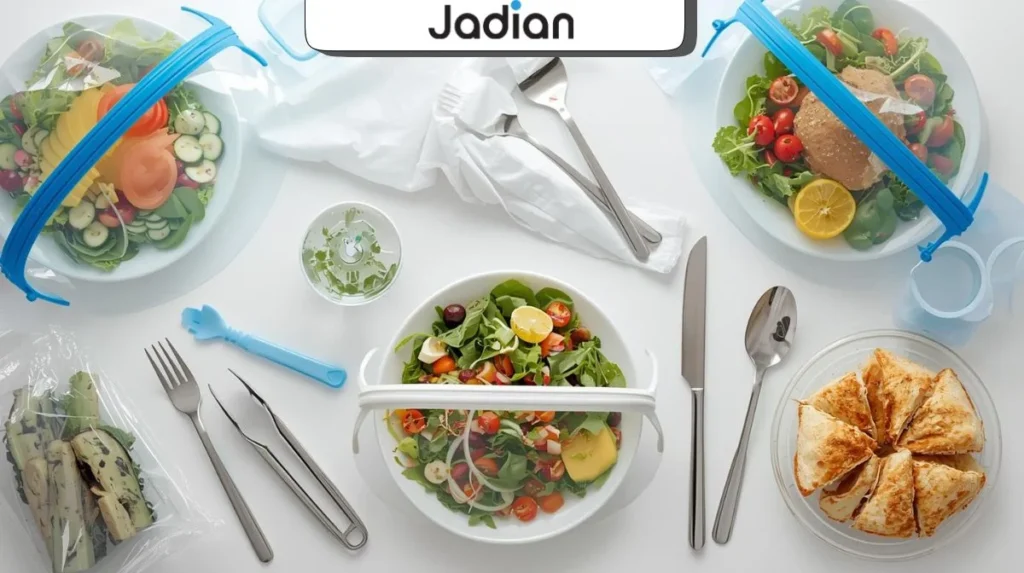
In food safety, ready-to-eat (RTE) food requires extra attention. Compared to raw ingredients, this type of food usually does not go through any additional cooking before it is served. This means if they get contaminated at any stage, that contamination goes directly to the customer. That’s when the real risk starts. In this blog we will check the answer to the question “What Should Food Workers Use to Protect Ready to Eat Food From Contamination“.
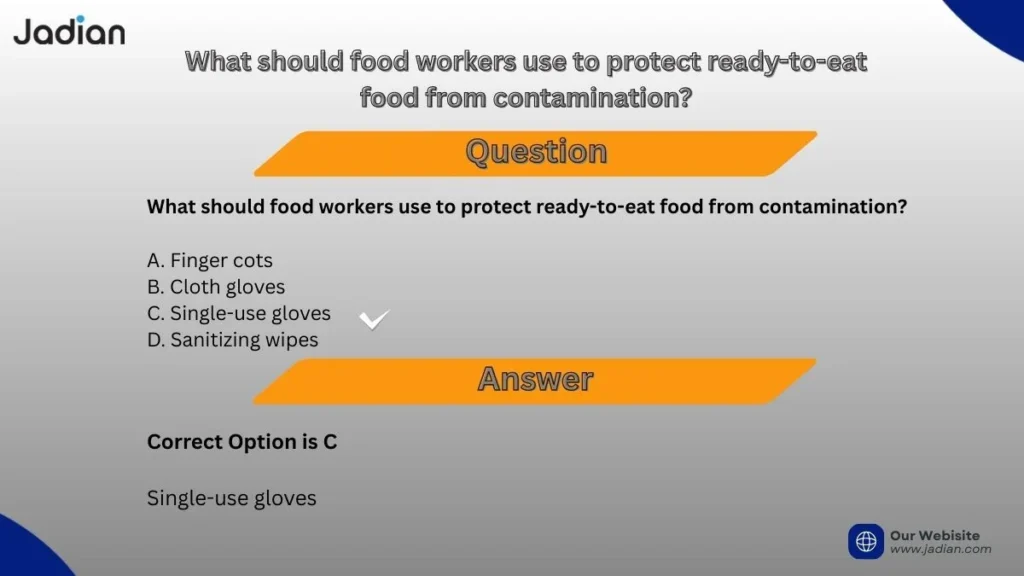
What Should Food Workers Use to Protect Ready to Eat Food From Contamination:
A. Bare hands
B. Apron
C. Single-use gloves or utensils
D. TowelCorrect Answer:
C. Single-use gloves or utensils
So, how to prevent contamination of ready-to-eat food by the food workers?
More than gloves and hand washing, food safety is a concern. It includes selecting appropriate tools, creating intelligent habits, and making safety a part of daily work.
Holding on to ready-made food safe is not merely because it is the right thing to do, but a question of life and death.
This article includes simple tricks and practices on how to preserve RTE food by avoiding contamination.
Understanding Food Contamination
We must know what we are trying to prevent before we talk of tools and prevention. Contamination in high-traffic kitchens is usually not caused by negligence but as a result of ineffective procedures or poorly maintained habits.
What is Cross Contamination?
Cross-contamination is one of the most common and dangerous types of food contamination. Simply put, it happens when harmful bacteria or germs move from one food, surface, or utensil to another.
Picture cutting raw chicken on a board. Then, use that same board to slice cooked meat or fresh salad without cleaning it first. Bacteria from the raw chicken can easily get onto the ready-to-eat food. This can also happen through hands, knives, countertops, storage containers, or even cloth towels.
This might be a totally unimportant slip; however, little mistakes can lead to tremendous issues. That is why consistency needs a good operational control and an evident food-safety management system.
Why Cross Contamination Matters for Ready-to-Eat Foods
Ready-to-eat foods are more dangerous as they do not undergo a second cooking session before being served. Cooking often destroys harmful bacteria, but it is too late when the food has been prepared.
If harmful bacteria get into the food at this point, they go straight to the customer. This raises the risk of foodborne illness, customer complaints, and damage to the business’s reputation.
That is why preventing cross-contamination is not optional. It is essential.
Tools and Practices to Protect Ready-to-Eat Food
When it comes to keeping ready-to-eat (RTE) food safe, the basics are more important than most people realize. Expensive equipment and complicated procedures aren’t always necessary. Often, it’s the simple daily habits like washing hands, using gloves, and keeping uniforms clean that have the biggest impact.
Using simple tools and sticking to regular routines helps prevent contamination. When backed by policies and tracked with food safety management software, it’s easier to ensure everyone follows the safety standards.
Hygiene Tools and Practices
Good hygiene is more than just a suggestion in food service; it is the basis of food safety. This makes food workers one of the key defenses against contamination.
Here are some hygiene tools and practices you can implement in your food business:
Proper Handwashing
Handwashing may seem basic, but it is one of the most effective ways for food workers to keep food safe.
Good hand hygiene involves the following steps:
- Washing your hands before you handle any food that is ready to eat.
- Washing your hands after touching raw meat, seafood, or poultry.
- Washing your hands after using the restroom.
- Washing after handling garbage, cleaning chemicals, phones, or money
- Washing your hands whenever they might have become contaminated.
To clean your hands well, use warm water and soap. Wash for at least 20 seconds, between your fingers and under your nails. Use a disposable towel or an air dryer to wash it well and then dry it off.
Shortcuts are the norm in busy kitchens. Coherent protocols and alerts are useful. Food-safety software is used in many businesses to schedule hygiene checks, record-keeping, and to train employees to ensure that they do their handwashing properly.
Protective Barriers
Washed hands are not sufficient; protective barriers provide safety between workers and help prepare food for eating.
Some examples are:
- Single-use gloves for handling ready-to-eat food
- Hairnets or caps to keep hair out of food
- Clean aprons to stop contaminants from clothing getting into food
- Clean uniforms that are changed regularly
Gloves are useful, but they are not a perfect solution. You need to change them often, especially after handling raw food, touching surfaces, or moving to a new task. If you do not change gloves, they can spread contamination just like bare hands.
Protective clothing should stay clean throughout the whole shift. If an apron gets dirty, replace it. If a uniform is contaminated, do not wear it while handling food.
When managers use guidelines and digital tracking with food safety management software, they can make sure hygiene practices are reinforced regularly.
In the end, keeping ready-to-eat food safe depends on people. When food workers use good hygiene and the right protective barriers, they greatly lower the risk of contamination. They also protect both their customers and the business’s reputation.
Read More >> How Should Food Workers Protect Food from Contamination After It Is Cooked
Equipment and Utensils to Prevent Contamination
When people ask: What should food workers use to protect ready-to-eat food from contamination? The answer is not just “gloves.” It also includes the equipment and utensils used daily. Good hand hygiene does not help if contaminated tools are used with different foods.
Using the right equipment in the correct way helps keep raw food separate from ready-to-eat (RTE) food.
Here is what you should do and use in order to protect RTE food from contamination:
Separate Equipment for Different Food Types
A simple and effective way to keep food safe is to use separate equipment for different types of food. For example, use different cutting boards, knives, and utensils for raw meat, seafood, poultry, and foods that are ready to eat.
Many kitchens make this easier by using color-coded cutting boards. For example:
- One color for raw poultry
- Another for raw meat
- Another for seafood
- A separate one for ready-to-eat foods
This color system helps prevent mistakes, especially when the kitchen is busy. It lets food workers quickly see which tools are safe to use.
While a food handler must wear single-use gloves when handling ready-to-eat food, gloves alone cannot stop cross-contamination if the same knife or cutting board was just used for raw chicken. Keeping tools separate is just as important as good personal hygiene.
Clean and Sanitize Regularly
Even if you use separate equipment, it is important to clean and sanitize between tasks.
Cleaning gets rid of visible dirt and food particles. On the other hand, sanitizing lowers harmful bacteria to safe levels. Both steps are important.
You should clean and sanitize surfaces and tools at these times:
- After preparing raw food
- Before switching to ready-to-eat food prep
- After spills or contamination
- At regular intervals during long prep periods
In busy kitchens, it is easy to think something is still clean enough. However, that kind of thinking can lead to problems. Sticking to regular cleaning routines helps prevent contamination.
Storage and Handling Solutions
Getting food ready is just one part of the process. How you store and handle ready-to-eat food is just as important for keeping it safe.
The following are some solutions for storing and handling ready-to-eat food.
Safe Food Storage
Proper storage prevents raw foods from contaminating cooked or ready-to-eat items.
Best practices include:
- Storing raw meat, poultry, and seafood below ready-to-eat foods in the refrigerator
- Using sealed, labeled containers
- Keeping prepared foods covered at all times
- Designating specific shelves for RTE items
Gravity matters more than people realize. If raw meat is stored above cooked food, any drips can contaminate what’s below. Keeping raw products on lower shelves eliminates that risk.
Sealed containers and clearly organized storage systems are just as important as gloves and hairnets. You should keep that in mind when thinking about what should food workers use to protect ready-to-eat food from contamination.
Temperature Control
Controlling temperature is an important way to prevent contamination and stop bacteria from growing.
Food should be:
- Held hot at safe temperatures during service
- Cooled quickly and properly after cooking
- Stored cold at safe refrigeration temperatures
- Reheated to appropriate internal temperatures
Bacteria can grow quickly if food stays in the temperature ‘danger zone.’ Even food that starts out safe can become unsafe if the temperature is not controlled properly.
Keeping ready-to-eat food safe takes more than just one step. It means using the right tools, equipment, and daily habits to make sure food stays safe.
Bottom Line
Keeping ready-to-eat food safe takes more than just one step or tool. It depends on the whole system working together. Good hygiene, using gloves and hairnets, having the right equipment and utensils, safe storage, and temperature control all matter.
When food workers stick to these practices, they do more than just follow rules. They help protect their customers and their business’s reputation. Using good habits along with the right tools helps prevent cross-contamination and keeps food safe every day.
Food safety is always a team effort. Every clean board, every glove worn, and every meal stored correctly all help create a kitchen people can trust.
FAQs
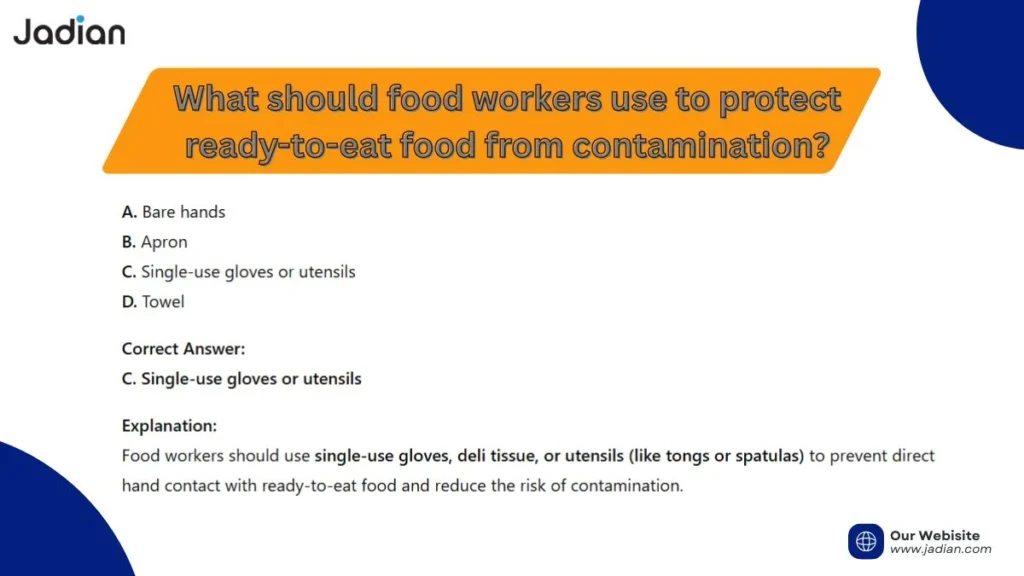
What should food workers use to protect ready-to-eat food from contamination?
A. Bare hands
B. Apron
C. Single-use gloves or utensils
D. Towel
Correct Answer:
C. Single-use gloves or utensils
Food workers need to follow good hygiene, use protective barriers, and handle equipment properly. Wash your hands well, wear single-use gloves for ready-to-eat foods, and use hairnets and clean uniforms. Keep separate utensils and cutting boards for raw and ready-to-eat foods. Store food safely and control temperatures to prevent contamination.
Why is cross-contamination dangerous for ready-to-eat foods?
Ready-to-eat foods are not cooked again before serving, so any bacteria or germs that get in during preparation or storage can reach the customer. Cross-contamination can occur through hands, utensils, surfaces, or food that is not stored properly. This is why good hygiene and keeping equipment separate are so important.
When should a food handler wear single-use gloves?
Food handlers should always wear single-use gloves when working with ready-to-eat foods. Change gloves whenever you switch between raw and cooked foods, touch unclean surfaces, or handle money, trash, or anything else that could contaminate your hands.
How should cutting boards and utensils be used safely?
Choose different color cutting boards and separate knives for raw and ready-to-eat foods. Gloves alone aren’t enough. Raw and cooked foods should be prepared using the same tools, and this is a way of spreading bacteria. To lower the risk, clean and dry the tools between jobs.
Is it possible to prevent contamination with the help of Food-Safety Management Software?
Yes, Food Safety Management Software helps you keep track of cleaning schedules, monitor temperatures, record glove use and handwashing, and make sure everyone follows the right procedures every time. It’s a useful way to make sure food safety is always a priority.