Introduction
Food safety in the United States is not a matter of chance; it is the result of a deliberate, scientifically driven regulatory framework. At the heart of this system lies the Food Code, a comprehensive document that dictates sanitary standards for retail environments. For many consumers and food business operators, a common question is who produces the Food Code and how those standards are established.
The Food Code is produced by the U.S. Food and Drug Administration (FDA) to provide science-based food safety standards.
The U.S. Food and Drug Administration (FDA) is the primary agency responsible for producing the Food Code. They serve as the central architect, establishing the technical provisions that govern everything from temperature controls to employee hygiene.
However, the creation of the Food Code is not a unilateral administrative task. It represents a rigorous, multi-disciplinary collaboration that aggregates the best available science.
The FDA works in concert with the Centers for Disease Control and Prevention (CDC) and the USDA to ensure regulations are based on hard data. This partnership ensures that rule changes are driven by actual epidemiological trends and risk assessments, rather than guesswork.
Furthermore, the process acts as a bridge between federal oversight and local enforcement. Through the Conference for Food Protection, the FDA gathers input from state regulators, industry representatives, and academic experts.
This consensus-based approach ensures the guidelines are practical for businesses while remaining effective for public health.
Why is this document so critical for the average consumer? It provides a uniform “model law” that standardizes safety expectations across state lines. Whether you are dining in a high-end restaurant or grabbing lunch at a cafeteria, the Food Code provides the baseline protection against foodborne illness.
This guide will answer the key question of who produces Food Code, examine the stakeholders involved in shaping it, explore the science behind its provisions, and explain how it is implemented to protect public health.
Who Exactly Produces the Food Code?
The U.S. Food and Drug Administration (FDA) is the agency responsible for publishing the Food Code, specifically through its Center for Food Safety and Applied Nutrition (CFSAN). While the FDA holds the pen, the creation of this document is actually a massive, collaborative project that aggregates the best available science on food safety.
The FDA views the Food Code as its “best advice” to the nation. It is not just a random set of rules; it is a scientifically sound technical and legal basis for regulating the retail and food service segment of the industry.
The FDA’s team of scientists, microbiologists, and public health experts spend years analyzing data to determine the safest internal cooking temperatures, the most effective sanitizing methods, and the best hygiene practices.
However, the FDA does not write this in a vacuum. They rely heavily on the Conference for Food Protection (CFP). This is a non-profit organization that brings together regulators, industry representatives, academia, and consumer groups.
Every two years, the CFP meets to debate and vote on changes to the code. If the CFP recommends a change like a new temperature standard for cooking pork the FDA reviews that recommendation and usually adopts it into the next edition of the Food Code. This ensures that the code represents a consensus of the best minds in food safety, rather than just the mandate of a single government office.
What Role Do Other Federal Agencies Play?
While the FDA publishes the Food Code, it is fundamentally a multi-agency effort that ensures consistency across the U.S. food supply chain.
The U.S. Department of Agriculture’s Food Safety and Inspection Service (FSIS) and the Centers for Disease Control and Prevention (CDC) play critical consulting and data-providing roles. This collaborative approach ensures that the final document is informed by diverse scientific and regulatory expertise.
The Role of the FSIS
The Food Safety and Inspection Service (FSIS) is the public health agency within the U.S. Department of Agriculture (USDA). They are responsible for the safety of the nation’s commercial supply of meat, poultry, and egg products. Since restaurants and grocery stores handle a massive amount of raw meat and poultry, the FSIS provides essential input on how these products should be handled at the retail level.
For example, if the FSIS updates its labeling requirements for mechanically tenderized beef, they work with the FDA to ensure the Food Code reflects those changes. This prevents a situation where a restaurant is following FDA rules that contradict USDA rules. The goal is a seamless transition of safety standards from the slaughterhouse (FSIS jurisdiction) to the kitchen counter (FDA Food Code guidance).
The Role of the CDC
The Centers for Disease Control and Prevention (CDC) provides the raw data that drives the decisions in the Food Code. The CDC tracks outbreaks of foodborne illness and identifies the common risk factors that cause them. When the CDC identifies that Norovirus is spreading rapidly due to poor handwashing, or that Salmonella outbreaks are linked to undercooked eggs, that data is sent to the FDA.
The FDA then uses this epidemiological evidence to justify new rules. If the data shows a spike in illness from leafy greens, the Food Code might be updated with stricter washing or holding requirements for those specific items. Without the CDC’s “disease detective” work, the FDA would be writing rules without knowing where the real dangers lie.
Why Was the Food Code Created in the First Place?
The Food Code was created to provide a uniform, science-based model for local and state jurisdictions to prevent foodborne illness in retail environments. Before a unified code existed, every city and state had its own disjointed set of rules, creating chaos for businesses and gaps in public safety.
The primary goal of the Food Code is the protection of public health. Foodborne diseases in the United States cause significant illness and economic loss every year. The FDA recognized that to combat this effectively, they needed a standardized playbook that every health inspector in the country could use.
Whether you are eating a burger in Seattle or a salad in Miami, the safety standards behind that meal should arguably be the same.
Historically, food regulation was a patchwork. One county might require gloves for all food preparation, while the neighboring county might only require handwashing. This inconsistency made it incredibly difficult for multi-state restaurant chains to train their staff. It also meant that germs, which don’t respect state lines, were treated differently depending on where you were. The Food Code solves this by offering a “model” law—a perfect template that states can adopt to ensure they are using the latest, most effective strategies to keep food safe.
How Often Is the Food Code Updated?
The FDA currently publishes a full new edition of the Food Code every four years, with a supplement released halfway through the cycle (every two years). This schedule strikes a balance between keeping up with rapid scientific advancements and giving states enough time to actually legislate and adopt the new rules.
Previously, between 1993 and 2001, the FDA issued a new code every two years. However, this proved to be too fast for most state governments. Passing new regulations takes time often years of public hearings and legislative voting. By the time a state adopted the 1999 code, the 2001 code was already out, making the state’s efforts instantly outdated.
To fix this, the FDA moved to the current four-year cycle starting in 2005.
- Full Editions: Published every 4 years (e.g., 2013, 2017, 2022). These contain comprehensive updates, rewrites, and structural changes.
- Supplements: Published 2 years after a full edition. These are smaller updates that address urgent public health issues or clarify confusing language without rewriting the whole book.
This cycle allows for stability. Regulators and industry professionals can spend time learning the “2022 Food Code” knowing it will be the standard for a significant period. It also aligns with the Conference for Food Protection’s meeting schedule, ensuring that stakeholder feedback is systematically incorporated.
Is the Food Code Actually Federal Law?
No, the FDA Food Code is not federal law; it is a “model code” that states and local jurisdictions can choose to adopt, modify, or ignore. This is one of the most common misconceptions about food safety regulation in the United States.
In the U.S. regulatory system, the FDA has direct legal authority over food manufacturing and processing (like a Oreo factory or a canning plant) across state lines. However, the regulation of retail food establishments like restaurants, grocery stores, food trucks, and schools is generally the jurisdiction of state and local health departments. The FDA cannot walk into a local diner and shut it down for a code violation; only the local health department can do that.
Because the FDA cannot force states to use the code, they publish it as a recommendation. It acts as a template.
- Adoption by Reference: Some states adopt it “by reference,” meaning they pass a law that simply says “We follow the current FDA Food Code.”
- Section-by-Section Adoption: Other states rewrite the code into their own state laws, picking and choosing which parts they like. They might keep the temperature rules but reject a rule about glove use.
This legal structure respects the sovereignty of state governments but creates a fragmented regulatory map. While the Food Code is the “gold standard,” it has no teeth until a state legislature or board of health votes to make it the law of their land.
How Do States Adopt the Food Code?
States adopt the Food Code through their own legislative or administrative rulemaking processes, often resulting in a “patchwork” where different states use different versions of the code. The process is often slow, bureaucratic, and complicated by local politics.
When the FDA releases a new Food Code (like the 2022 edition), the clock starts ticking for states.
- Review: State health officials review the new code to see what has changed.
- Proposal: They propose adopting the new version to their state legislature or board of health.
- Public Comment: There is usually a period where restaurant associations and the public can argue for or against specific new rules.
- Adoption: Finally, the state votes to adopt it.
Because this takes time and money (retraining inspectors is expensive), many states lag behind. It is not uncommon to find a state still operating under the 2013 or even the 2009 Food Code, while a neighboring state is using the 2017 version.
This creates a complex environment for national chains. A supermarket chain with stores in 50 states might have to navigate 50 slightly different sets of food safety rules. The FDA National Retail Food Team works tirelessly to encourage states to adopt the most recent version to harmonize these standards, but they can only encourage, not command.
What Are the Key Changes in the 2022 Food Code?
The 2022 FDA Food Code introduced several significant updates, including adding sesame as a major allergen, revising the definition of “intact meat,” and creating new standards for food donation. These changes reflect the latest understanding of risk and the evolving nature of the food industry.
Here is a breakdown of the most impactful changes in the 2022 edition:
1. Sesame as the 9th Major Allergen
The biggest change for many is the inclusion of sesame as a major food allergen. This aligns the Food Code with the FASTER Act of 2021.
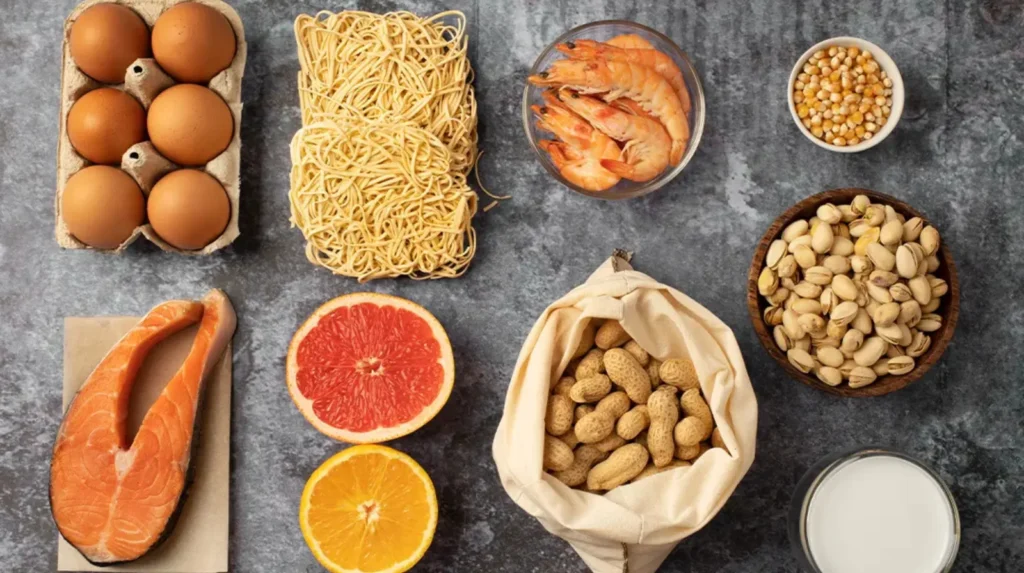
- Retailers must now treat sesame with the same caution as peanuts, tree nuts, milk, eggs, wheat, soy, fish, and crustacean shellfish.
- It requires clear labeling and stricter cross-contact prevention measures in kitchens.
2. Revisions to “Intact Meat”
The definition of “intact meat” was clarified. This is crucial for cooking temperatures. If meat is “intact” (like a whole steak), surface germs are the only concern, so it can be cooked to a lower internal temperature. If it is “mechanically tenderized” (pierced with blades), germs are pushed inside.
- The 2022 code clarifies that meats vacuum-tumbled with solutions or cubed/pounded are not intact.
- This helps chefs and inspectors know exactly when a steak needs to be cooked more thoroughly to be safe.
3. Food Donation Guidelines
For the first time, the Food Code explicitly addresses food donation.
- It clarifies that food stored, prepared, and labeled according to the code can be donated.
- This is a major step toward reducing food waste, giving businesses the regulatory confidence to donate excess food to shelters without fear of violating health codes.
4. Pet Dogs in Outdoor Dining
The code now offers a standardized allowance for pet dogs in outdoor dining spaces, provided the establishment meets certain sanitation requirements and the local regulatory authority approves it.
- Waiters cannot touch dogs and then serve food.
- Dogs must stay off chairs and tables.
- This replaces the vague “no pets” rules that were often ignored, providing a safe framework for dog-friendly patios.
5. Handwashing Temperature Lowered
The required temperature for water at handwashing sinks was lowered from 100°F (38°C) to 85°F (29.4°C).
- Research showed that water temperature is not the primary factor in killing bacteria during handwashing—soap and friction are.
- Lowering the temperature saves energy without compromising safety, making it a “green” update.
How Does the Food Code Impact Restaurants and Retailers?
The Food Code directly dictates the daily operations of restaurants and retailers, governing everything from how they wash hands to how they cool down a pot of chili. For the industry, the Food Code is the “bible” of operations.
Operational Procedures
Every Standard Operating Procedure (SOP) in a professional kitchen is likely rooted in the Food Code.
- Temperature Control: The code sets the “Danger Zone” (41°F to 135°F). Managers must design their lines to keep cold food below 41°F and hot food above 135°F.
- Hygiene: It mandates when to wash hands (e.g., after touching raw meat, before putting on gloves).
- Cleaning: It specifies the concentration of sanitizer (like chlorine or quat) needed to kill bugs on tables and dishes.
Inspections and Scoring
When a health inspector walks in, they are essentially grading the restaurant against the Food Code adopted by that state.
- Priority Items: These are violations that directly cause illness (e.g., raw chicken dripping on lettuce). These must be fixed immediately.
- Core Items: These are maintenance or sanitation issues (e.g., a dirty floor) that must be fixed soon but aren’t immediate emergencies.
Training and Certification
The Food Code requires that at least one “Person in Charge” (PIC) be a Certified Food Protection Manager. This drives the entire food safety training industry. Managers must take exams (like ServSafe) that are based entirely on the FDA Food Code’s curriculum.
What Happens if a State Doesn’t Adopt the Latest Code?
If a state fails to adopt the latest Food Code, it risks falling behind on public health protections and creates confusion for businesses operating across state lines. The “patchwork” adoption is a significant challenge for the U.S. food safety system.
Increased Public Health Risk
Old codes may not account for new threats.
- A state using the 2009 code might not have adequate regulations for sous-vide cooking or sprouting seeds, both of which have been identified as high-risk in later years.
- Residents in those states are technically less protected against modern food safety risks than residents in states with the 2022 code.
Economic Inefficiency
For national chains, inconsistent regulations are a nightmare.
- A chain might want to roll out a new “medium-rare burger” procedure nationwide.
- If State A allows it (based on the 2022 code) but State B bans it (based on the 2005 code), the chain has to create two different training manuals and supply chains.
- This stifles innovation and increases the cost of doing business.
Loss of Federal Standardization
When a state fails to adopt the current FDA Food Code, it creates a significant deficiency in federal standardization, which can isolate its public health infrastructure. The FDA provides extensive training and support designed to ensure a uniform national food safety system. This support is fundamentally linked to the content and framework of the most recent Food Code edition.
Hindrance to Professional Training
The FDA’s specialized training for state and local health inspectors is entirely predicated on the current Food Code. These programs are essential for ensuring that inspections are consistent and science-based nationwide. If a state continues to operate under an outdated code (e.g., 2005 or 2009), its inspectors receive training that is mismatched with their regulatory tools.
- Misaligned Practices: Inspectors trained on the 2022 standards may be forced to enforce 2009 rules that lack newer, more effective measures. Conversely, those trained only on the old code will miss critical modern risk factors.
- Inconsistent Enforcement: This disparity compromises the integrity of the inspection process. It results in inconsistent enforcement decisions, making it difficult for multi-state businesses to comply and creating public confusion.
Exclusion from National Programs
Perhaps more critically, failure to adopt the current code prevents a state’s health department from fully participating in the Voluntary National Retail Food Regulatory Program Standards. These Standards are a set of best practices for effective food safety programs, not just for the rules themselves, but for how the regulatory agency manages its operations.
- Benchmarking Loss: Participation in these standards allows states to benchmark their performance against national metrics and identify areas for improvement. A state using an “ancient” code is essentially using an old map and cannot effectively compare its routes with others using a modern GPS.
- Isolation from Federal Support: States that do not adhere to current standards are often disconnected from federal resources, grants, and technical assistance programs offered by the FDA and CDC. This isolation cuts off access to critical funding and the latest analytical tools needed to respond to emerging foodborne threats.
This regulatory isolation ultimately weakens the state’s capacity to protect its residents. It ensures that their public health staff are operating outside the main flow of national information and standardized best practices, creating a discernible gap in consumer protection compared to states using the latest Food Code.
Conclusion
The FDA Food Code is the unsung hero of your dining experience. While produced by the FDA, it is the result of a massive, ongoing collaboration between federal agencies like the FSIS and CDC, state regulators, and industry experts. It ensures that the science of safety keeps pace with the evolution of how we grow, cook, and serve food. Although it is not federal law, its adoption by states is crucial for a unified, safe food system. Jadian is providing the best information related to the FDA codes and proper answer to the question, who produces the food code?
FAQs Regarding the FDA Food Code
Is the FDA Food Code mandatory for all states?
No. It is a model code. Each state, territory, or tribal nation must legally adopt it for it to become enforceable law in that jurisdiction.
The Food Code is created by which government agency?
The U.S. Food and Drug Administration (FDA) is the main government body responsible for creating the Food Code. The FDA develops and updates the Code using scientific research and food safety data. To strengthen the guidelines, it also collaborates with the United States Department of Agriculture (USDA) and the Centers for Disease Control and Prevention (CDC), ensuring the Food Code reflects current public health risks and best practices.
Who writes the Food Code?
The U.S. Food and Drug Administration (FDA) writes and publishes it, with significant input from the Conference for Food Protection (CFP), the USDA (FSIS), and the CDC.
How often is the Food Code updated?
A full new edition is published every four years (e.g., 2013, 2017, 2022). A supplement is usually published two years after each full edition to address interim updates.
What is the most current version of the Food Code?
As of this writing, the 2022 FDA Food Code is the most current full edition.
Why do some states use older versions of the Food Code?
Adopting a new code requires a legislative or administrative process that takes time, money, and political will. Some states lack the resources or the legislative priority to update their rules every four years.