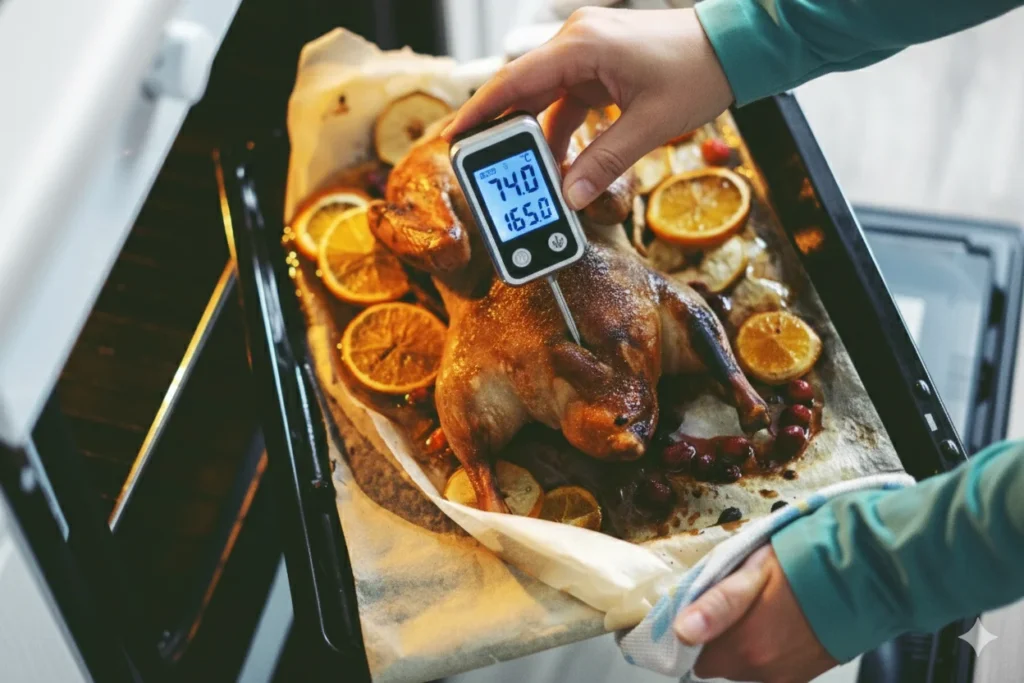
The majority of pathogenic bacteria will be destroyed by a minimum internal temperature of 74°C (165°F) when appropriately heated. Therefore, when we ask about the temperature that kills bacteria, 74°C (165°F) is generally considered the safe temperature for preparing food at home.
Understanding the temperature at which bacteria in food are killed is critical for reducing the risk of foodborne illness. When you cook your food to the proper internal temperature, you will destroy all pathogens that cause disease, including Salmonella, E. coli, and Listeria.
However, temperature is just one factor involved. Time and how you store and handle your food also play an essential role.
In this article, explain what temperatures are necessary to kill bacteria, what these temperatures are in degrees Celsius, how heat kills harmful microorganisms, what the food danger zone is, and demonstrate simple and safe cooking and storage in simple terms.
Does Heat Kill Bacteria?
Yes, heat can denature bacterial proteins and enzymes, ultimately leading to the death of the organism. Does heat kill bacteria? Yes, it can — as long as there is enough heat present in the environment.
Bacteria are living microorganisms that can be destroyed by applying sufficient heat. Bacterial cell structure breaks down due to too much heat, and essential bacterial enzymes cease functioning. The bacteria die due to the destruction of their cellular structure.
However, mild heat may simply slow down bacterial growth. Proper cooking temperatures are required to eliminate all potentially dangerous bacteria.
What Temperature Kills Bacteria in Degrees Celsius?
When exposed to sufficient heat, most harmful bacteria die at 70-74°C. As such, the safest standard for home food preparation can be determined as follows to kill bacteria safely:
If you are explicitly looking for what temperature kills bacteria in degrees Celsius, this is broken down clearly below:
Most dangerous bacteria are killed when heated to 70-74°C (158-165°F).
What Is the Food Danger Zone?
The food danger zone is the temperature range between 5 °C and 60 °C. It is a temperature range where bacteria grow extremely fast. Knowing about the food danger zone can be as important as understanding how to kill bacteria with heat, because in this zone, bacteria double approximately every 20 minutes.
Additionally, the room temperature is within the danger zone for food. When you keep food warm by improper buffets, it will also remain in the danger zone.
How long should food not be allowed to sit in the food danger zone?
- Normal room temperature: 2 hours
- Hot climates: 1 hour
- Store food at temperatures below 5°c (in cold storage).
- Store food at temperatures above 60 °C (hot holding).
Why is 74°C the Standard Answer to What Temperature Kills Bacteria?
74 degrees Celsius will kill many of the most common pathogenic microorganisms that are responsible for foodborne illness.
Most pathogens die at 74 °C as follows:
• Salmonella
• E. coli
• Listeria
• Campylobacter
The U.S. Department of Agriculture’s Food Safety and Inspection Service recommends a minimum internal temperature of 165°F (74°C) to prevent foodborne illness when cooking. The USDA’s recommended internal temperature for cooking is based on the idea that, to ensure the entire piece of food is cooked through, there needs to be a buffer, or “safety margin,” to account for any areas that may have been undercooked due to uneven cooking.
Does Heat Kill Bacteria Instantly?
Yes, bacteria are killed by heat in seconds at 74°C. Heat kills bacteria slowly at temperatures under 70°C.
If you wonder, does heat kill bacteria immediately?
• at 60°C → bacteria die gradually.
• at 70°C → bacteria die quickly.
• at 74°C → almost instant death of bacteria.
Temperature and time are both critical to killing bacteria.
What Temperature Kills Bacteria in Meat?
Different types of meat require different internal temperatures to ensure food safety.
If you would like to know what temperature kills bacteria in meat, refer to this chart:
Chicken and Turkey must reach 74°C because they carry a higher bacterial risk.
Does Boiling Kill All Bacteria?
Heat is highly effective at killing most bacteria when you boil water. However, a few types of bacteria (spore-formers) have spores that can withstand boiling.
Some examples include:
- Clostridium botulinum – infamous for producing a potent neurotoxin that can lead to severe food poisoning
- Bacillus cereus – commonly associated with rice and pasta dishes, and can cause gastrointestinal distress.
Therefore, to ensure your food is safe from bacterial contamination, store it properly once cooked.
Can Reheating Kill Bacteria?
Yes, heating food to an internal temperature of 74 °C will kill all the bacteria that have grown on it while it was in cold storage (or the fridge). Also, if you are unsure about what temperature kills bacteria when reheating your food, use 74 °C as a guideline.
However, it is worth noting that:
- Reheating food will not remove toxins.
- If food has been left at temperatures within the food danger zone for an extended period, it could still be dangerous.
To Reheat Safely:
- Stir your food until everything is evenly heated.
- Ensure you check the food’s internal temperature before consuming it.
- Do Not Reheat Food Multiple Times.
What Happens Inside the Food Danger Zone?
Bacteria will multiply quickly from 5 degrees Celsius to 60 degrees Celsius.
In the “Danger Zone” of temperatures (between 40°F and 140°F) for a food item, there are some critical conditions for bacterial growth:
- The rate of growth is exponential.
- Food items may appear perfectly fine to the consumer, yet in fact have reached unsafe levels of bacterial contamination.
- There is no noticeable odor indicating bacterial growth on the food.
As a result of bacterial growth in the “danger zone,” after 2 hours at those temperatures, the bacteria are likely to reach unsafe levels. After 4 hours at those same temperatures, the safest option is to discard the food entirely.
Temperature control is one of the most effective ways to prevent foodborne illness by killing bacteria before consuming the food.
Does Freezing Kill Bacteria?
No, freezing will not kill most of the bacteria. What it will do is stop them from growing and multiplying until they are thawed again, at which point they will resume growing.
To safely thaw a frozen product, follow one of the methods below:
- Thaw in the Refrigerator (at or below 5°C)
- Thaw under Cold Running Water
- Thaw using a Microwave and Cook Immediately
DO NOT thaw at Room Temperature, as this puts your food in the danger zone for bacterial growth.
How Do You Accurately Measure Temperature?
Guessing is unreliable when it comes to food temperatures; use a food thermometer to confirm that your food has reached a safe internal temperature.
To measure properly for temperature:
- Insert the thermometer into the thickest part of the food.
- Avoid touching the bone with the thermometer.
- Wait until you get a stable reading from the thermometer.
- Clean the thermometer after use.
If you want to know what temperature kills bacteria, the only reliable way is to measure.
How Can You Prevent Bacterial Growth?
Preventing bacterial contamination is much easier than trying to kill it after the fact.
Follow the guidelines listed below to prevent your food from being contaminated with dangerous levels of bacteria:
1. Keep Your Food Out of the “Danger Zone” (between 5°C & 60°C)
Refrigerate at 5°C or below to keep cold foods cold. Also, always keep hot foods heated to at least 60°C, or use an electric warming tray, a thermos, etc.
2. Cook Foods to a Safe Temperature
If you are unsure how long a particular food has been cooking, cook it until the internal temperature reaches at least 74°C.
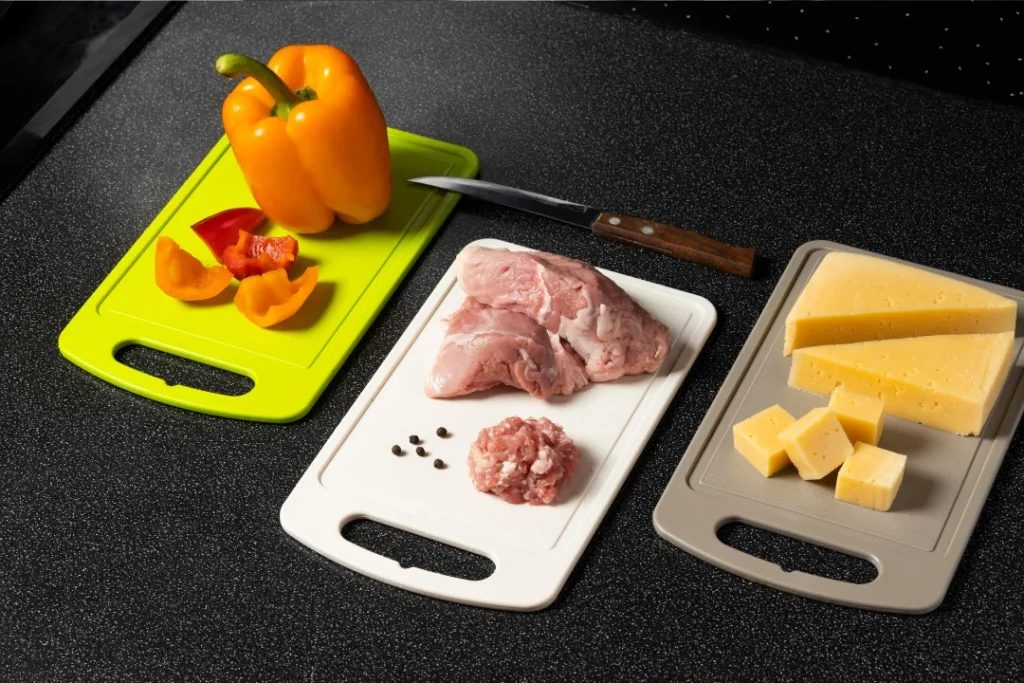
3. Avoid Cross-contamination of raw and cooked food.
- Only keep raw meats, poultry, fish, eggs, and dairy products in separate containers or bags.
- Separate them from other foods, such as cooked foods.
- Wash your hands regularly as you prepare meals, particularly when you touch food and right after touching raw food.
- It is important to sanitize all surfaces of food as soon as possible.
4. Store Leftover Foods Properly
Store leftovers for 2 hrs after preparation and eat them in 3-4 days.
What Are the Most Common Foodborne Bacteria?
There are different kinds of bacteria that may lead to food poisoning unless they are killed (destroyed) at a safe enough temperature in food.
The following are some of the typical pathogens that may cause food poisoning:
• Salmonella
• E. coli
• Listeria
• Campylobacter
• Clostridium perfringens
Generally, at 74 °C, the majority of these bacteria will be killed, which is the ideal answer to the question “What temperature kills bacteria in food?”
Quick Reference: Safe Temperature Summary
The following are typical foods that have to be cooked to an internal temperature to destroy dangerous bacteria:
- ✔ Poultry (chicken, turkey) – 74°C
- ✔ Ground meats (beef, pork, lamb, etc.) – 71°C
- ✔ Fish – 63°C
- ✔ All reheated leftovers – 74°C
- ✔ Cold prepared foods should be kept at a refrigeration temperature below 5°C
- ✔ Hot foods must be kept at a minimum of 60°C
Final Takeaway: What Temperature Kills Bacteria in Food?
Bacteria that cause disease are destroyed at 74°C (165°F), but food safety does not stop at one temperature. It involves avoiding keeping food in the danger zone (4 o C -60°C/40°F-140°F), properly storing perishable foods, warming foods, and always checking temperatures with a food thermometer.
Food safety requires precision, supervision, and documentation. With Jadian, you can automate temperature checks and compliance tracking, and get a real-time view of your operations.
Control your food safety now- book a demo with Jadian and ensure compliance with confidence.
FAQ Section
1. Is there a specific temperature that will kill bacteria in your food?
The most hazardous types of bacteria can be destroyed at about 74°C (165°F), which is generally considered a safe internal cooking temperature.
2. Does heating kill bacteria?
Yes. Heating will absolutely kill bacteria by destroying their cells once you have reached a sufficiently safe internal temperature for the food being cooked.
3. At what temperature do bacteria die in degrees Celsius?
Bacterial pathogens die off most quickly between 70-74°C. Therefore, 74°C is the minimum safe temperature for cooking.
4. Is there a “danger zone” for food?
Yes, there is a “danger zone” for food. The “danger zone” is from 5°C to 60°C. It is during this time frame that bacteria grow very quickly.
5. Will boiling kill bacteria?
Boiling water at 100°C kills most active bacteria. However, cooking will not destroy certain types of spores or toxins that were present before cooking.
6. Will reheating kill bacteria?
Reheating to an internal temperature of 74°C will kill bacteria. However, toxins produced during the initial contamination will remain.
7. Will freezing kill bacteria?
Freezing will slow bacterial growth; however, it will not kill them.