In food manufacturing, where perishable goods are constantly on the move, temperature control stands as the silent guardian of safety. Keeping temperatures in check is crucial for preserving both quality and safety. This applies whether you are working with fresh ingredients or getting finished products ready to ship. The maximum cold holding temperature is 41°F (5°C), and maintaining this is crucial for food safety in manufacturing and storage.
Of all the temperature control measures, cold holding stands out as both crucial and often misunderstood. What is the maximum cold holding temperature that keeps food safe and meets regulations? Knowing this limit and why it matters helps manufacturers lower risks and protect their customers and their brand.
This guide breaks down cold holding requirements and highlights why mastering temperature control is key to food production.
Why Cold Holding Matters in Food Manufacturing
Cold holding plays a key role in food manufacturing because it affects both microbial growth and food safety. Perishable food can become contaminated with bacteria if not kept at the right temperature. If cold food rises above its safe temperature limit, bacteria can grow quickly, even if the food looks normal.
In large food manufacturing, keeping food cold is more important because storage times are longer and production runs are bigger. Even small changes in temperature can impact large amounts of product, causing quality problems or breaking regulations. Manufacturers should know the maximum cold holding temperature. They should also keep it consistent in all cold storage areas, including coolers and transport vehicles.
Keeping food at the right cold temperature keeps it safe and fresh. For businesses, maintaining proper cold holding temperatures also improves efficiency and helps meet food safety standards during audits and inspections.
What Is Cold Holding Temperature?
Cold holding temperature is the practice of keeping perishable food within a refrigerated range to prevent harmful microorganisms from growing. In food manufacturing, this rule applies whenever food is stored, moved, or kept in the fridge. It includes raw ingredients, food being prepared, and finished products that need to be kept cold to stay safe.
It is important to understand cold holding temperature because letting food get too warm is a cause of foodborne illness. If food is not kept cold enough, bacteria can grow quickly, sometimes in only a short period of time. This is why food safety programs such as HACCP focus on temperature control to help prevent problems.
Food manufacturers often want to know what is the maximum cold holding temperature at which food can be stored. Authorities set this limit to keep perishable foods out of the range where harmful bacteria can grow.
Cold holding is not just about putting food in the fridge. It requires keeping food at or below the recommended maximum temperature to prevent biological hazards.
The Food Temperature Danger Zone
The food temperature danger zone is the range in which bacteria grow quickly, which can make food unsafe to eat. This range is usually 41°F to 135°F (5°C to 57°C). If food stays in this zone too long, harmful germs can multiply and raise the risk of foodborne illness.
Cold holding keeps food out of the danger zone.
In food manufacturing, food can become unsafe if it gets too warm during storage, processing, or slow cooling. Food can become unsafe quickly if it is kept at the wrong temperature, especially items like meat, dairy, and seafood. It is important to watch temperatures carefully and respond quickly if they rise above safe levels.
Keeping food below the danger zone protects customers, helps meet food safety standards, and keeps products of high quality. Storing food at the right cold temperature is one of the best ways to avoid safety issues in food manufacturing.
Maximum Cold Holding Temperature Standards
Maximum cold holding temperature standards show us how cold food needs to be to stay safe. These rules keep food from getting warm enough for harmful bacteria to grow and make people sick.
In large manufacturing settings, these standards help keep the process consistent and make sure everyone does their part.
Food safety authorities agree that cold food must be kept at low enough temperatures to slow down bacteria. For manufacturers, following these standards is important for meeting regulations, protecting customers, and keeping products safe. As such, knowing the maximum cold holding temperature helps with building good food safety systems and training staff on safe handling.
Cold holding standards apply to raw ingredients, food being prepared, and finished products that must be kept cold.
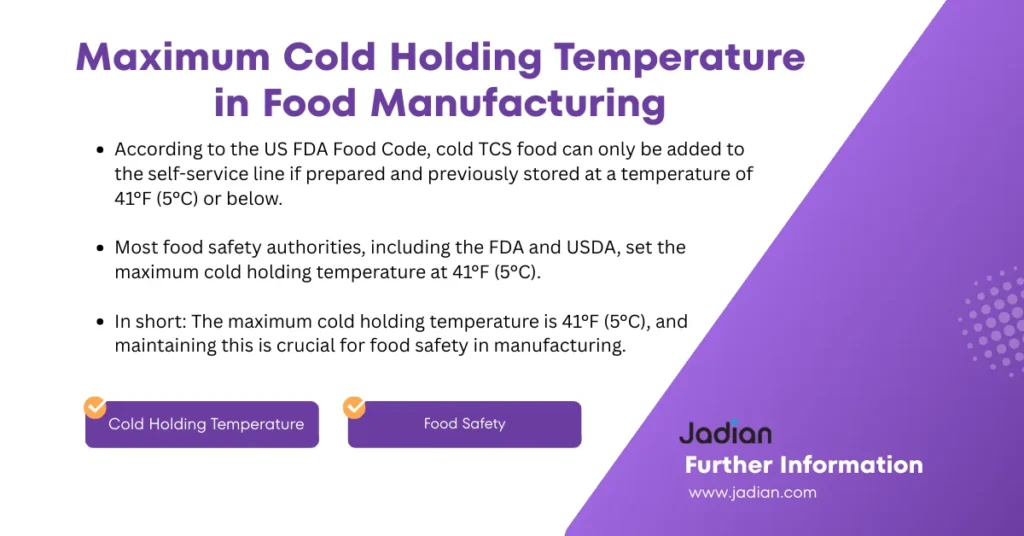
The maximum cold holding temperature is 41°F (5°C), and maintaining this is crucial for food safety in manufacturing and storage.
Regulatory Guidelines
The Food and Drug Administration (FDA) and the United States Department of Agriculture (USDA) create the main rules for food safety. Their guidelines help reduce the risk of foodborne illness and ensure food safety practices are consistent across the industry.
The FDA Food Code says cold food must be kept at 41°F (5°C) or lower. Most places that make, prepare, or handle food follow this rule. The USDA also has similar rules for places that work with meat, poultry, and eggs. These rules make sure temperatures are carefully controlled when food is made and stored.
These rules help prevent biological hazards. The FDA and USDA set a maximum cold holding temperature so manufacturers know how cold food must be kept. Given this, production facilities need to check temperatures often, keep good records, and act fast if temperatures go above the limit.
If companies do not follow these standards, they may face citations, product holds, recalls, or even shutdowns. Cold holding requirements are important for food manufacturing compliance and managing risk. Manufacturers need to make these rules part of daily routines, HACCP plans, and employee training to ensure they are always followed.
High-Risk Food and Cold Holding Requirements
It is essential to keep high-risk food cold to stop harmful microorganisms from growing when temperatures are not safe. In food manufacturing, these foods are often stored in large quantities for long periods. Therefore, keeping the right temperature is crucial to avoid contamination and spoilage.
Food manufacturers need to find out which foods are high-risk in their operations and use stricter cold storage rules. This means keeping them:
- Properly refrigerated
- Limiting the time they spend out of cold storage
- Making sure handling does not affect temperature control
Managing high-risk food well is an important part of a strong food safety program.
What Makes a Food High Risk?
Food is high risk if it has qualities that let harmful bacteria grow when it’s not at the right temperature. This food often has a lot of moisture, many nutrients, and a neutral or slightly acidic pH. If food is kept warmer than the recommended cold temperatures, bacteria can grow quickly and raise the risk of foodborne illness.
The way food is handled can also affect its risk. Cooking, cutting, or processing food removes its natural barriers, making it easier for germs to get in. For this type of food, it is important to follow cold storage rules closely.
Time and handling also affect how risky a food is. Food that is handled frequently, divided into portions, or moved is more likely to have changes in temperature. In food manufacturing, these risks increase because of the large amounts produced and the complex steps involved.
Examples of High-Risk Foods That Require Strict Cold Holding
Many everyday food is considered high-risk and need to be kept cold at or below the safe temperature limit.
Dairy products such as milk, cheese, yogurt, and cream can spoil quickly and may grow bacteria if they are not kept cold. To keep them safe, always store them at or below the recommended cold holding temperature.
Meat, poultry, and seafood are also high-risk because their high protein content makes them more likely to harbor harmful bacteria. Both raw and cooked types need careful temperature monitoring. If they go above the safe limit, they can quickly become unsafe to eat.
Cooked food like prepared meals, sauces, and ready-to-eat items is also high-risk. After cooking, they need to be cooled quickly and kept cold to stop bacteria from growing. Cut fruits and vegetables are also more at risk than whole ones. This is because cutting exposes the inside and makes it easier for bacteria to grow.
In food manufacturing, keeping high-risk food safe means using steady refrigeration and checking temperatures often. Following these strict cold holding rules can lower food safety risks, meet regulations, and protect both their customers and reputation.
Best Practices for Maintaining Cold Holding Temperatures
To maintain proper cold holding temperatures in food manufacturing, you need reliable equipment, good routines, and regular checks.
Even with clear rules, problems usually happen because steps aren’t followed every time. Using best practices turns food safety rules into daily habits that keep products safe and protect customers.
In food manufacturing, where food moves quickly through storage and processing, keeping cold holding temperatures steady takes teamwork. It also requires the right equipment and good routines. The best practices below focus on the most important areas
- Using refrigeration equipment
- Checking and recording temperatures; and
- Storing and rotating food properly
Proper Use of Refrigeration Equipment
Refrigeration equipment is key to keeping food cold and safe in food manufacturing. Coolers, freezers, refrigerated rooms, and transport units must be well designed, used correctly, and maintained to keep food safe. Simply having the equipment is not enough. How you use and care for it every day is just as important for food safety.
Set your equipment to keep temperatures well below the maximum limit. Things like opening doors, loading, and room conditions can cause changes. Knowing the highest safe temperature helps you set a safety margin so food stays safe, even when it gets busy. Do not overload units, block airflow, or put warm products, as these can make it harder to control the temperature.
Regular maintenance is important. Issues like broken seals, damaged doors, or faulty thermostats can slowly raise temperatures without anyone noticing. Food manufacturers should plan regular inspections and preventive maintenance to make sure refrigeration equipment works properly and keeps food cold.
Temperature Monitoring and Record-Keeping
Regular temperature monitoring is essential for keeping cold storage in compliance.
Monitoring systems let you see refrigeration performance in real time and spot temperature changes before they become food safety problems. This matters even more in food manufacturing, where large amounts of product can be affected if temperatures are not controlled.
You can use manual checks, automated sensors, or both to make sure cold holding temperatures stay within safe limits. Keeping accurate records shows you are following the rules and helps during audits or inspections. These records should clearly prove that food was always kept below the set maximum temperature.
Knowing the maximum cold holding temperature helps staff understand monitoring data and know when to act. If temperatures go above safe limits, clear procedures should guide quick responses, like moving food or fixing equipment.
Regular monitoring and good record-keeping are essential for a strong food safety system.
Storage Guidelines and Food Rotation (FIFO)
Keeping good storage habits helps maintain steady cold holding temperatures and prevents food safety issues.
Organize food in refrigerators so air can circulate easily and temperatures stay consistent on all shelves and in all containers. If storage is too crowded or stacked the wrong way, warm spots may develop and increase the risk of unsafe temperatures.
Using the First-In, First-Out (FIFO) method to rotate food is also important. FIFO means using or sending out older products before newer ones, which helps avoid keeping food too long. When FIFO is combined with steady cold holding, manufacturers can manage shelf life better and reduce waste.
Clear labels that show receiving dates, use-by dates, and storage instructions help with FIFO and keeping the right temperatures. When staff know the maximum cold holding temperature and how storage can affect it, they can keep the facility safe.
Proper storage and rotation help ensure cold holding standards are followed from delivery through distribution.
Consequences of Exceeding the Maximum Cold Holding Temperature
If cold holding temperatures rise above the safe limit, food safety is at risk, and business results can suffer. Sticking to these standards helps prevent harmful bacteria from growing too quickly. Ignoring them can put several batches at risk and affect the whole operation, especially in large food manufacturing settings.
Controlling cold holding temperatures is essential, not just a suggestion. It helps prevent health risks, avoids legal trouble, and protects your reputation.
The next sections explain the main risks and effects of going over safe cold holding limits.
Food Safety Risks
If cold holding temperatures are not maintained, the risk of foodborne illness goes up right away. This is because bacteria can multiply quickly when food is kept too warm. Harmful germs like Salmonella, Listeria monocytogenes, and E. coli may reach dangerous levels, even if the food seems fine.
Letting food get too warm can also make it spoil faster and not last as long. Even if people do not get sick immediately, the quality can decrease, and the chance of contamination increases over time. Keeping food at the right cold temperature is one of the best ways to keep it safe and protect people.
Regulatory and Business Impacts
Letting food get too warm can cause huge problems for your business and its compliance, not just food safety issues.
Food safety officials expect companies to keep food at the right temperature and keep good records. If inspectors find problems with temperatures, companies could get warnings, fines, or have to fix the issue.
It’s important to know the maximum cold holding temperature to follow rules set by agencies like the FDA and USDA. Not meeting these standards can lead to product holds, recalls, or even facility shutdowns in serious cases. These issues can disrupt your business, increase costs, and damage your relationships with distributors and retailers.
Not following temperature rules can also be very expensive for a business. In the food industry, keeping food at the right temperature is not just about following the rules. It also helps keep your business safe and makes your brand stronger.
Common Mistakes in Cold Holding and How to Avoid Them
Cold holding problems still happen often in food manufacturing, even when companies follow regulations and standard safety practices. These problems usually come from simple day-to-day mistakes, not from ignoring the rules on purpose.
The sections below highlight common cold holding mistakes and show how manufacturers can prevent them with better procedures, training, and supervision.
Improper Temperature Monitoring
Cold holding often fails when staff do not check temperatures correctly or frequently enough.
Sometimes, staff check temperatures only occasionally or record them incorrectly. This means issues might not be found for a long time. If monitoring is unreliable, food can go above safe temperatures without anyone realizing it.
Regulations set a clear standard for checking monitoring data. Yet, if thermometers are not calibrated or checks happen too infrequently, this standard is less effective. In busy manufacturing, manual checks may not be enough since temperatures can change quickly.
To avoid this, food manufacturers should check temperatures often, use reliable thermometers or sensors, and keep clear records. Staff also need to recognize temperature issues and respond quickly. Careful monitoring keeps food safe and proves to inspectors that rules are met.
Overcrowding Refrigeration Units
Putting too much food in the fridge is a common mistake that makes it harder to keep things cold enough.
If units are packed too full, air cannot move around properly. This causes uneven cooling and warm spots. Some products might get warmer even if the unit looks like it is working fine.
Even if your refrigerator is working properly, food will not stay safe unless air can circulate. Overcrowding often happens during busy times or when storage is not well organized.
To avoid these problems, manufacturers should set clear storage rules that leave space between products and shelves. They also need to keep inventory within the unit’s limits and make sure staff know how to load items correctly. These steps help keep the unit’s temperature steady.
Neglecting Equipment Maintenance
If you do not regularly take care of refrigeration equipment, you could have slow problems with temperature. Issues like old door seals or broken thermostats can make it difficult for the units to keep food cold enough. Since these issues often develop over time, they might not be noticed until there is a temperature violation.
Regular preventive maintenance helps refrigeration units run efficiently and reliably. If you miss regular checks and servicing, even minor equipment issues can become serious food safety risks.
Food manufacturers need to set up regular maintenance programs with inspections, cleaning, and quick repairs. Keeping and reviewing maintenance records helps spot problems that happen often. Taking care of equipment also reduces the risk of temperature issues.
Conclusion
Keeping cold holding temperatures just right is essential in food manufacturing. Proper temperature control safeguards product safety, preserves quality, and ensures compliance with regulations. By following the right temperature guidelines, food manufacturers lower the chances of food spoiling or becoming contaminated.
A strong food safety system starts with knowing temperature standards, understanding which foods are high-risk, and using reliable controls. You have to ensure that you use refrigeration equipment properly, check temperatures regularly, store food correctly, and keep equipment well-maintained. Avoiding common mistakes and responding quickly to temperature changes will help you meet your food safety goals.
In the end, cold holding is more than just following rules. It shows a company’s real commitment to keeping food safe and aiming for high standards in every part of its work.
FAQs
What is the maximum required cold holding temperature for cut cantaloupe?
Cut cantaloupe is a high-risk food because slicing it exposes the inside and adds moisture, which can help bacteria grow. Once you cut a cantaloupe, store it at 41°F (5°C) or colder. Keeping it this cool helps slow down bacteria and lowers the chance of getting sick from food while it is stored or moved.
What is the maximum cold holding temperature?
Store perishable and high-risk foods at 41°F (5°C) or lower. Food safety rules require this to help slow bacterial growth. Storing food at this temperature keeps it safe and fresh.
What is the maximum cold-holding temperature for pasta salad?
Pasta salad can spoil easily, especially if it contains cooked pasta, mayonnaise, dairy, meat, or vegetables. Make sure to keep it chilled at 41°F (5°C) or below.
What is the maximum cold holding temperature allowed for deli meat?
Keep deli meats like sliced ham, turkey, roast beef, and other ready-to-eat meats at 41°F (5°C) or colder. If these products get too warm, harmful bacteria such as Listeria can grow quickly.
What is the maximum cold holding temperature for shredded lettuce?
Shredded lettuce is riskier than whole lettuce because cutting it exposes more surface area and releases moisture. To keep it safe and fresh, store it at 41°F (5°C) or colder. Good refrigeration also helps it last longer and prevents spoilage.
What is the maximum cold holding temperature for sliced watermelon?
Sliced watermelon, along with other cut melons, is seen as a high-risk food. After cutting, keep it at 41°F (5°C) or colder. This temperature slows down bacteria and keeps the watermelon safe to eat.
What is the maximum cold holding temperature for pasta salad?
Keep pasta salad at 41°F (5°C) or colder. Because it is a ready-to-eat dish with several ingredients, keeping it cold helps prevent contamination and keeps it safe to eat.
What is the maximum required cold holding temperature?
Perishable foods must be kept at 41°F (5°C) or colder during storage, holding, and display. This helps meet food safety standards and lowers the risk of foodborne illness.
What is the maximum cold holding temperature allowed for shredded lettuce?
Keep shredded lettuce cold at 41°F (5°C) or below. This is important because shredded or cut produce is more likely to be affected by temperature changes. They can also grow harmful microbes faster than whole vegetables.