Food safety means more than simply following the rules. It is a promise. Every time someone buys a packaged snack or dines at a restaurant, they trust that the food is safe to eat. Behind this trust is a process that keeps everything smooth: a quality management system in food industry operations.
With strict regulations, global supply chains, and well-informed consumers, food businesses must avoid inconsistencies. Even a minor safety issue can cause contamination, recalls, damage to reputation, and financial loss. Food quality management is essential because it builds consistency, lowers risk, and encourages ongoing improvement.
A quality management system in the food industry protects both consumers and businesses. This guide will walk you through the importance of quality management in the food industry for everyone’s safety.
What is a Quality Management System in the Food Industry?
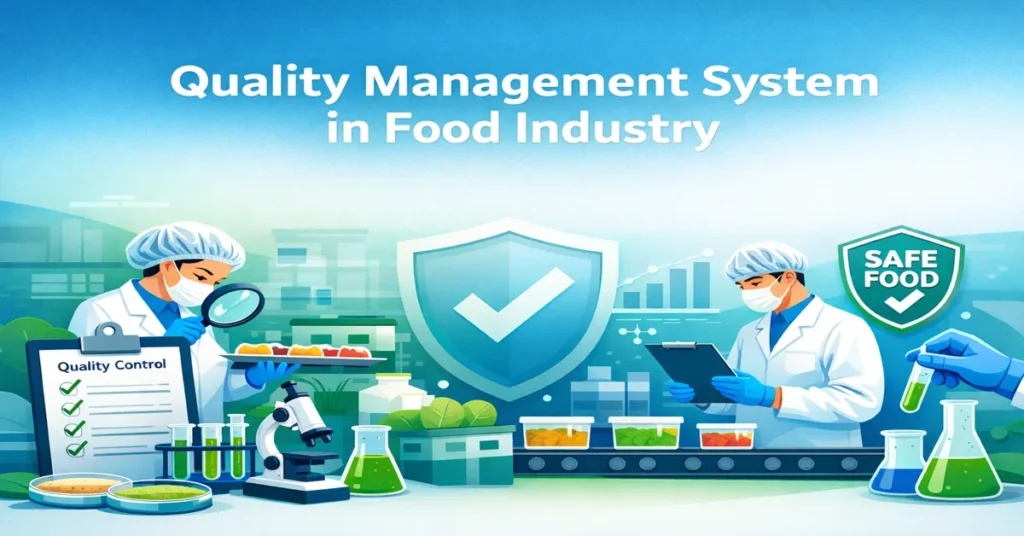
If you’ve ever wondered how food businesses make everything consistent and safe, they use a quality management system, or QMS. This is a set of steps that helps a food company organize its work so products stay safe, high-quality, and meet all the rules.
What is the purpose of a food safety management system? The main goal is to prevent problems and keep things consistent. Rather than waiting for issues to come up, a quality management system helps businesses spot risks early and set clear steps to follow. This way, food safety becomes a regular part of work, not just another task to finish.
In the food industry, a QMS is about more than just taste or appearance. It covers the following thoroughly:
- How ingredients are sourced
- How food is handled
- How equipment is cleaned
- How staff are trained
- How records are kept
This system gives employees clear policies and procedures to follow at every level. A well-designed QMS typically includes essential components, such as:
- Document control
- Standard operating procedures (SOPs)
- Hazard identification and risk assessment
- Corrective and preventive actions (CAPA)
- Internal audits
Many food businesses align their systems with globally recognized frameworks, such as:
- International Organization for Standardization (including ISO 9001 and ISO 22000)
- Food and Agriculture Organization through Codex Alimentarius
- The principles of Hazard Analysis and Critical Control Points (HACCP).
In the end, a quality management system gives food businesses clarity and control. This strategy assists companies in complying with laws, safeguarding the customers, and establishing trust. It encourages accountability and motivates continuous improvement, as well. It also supports accountability and encourages ongoing improvement.
How Does a QMS Improve Food Safety Compliance?
The food businesses have continuously changing regulations, inspections, certifications, and customer expectations. A food-safety quality management system (QMS) ensures compliance is part of the day-to-day workload; consequently, a company does not have to make last-minute rushes.
A well-designed food safety quality management system helps match your internal processes with national and international food laws. It makes sure policies are not just written, but actually followed, checked, and improved over time. Hygiene standards and hazard controls become part of a clear, repeatable system. So, you don’t have to rely on memory or guesswork.
Technology plays a key role. Food-safety, quality, and compliance software helps many firms store all documents in a single location, automatically send notifications, monitor corrective measures, and conduct audits. This makes things run more smoothly, cuts down on mistakes, and lowers the risk of contamination.
A QMS makes it easier to prepare for recalls and keep track of things. You can quickly find and fix problems with real-time reports, supplier checks, and batch tracking. When you go through a regulatory inspection, keeping records organized and using automated systems can make things a lot less stressful.
A food safety quality management system does more than just help businesses “pass inspections.” It helps create a culture of consistency, accountability, and ongoing improvement. This is what really supports food safety compliance.
Benefits of a Quality Management System in the Food Industry
A good quality management system in the food industry does more than meet regulations. It also helps build a smarter, safer, and more dependable business.

Here are some ways it truly makes a difference:
1. Improved Food Safety Outcomes
A quality management system helps protect consumers. If these systems are set up well and carefully monitored, the chance of contamination drops significantly.
Clear steps for handling, storing, cleaning, and preparing food help stop mistakes before they happen. By identifying hazards early, teams can catch problems like temperature issues, supplier changes, or cleaning gaps right away.
As a result, there are fewer product recalls and issues. Thus, people can feel more confident that the food leaving the facility is safe to eat.
2. Increased Operational Efficiency
Food quality management is about more than just food safety. It also makes business operations run more smoothly. When workflows are clearly documented, employees spend less time looking for answers and more time doing their jobs well.
Streamlined processes reduce confusion. Keeping track of inventory helps prevent having too much or running out of stock. Problems are identified early, hence saving money. Early detection of problems will save the business unnecessary rework, waste, and last-minute patches.
3. Better Brand Reputation and Consumer Confidence
Trust is created through consistency. Once the customers discover that your products are reliable, safe, and of high quality, chances are that they will come back and refer to you.
Food quality control involves control of constant taste, texture, packaging, and safety. This kind of trust makes your brand look better and shows that you are responsible and professional. Customers in the modern world are more knowledgeable than ever before.
4. Minimized Legal and Financial Risk
Food safety failures can be expensive. The costs go beyond fines and may include lawsuits, product recalls, and long-term harm to your brand. A strong quality management system in the food industry can help prevent these issues.
Keeping clear records, monitoring processes, and taking corrective actions can help you avoid regulatory penalties. Taking preventive steps also lowers the risk of legal claims. Some companies even pay less for insurance because strong food quality management shows they have lower operational risks.
5. Continuous Improvement Culture
One important benefit of food quality management is that it helps develop a strong mindset. Rather than just reacting to problems, teams start looking for ways to make things better.
Using data to make decisions helps managers find trends and spot recurring issues. With root cause analysis, they can make sure problems are fixed at their source, not just covered up. Regular performance checks help the business make steady progress.
Over time, focusing on continuous improvement strengthens both food safety and business performance.
Essential Features of an Effective Food Industry QMS
A good food safety quality management system is more than just paperwork. It supports teams in their everyday work. When you use food safety quality and compliance management software, the system becomes easier to see, manage, and trust.
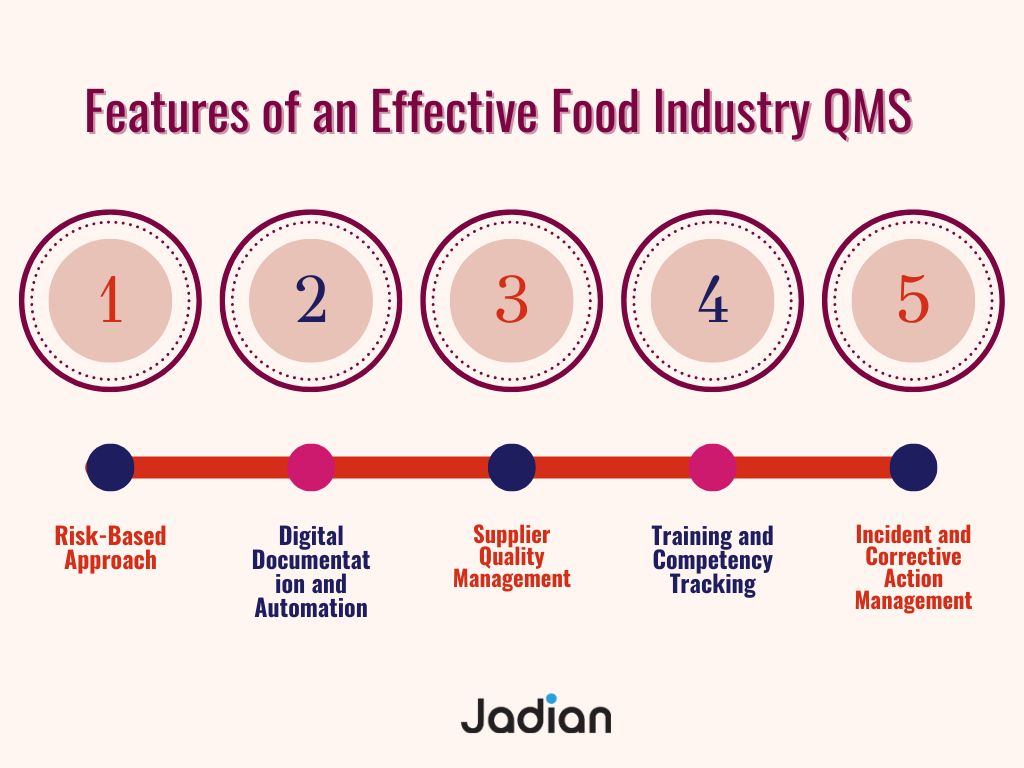
Here are the most important features to look for:
Risk-Based Approach
A strong food safety management system starts with a risk-based approach. Rather than waiting for issues to appear, businesses look for possible hazards early to prevent harm.
When companies regularly check for risks and use preventive measures, they lower the chances of contamination and food safety problems.
Digital Documentation and Automation
Paper systems can easily become messy or outdated. That’s why many companies now use food safety quality and compliance management software to automate their work.
Some important digital features include:
- Cloud-based document control helps keep policies and SOPs up to date.
- Automated compliance alerts let teams know when certifications are about to expire or when checks have been missed.
- Real-time dashboards give teams instant access to performance metrics.
Automation like this improves accuracy, saves time, and helps reduce human error.
Supplier Quality Management
Food safety begins with suppliers, not just in the kitchen or factory. A good food safety quality management system relies on strong controls over vendor relationships.
This usually includes:
- Regular vendor audits
- Careful ingredient verification
- Maintaining an approved supplier list
Setting clear standards for suppliers helps protect operations from risks that could impact product safety and quality.
Training and Competency Tracking
Even the best system needs well-trained people to succeed. A strong QMS helps employees know their responsibilities and keep up with food safety requirements.
Here are the main steps in this process:
- Keeping track of employee qualifications by managing certifications.
- Deliver periodic refresher training as a reminder of the standards.
- Supervise performance so as to ensure procedures are adhered to.
When employees feel confident and informed, following the rules naturally becomes part of the company culture.
Incident and Corrective Action Management
No system works flawlessly, so how a company handles problems matters just as much as trying to prevent them.
An effective system should have tools for:
- Non-conformance tracking
- Root cause analysis to identify why issues happened
- Preventive action planning to stop them from recurring
Food safety, quality, and compliance management software helps log, investigate, and resolve incidents efficiently. This approach supports ongoing improvement instead of repeating the same mistakes.
Which Food Safety Practice Will Help Prevent Biological Hazards?
Biological hazards such as bacteria, viruses, and parasites are among the most common causes of foodborne illness. The good news is that these hazards are among the easiest to prevent if you use the right practices.
A strong quality management system helps make safety practices part of everyday routines in food industry operations. Focusing on prevention and consistency is key to managing food quality well.
Here are the key practices that help prevent biological hazards:
Proper Temperature Control
Keeping food at the right temperature is one of the best ways to stop harmful microorganisms. Bacteria can grow fast when food stays in the “temperature danger zone.” Hence, it is important to control both heat and cold.
In the food industry, keeping temperature logs and checking temperatures often helps ensure that standards are met.
Good Personal Hygiene
People often spread bacteria without knowing it when they handle food. That’s why good personal hygiene is so important for keeping food safe.
Food quality management systems help build these habits by providing training, supervision, and record-keeping.
Cross-Contamination Prevention
Cross-contamination is when harmful germs move from one surface, food, or tool to another. To prevent this, keep your workspace tidy and pay close attention to what you are doing.
A good quality management system in food industry operations makes it clear what prevention steps to take and helps everyone follow them.
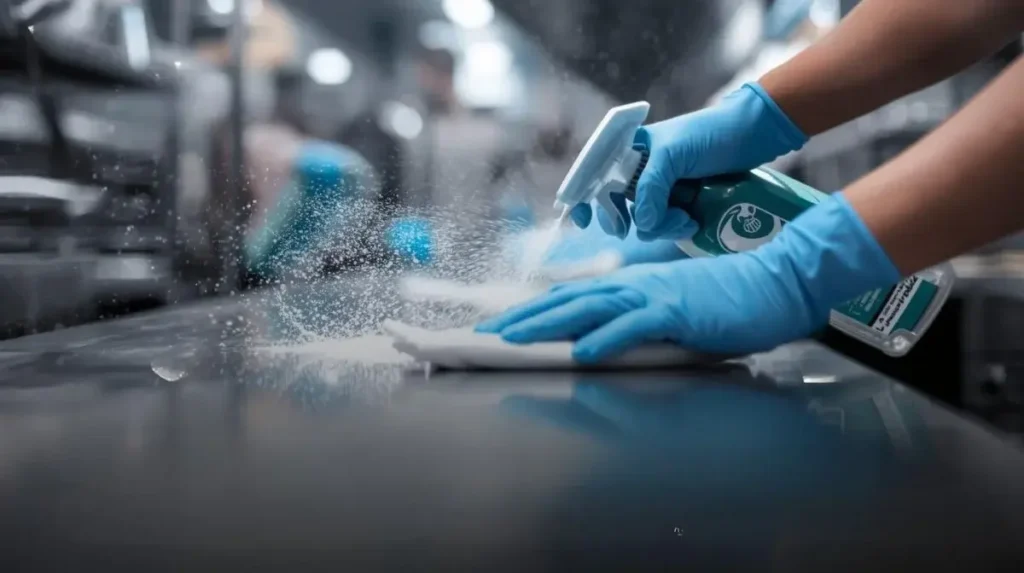
Cleaning and Sanitation Procedures
Keeping areas clean is key to controlling biological hazards. Even small amounts of residue can let bacteria grow if not cleaned up well.
Food quality management focuses on keeping good records and making sure everyone is responsible, so cleaning is never rushed or missed.
Which Agency Enforces Food Safety in a Restaurant?
Food safety enforcement is not handled by a single authority. The agency in charge of restaurant food safety varies by country, and sometimes by state or local area. Food businesses use quality management systems to meet industry standards. However, government agencies make sure these standards are followed by law.
This is how enforcement usually works:
United States
In the United States, several agencies share responsibility for food safety.
- Food and Drug Administration (FDA)
Most food products are regulated by the FDA, which promulgates safety regulations for restaurants. It issuesthe FDA Food Code, on the basis of which the rules are modified by many states and other local jurisdictions.
- United States Department of Agriculture (USDA)
The USDA oversees the regulation of meat, poultry, and some egg products. Although it typically does not inspect restaurants directly, it does keep track of the meat and poultry that restaurants buy.
- Local and State Health Departments
The local and state health departments regulate food safety regulations in restaurants. Routine inspections are also done where the inspectors give out permits, carry out investigations into complaints, and verify that the local laws do not contradict federal standards. The owners of restaurants are normally in a close association with the local health inspectors.
International Context
In countries outside the United States, food safety enforcement works differently depending on the region.
- European Food Safety Authority (EFSA)
In the European Union, the EFSA gives scientific advice and guidance on food safety. However, each member state is responsible for enforcing these rules.
- National Food Safety Authorities
In most countries, food safety agencies are responsible for inspecting restaurants and making sure rules are followed. These agencies can operate at the national level, the regional level, or sometimes both.
Food safety enforcement agencies differ depending on the country, state, or even city. Restaurants should learn the specific regulations that apply in their area. Wherever they are located, a strong internal system helps them stay prepared for inspections and comply with the rules.
When Should Staff Receive Food Safety Training?
Food safety training should happen more than once. In a strong quality management system for the food industry, training is ongoing, well-planned, and tailored to each person’s role.
Here are the key times when staff should get food safety training:
Upon Hiring
Every new employee must complete food safety training before handling food. This initial training makes sure everyone knows what is expected from day one.
Starting training early helps employees develop safe habits right away, so they do not have to correct mistakes later.
Regular Refresher Training
Food safety standards are always evolving. Rules change, procedures get better, and teams can sometimes lose track. That’s why it’s important to have regular refresher training.
In a food industry quality management system, refresher training helps keep everyone on the same page and responsible for their actions.
Role-Specific Training
Since employees have different responsibilities, training should be adjusted to fit each role.
- Supervisors and managers need a strong understanding of compliance rules, how to document processes, and what steps to take when problems come up.
- Food handlers should get clear instructions on how to prepare and store food safely, and how to prevent cross-contamination.
- Sanitation staff need to know which cleaning chemicals to use, how to disinfect properly, and how to check that everything is clean.
Food quality is managed best when training is matched to each person’s job and responsibilities.
What Is the Best Way to Prevent Poor Food Safety?
Poor food safety rarely comes from a single big mistake. More often, it happens because of small gaps, missed steps, or habits that slip over time. The best way to prevent this is to take action early. Jadian is the best quality management software to manage food safety.
Here are the key things that really matter:
Build a Strong Food Safety Culture
Everything begins with leadership. When managers and owners make safety a priority at all times, employees are more likely to follow their example.
When everyone on the team takes responsibility, food safety becomes part of our daily routine, not just another task to check off.
Implement a Robust Quality Management System
A well-organized quality management system keeps food industry operations running smoothly and consistently. Rather than depending on memory or informal habits, a QMS sets up clear steps, monitoring, and ways to fix problems.
Good food quality management makes safety part of the system, not just a matter of chance.
Conduct Routine Audits and Inspections
Regular internal audits help spot gaps before outside regulators find them. These checks let businesses review their records, watch how employees work, and fix small problems before they become serious.
Routine inspections also build accountability. It also reminds teams to follow food safety standards at all times, not only when an inspection is expected.
Invest in Ongoing Education and Technology
When food safety standards change, we need to update our training and tools, too. Regular training helps everyone stay current with best practices and new rules.
Food safety, quality, and compliance management software helps reduce mistakes in food quality management. It also gives a clearer view of what is happening during operations.
Why a QMS Is Essential for Modern Food Businesses
With tough regulations in place, food businesses must rely on a robust quality management system to stay compliant and thrive. A QMS helps bring structure, accountability, and consistency to the whole company.
The benefits go beyond just safety.
A well-run quality management system in the food industry also boosts how the business operates. Standard processes help cut waste, make work more efficient, and lower the chance of expensive errors. Teams understand their roles better, audits are easier, and decisions rely more on data. A strong QMS is key to long-term business success.
Food quality management is more than just following rules. It is about taking responsibility, building a good reputation, and staying resilient when challenges arise. A strong QMS helps food businesses protect people, work efficiently, and grow in a competitive industry.
FAQs
What is a Quality Management System (QMS) in the food industry?
A quality management system in the food industry is a set of policies, procedures, and controls that work together. It makes sure food products always meet safety, quality, and legal standards. This system helps businesses reduce risks, stay compliant, and improve gradually.
What is the purpose of a food safety management system?
The main goal is to prevent food safety hazards before they occur. A food safety management system identifies risks, sets clear rules, monitors progress, and fixes any problems to protect both customers and the business.
How does a QMS improve food safety compliance?
A QMS helps businesses keep their processes organized, track procedures, follow up on corrective actions, and prepare for audits. It also makes it simpler to meet food safety standards, both locally and internationally.
What are the key components of a food industry QMS?
The main parts usually include document control, standard operating procedures (SOPs), hazard identification and risk assessment using HACCP principles, corrective and preventive actions (CAPA), internal audits, and ongoing improvement processes.
Why is food quality management important for restaurants and food manufacturers?
Food quality management helps keep products safe and consistent, lowers the risk of contamination, reduces recalls, protects a company’s reputation, and helps businesses avoid legal or financial trouble.