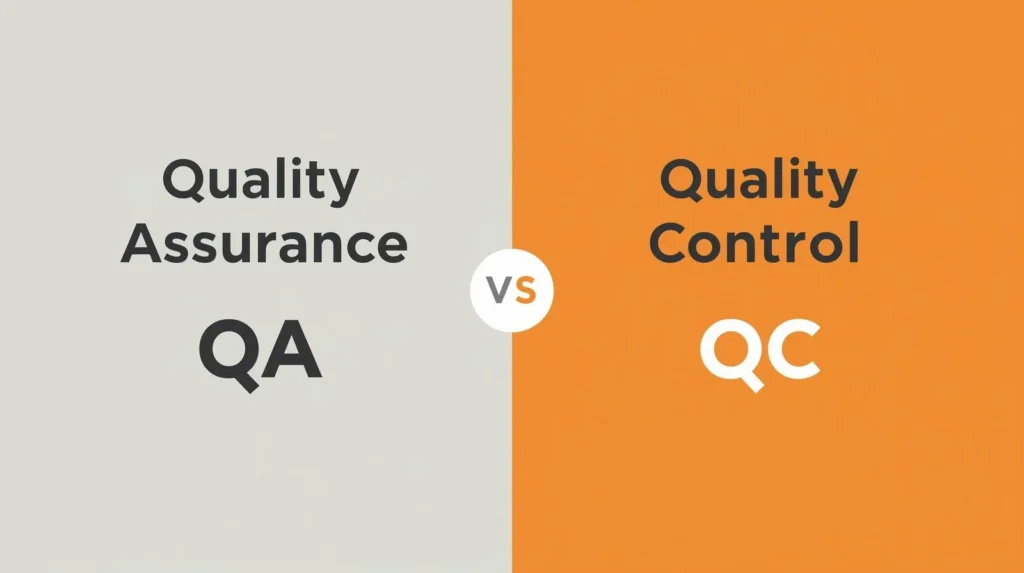
Quality assurance (QA) and quality control (QC) both focus on meeting the required standard. The key difference is simple: QA prevents problems, while QC finds and fixes problems. In construction, using both well reduces rework, delays, and disputes.
What does QA/QC mean in construction?
QA/QC meaning: QA is the system that stops defects from happening. QC is the set of checks that catch defects that still happen. Together, QA and QC protect cost, schedule, and client trust.
In construction, “quality” is not just “looks good.” It means the project matches:
- Drawings and specifications
- Codes and regulations
- Contract requirements
- Approved submittals and mockups
How do QA and QC fit into each construction phase?
Construction quality problems often happen at handoffs. That is why it helps to think about QA and QC by phase, not as one general “quality program.” In each phase, QA sets up the process so mistakes are less likely, and QC checks the work so issues are caught early. When both are mapped to the project timeline, teams spend less time arguing about responsibility and more time preventing repeats.
Pre-construction (before work starts) is where QA should be strongest. This is where you define what “acceptable” means and how information will move between the office and the site.
QA tasks here include setting quality goals, writing the quality assurance plan for construction, defining required checklists, and confirming document control rules. It is also the right time to align on submittals, mockups, tolerances, and hold points. QC still matters in pre-con, but it shows up as reviews and validations.
For example, QC-type checks include confirming submittals match the spec, verifying test requirements are listed in the ITP, and reviewing supplier certifications. When pre-con QA is weak, crews often start work with unclear standards and outdated drawings.
Procurement and material delivery are another high-risk zone. QA here focuses on preventing the wrong materials from reaching the installation. That includes approved vendor lists, submittal approvals before ordering, and clear storage and handling requirements.
QC in this phase means receiving inspections and documentation checks. Teams verify quantities, inspect for damage, confirm the right model numbers, and check that required certificates and test reports are included.
This is a practical example of quality control for field operations, because catching a mismatch at delivery is far cheaper than removing installed material later.
During installation (active construction), QA becomes about consistency. Field quality assurance shows up as pre-task planning, first-in-place approvals, toolbox talks for critical steps, and simple checklists crews can follow.
It also includes making sure RFIs are answered quickly and revisions are clearly issued to the field. QC during installation is the ongoing cycle of inspections, testing, and documenting results. Field quality control includes walkthroughs, dimensional checks, and verifying that required tests happen on schedule.
This is also when field quality control reports become valuable. If the report is consistent, it becomes easy to spot repeated defects and fix the underlying process.
Commissioning and handover are where QC activity peaks for many teams. There are more punch lists, more owner inspections, and more final testing. QC is essential here, but relying on “end-of-job QC” usually signals earlier QA gaps. QA at closeout should focus on clean documentation and repeatable proof of compliance.
That includes organizing test results, as-builts, O&M manuals, and closeout packages. It also includes making sure corrective actions are truly closed, not just cosmetically patched.
A simple takeaway is this: QA is strongest at the start of each phase, and QC is strongest during and at the end of each phase. If you build your QA/QC plan around the timeline, you reduce surprises and improve trust across the project team.
What is the difference between quality assurance vs quality control?
Quality assurance vs quality control: QA focuses on the process. QC focuses on the product. QA is proactive and planned. QC is inspection and verification.
Here is a clear comparison table:
| Aspect | Quality Assurance (QA) | Quality Control (QC) |
| Main goal | Prevent defects | Find and fix defects |
| Timing | Before and during work | During and after work |
| Focus | Planning, standards, workflows | Inspections, testing, and punch lists |
| Typical outputs | QA plan, checklists, training, audits | Inspection reports, test results, NCRs |
| Mindset | “How do we do it right?” | “Did we build it right?” |
A practical way to remember it:
- QA builds the guardrails.
- QC checks the results inside those guardrails.
Why does QA vs QC in construction matter so much?
QA vs QC in construction matters because construction has many moving parts. Teams change. Conditions change. Documents change. If quality is only checked at the end, defects become expensive.
When QA is weak, QC becomes heavier because more issues appear on-site. That usually leads to:
- Rework
- Material waste
- Schedule compression
- Friction with subcontractors
- Handover delays
A balanced approach lowers risk across the whole project.
What is construction quality assurance (QA)?
Construction quality assurance is the planning and system-building that helps teams do work correctly the first time. It is about preventing mistakes by setting clear expectations and making the process easy to follow.
Quality assurance in building construction often includes:
- Setting standards and acceptance criteria before work starts
- Confirming teams have the latest drawings and specs
- Defining hold points (when work must stop for review)
- Training teams on methods and tolerances
- Running internal audits to confirm processes are followed
QA is not only paperwork. Done well, QA is practical and field-friendly.
What does a quality assurance plan for construction include?
A quality assurance plan for construction should state how quality will be planned, communicated, and protected across the project. It should be simple enough that teams actually use it.
A solid QA plan commonly includes:
- Project quality objectives
- What “good” looks like for this job
- Roles and responsibilities
- Who approves, who checks, who documents
- Document control process
- How revisions are issued and confirmed in the field
- Submittals and approvals workflow
- How materials and methods are approved before installation
- Pre-construction and pre-install meetings
- What must be reviewed before starting key scopes
- Checklists and standard procedures
- Simple “do this every time” steps
- Training requirements
- Site orientation, method statements, safety, and quality basics
- Audit schedule
- Periodic checks to confirm that the system is being followed
If the plan is too long, it becomes shelfware. If it is too short, it becomes vague. Aim for clarity.
What is field quality assurance, and what does it look like on-site?
Field quality assurance means QA is not limited to office documents. It is applied where work happens: in the field. The goal is to prevent defects by shaping daily execution.

Common field QA practices include:
- Pre-task planning meetings that review quality risks
- Confirming crews have the current drawings on their devices
- First-install inspections (checking the first room or first section)
- Mockups and sample panels to align expectations early
- Standard checklists that match real installation steps
A simple example:
- Before waterproofing starts, field QA ensures the correct system is approved, the substrate prep method is understood, and the crew knows cure times.
That is QA doing its job before QC has to catch failures later.
What is quality control (QC) in construction?
Quality control for field operations is the inspection and testing used to confirm that completed work meets requirements. QC answers one question: Does the work match the spec right now?
Typical QC activities include:
- Site inspections and walkthroughs
- Testing (slump tests, compaction tests, weld tests)
- Dimensional checks (levels, plumbness, alignment)
- Punch lists and deficiency tracking
- Verifying corrective actions are completed
QC is where issues become visible and measurable.
What is field quality control, and who usually owns it?
Field quality control is QC done on-site while work is ongoing. It is commonly owned by:
- QC managers
- Project engineers
- Inspectors (in-house or third-party)
- Supervisors and forepersons (for self-checks)
Good field QC prevents problems from being buried behind the next trade. It keeps defects small and fixable.
What are field quality control reports, and why do they matter?
Field quality control reports are the written record of what was inspected, what passed, what failed, and what was done next. They protect the project because they create a clear trail.
A good report typically includes:
- Date, location, and scope inspected
- References (drawing numbers, spec sections, ITP checkpoints)
- Photos with notes
- Pass or fail result
- Defects found and assigned corrective actions
- Re-inspection notes and closure status
Reports matter because they help resolve disputes. They also help spot patterns, like repeated defects from the same workflow.
How do QA and QC work together in real projects?
QA and QC are most effective when they form one loop:
- QA sets the process
- Standards, checklists, approvals
- Work is performed
- Crews install based on approved methods
- QC verifies results
- Inspections and tests confirm compliance
- Feedback improves QA
- Repeated defects lead to better checklists, training, or planning
This is how teams move from “fixing problems” to “preventing problems.”
What are common examples of quality control vs quality assurance?
Quality control vs quality assurance: QA is the plan and prevention. QC is the check and correction. Here are practical examples:
Examples of QA (preventive)
- Creating an installation checklist for fire-rated wall assemblies
- Holding a pre-install meeting for curtain wall tolerances
- Using document control to prevent old drawings in the field
- Training crews on concrete finishing standards
Examples of QC (detective)
- Inspecting rebar spacing before pour
- Reviewing weld test results
- Creating a punch list after a walkthrough
- Issuing a nonconformance report (NCR) for failed work
If you only do QC, you end up paying for learning the same lesson repeatedly.
Why do teams often do more QC than QA?
Many projects rely more on QC because QC feels urgent and visible. QA can feel like “extra steps” when schedules are tight.
Common reasons QA falls behind:
- Fast mobilization with limited planning time
- Poor document control, leading to outdated info on-site
- No standard checklists across projects
- Limited training time for new crews
- Weak coordination between the field and the office
The result is predictable: QC catches issues, but too late, and rework grows.
How can you improve construction quality assurance and field quality control?
To improve quality, focus on prevention first, then strengthen checks. Small changes compound fast.
1) Start with one-page checklists per key scope
The best checklists match the way work is actually done.
- Keep them short
- Use simple language
- Include “critical points” that cause major rework
2) Use “first-in-place” approvals
Approve the first section before repeating it everywhere.
- First bathroom waterproofing
- First hotel room fit-out
- First façade bay installation
3) Improve handoffs between the field and the office
Quality failures often come from gaps in information.
- Confirm latest revisions
- Track RFIs clearly
- Make approvals easy to find
4) Standardize reports to speed up documentation
Field quality control reports should be consistent.
- Same format every day
- Photos required for key checkpoints
- Clear assignment of corrective actions
5) Treat recurring defects as process failures
If the same issue repeats, do not only fix the work. Fix the system.
- Update the QA checklist
- Add a training moment
- Add a hold point
What should you track to know if QA/QC is working?
Track indicators that show prevention is improving, not just whether the site “looks okay.”
Useful metrics include:
- Number of punch list items per area (trend over time)
- Rework hours and cost (by trade)
- NCR count and closure time
- Inspection pass rate on first attempt
- RFI response time (slow responses often trigger quality issues)
- Defects per drawing revision change (document control health)
Quality improves when teams measure the right things.
FAQs
What is the QA/QC meaning in construction?
QA/QC means the combined approach to managing quality. QA prevents defects through planning and process. QC finds defects through inspection and testing.
What is the difference between quality assurance vs quality control?
Quality assurance is proactive and process-based. Quality control is reactive and verification-based. QA defines how work should be done. QC checks if it was done correctly.
Is QA or QC more important in construction?
Both matter, but QA reduces the need for QC by preventing defects early. Strong QA lowers rework and saves time. QC remains essential to confirm compliance.
What is a quality assurance plan for construction?
A QA plan is a document that outlines how the project’s quality will be maintained. It includes roles, standards, checklists, document control, training, and steps for auditing.
What is field quality assurance?
Field quality assurance is QA applied on-site. It includes pre-task planning, first-install reviews, mockups, and checklist-based workflows that prevent mistakes.
What is field quality control?
Field quality control is checking and testing work on-site to make sure it meets the requirements. It has walkthroughs, tests, punch lists, and re-inspections in it.
What are field quality control reports?
Field quality control reports document inspections, results, photos, defects, and corrective actions. They leave a record of what happened and help stop problems from happening again.
How do QA vs QC in construction reduce rework?
Planning, training, and clear workflows are all ways that QA stops mistakes from happening, which cuts down on rework. QC cuts down on rework by finding problems early, before they get worse.