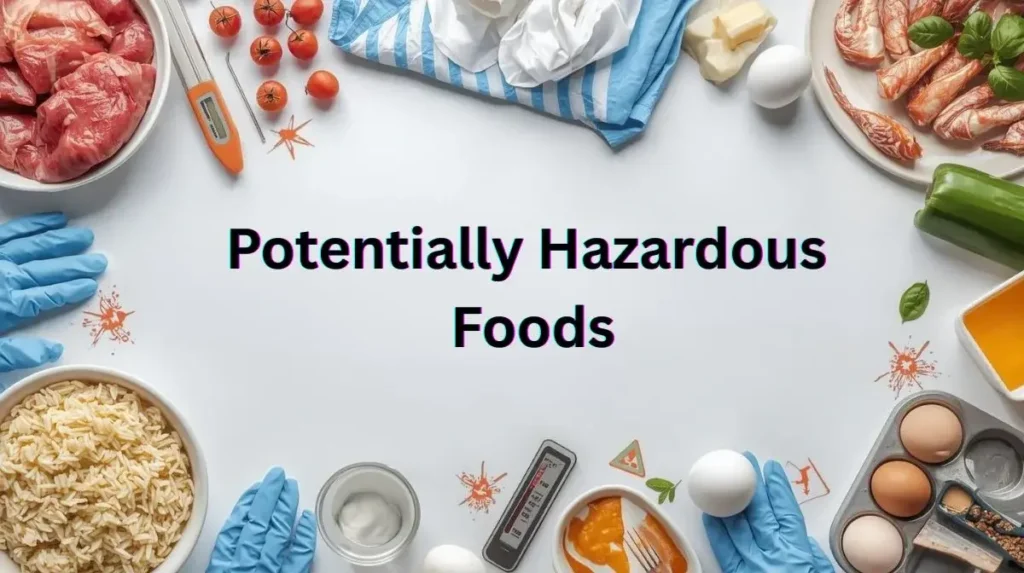
Food safety is a significant issue with potentially hazardous foods, whether in a commercial kitchen or at home. Such foods tend to encourage the rapid multiplication of harmful bacteria when they are mishandled, stored, or cooked improperly.
Learning the definition of PHF, proper storage of such foods, and temperature risk management are key to preventing foodborne infections and adhering to food safety standards.
This guide explains the meaning of PHFs, describes the types of foods that belong to this category, and provides clear, practical rules for storing and controlling temperature. Each section begins with the main takeaway, followed by elaborations you can put into practice in real-life food-handling scenarios.
What are potentially hazardous foods?
Potentially dangerous foods are those that require strict temperature control, as they favor the growth of harmful microorganisms. These foods spoil easily when stored in inappropriate environments, particularly in high temperatures.
Potentially hazardous food, sometimes abbreviated as PHFs, is foods that offer the optimum conditions that allow bacterial growth. They typically are moist, have proteins and nutrients that the bacteria require to multiply. These factors cause a high level of risk of foodborne illness when they are combined with unsafe temperatures.
In order to see the PHFs in clear terms, it is best to begin with a simple question: What is a PHF? PHF is food that needs to be kept hot or cold in order to avoid microbial growth. When stored at room temperature, these foods may appear and smell safe, but they may be unsafe.
The PHF’s meaning closely relates to food safety laws worldwide. Health officers categorize the foods as potentially dangerous based on their pH, water activity, and protein. Low-acid and high-moisture foods are particularly dangerous.
PHFs do not, per se, pose a danger. They can be dangerous only in case the time and temperature are not controlled appropriately. That is why food safety training has such a high emphasis on the process of proper storage, cooling, reheating, and holding of the food.
Typical features of potentially hazardous food are:
- High moisture content
- pH 7-8 or pH acidic.
- High in either protein or carbohydrates.
- Refrigeration or hot holding.
Knowing these traits will enable food handlers to detect the risks at an early stage and respond appropriately before food contamination.
Why are potentially dangerous foods dangerous?
Potentially dangerous foods are dangerous because they allow bacteria to grow rapidly when temperatures are not controlled. These foods can become unsafe to eat even after being exposed to unsafe temperatures, even in the short term.
Salmonella, Listeria monocytogenes, and E. coli are bacteria that are able to proliferate in warm and damp environments. The PHFs offer precisely what is required by these microorganisms. Bacteria may double every 20 minutes when food remains in the dangerous zone.
Contrary to the case of spoilage bacteria, harmful pathogens do not necessarily result in visible change. Food can be fresh, have a normal smell, taste good, and yet be dangerous. That is why PHFs are particularly dangerous since contamination is invisible.
Cross-contamination is another reason why PHFs are more dangerous. Raw PHFs include meat or poultry that may be exposed to ready-to-eat foods by contact with contaminated surfaces or utensils or due to improper storage conditions.
The chances of infection are higher in high-flow kitchens where food is commonly handled between storage, preparation, cooking, and service. PHFs may get into dangerous situations very easily without any proper procedures.
The risk factors that lead to PHF include:
- Inappropriate refrigeration temperature.
- Poor cooking or reheating.
- Slow cooling after cooking
- Long room temperature storage.
The identification of the risks is the first factor that can help in controlling the risks.
Which foods count as PHFs?
PHFs consist of foods that are moist and rich in protein and need to be kept at a specific temperature to preserve the food. They are foods that are usually stored in commercial kitchens and domestic refrigerators.
When inquiring about the foods that comprise PHF, it is a good idea to consider the preparation and the storage of the food. This category includes many things that a person encounters in their day-to-day activities, particularly the products of animal origin or cooked vegetable products.
Foods that may cause harm to people are known to be:
Animal-based PHFs
- Raw and cooked meat (beef, pork, lamb)
- Poultry such as chicken and turkey.
- Fish, crustaceans, shellfish, and seafood.
- Eggs and egg-based dishes
- Dairy products, milk, cheese, and cream.
They are rich in protein and moisture, and hence can support the growth of bacteria in case they are not stored in cold or hot conditions.
Plant-based PHFs
- Cooked rice and pasta
- Cooked vegetables
- Baked potatoes
- Tofu and soy-based products
Raw fruits and vegetables are not normally PHFs, but cooking causes a change in structure. After cooking, they can be stored in a refrigerator.
Mixed and prepared foods
- Soups and stews
- Sauces and gravies
- Casseroles
- Ready salads (egg salad, chicken salad, tuna salad)
- Cooked beans and legumes
The foods are a combination of various ingredients, which enhances moisture and nutrient access to bacteria.
Foods that may surprise you
Other foods are frequently neglected, and yet they are PHFs:
- Cut melons and tomatoes
- Sprouts
- Garlic in oil mixtures
- Cooked grains
Knowing which foods contain PHF can help avoid the mishandling of the same by mistake. In case of doubt, handle the food as something that might be dangerous and practice strict temperature control.
What are the foods that are not PHFs?
Shelf-stable foods, dry foods, acidic foods, and high sugar or salt foods are not usually PHFs. These foods are not favorable to the rapid growth of bacteria.
Not every food needs to be kept at a certain temperature. The composition of some foods prevents their growth by bacteria.
Examples of non-PHF foodstuffs include:
- Uncooked dry food such as rice, pasta, and flour.
- Baked goods, breads, no cream fillings.
- Foods that are acidic, such as pickles and vinegar-containing items.
- Jams, jellies, and honey
- Canned foods before opening
Such foods are either low in water activity or acidity that inhibits the growth of microbes. But when modified or mixed with other products, they can be PHFs.
An example is that dry pasta is not a PHF, but cooked pasta is. These differences are essential in the management of food safety.
Where must you store potentially hazardous food?
Potentially harmful food has to be kept in cold or hot temperatures to avoid the growth of bacteria. Safety requires the appropriate location of storage and temperature control.
And, therefore, where shall you keep potentially risky food? The solution lies in whether one is dealing with cold, hot, raw, or ready-to-eat food.
Cold storage requirements
Cold PHFs should be kept at -5 degrees Celsius (41 degrees Fahrenheit) or lower. Refrigeration delays bacterial growth and increases food safety.
Cold storage best practice includes:
- Insert calibrated thermometers in any refrigerator.
- Do not overload the refrigerators.
- Keep food in covered, food-grade containers.
- Label containers using preparation and use-by dates.
Raw PHFs must never be kept above ready-to-eat foods in order to avoid drips and cross-contamination.
Hot holding requirements
Hot PHFs need to be kept at 60degC (140degF) and more. This is the temperature that will not allow bacteria to multiply.
Hot holding equipment includes:
- Steam tables
- Hot holding cabinets
- Chafing dishes
Food ought to be stirred and its temperature checked periodically to maintain a uniform heat level.
Refrigerator storage levels.
An effective storage order has less cross-contamination:
- Ready-to-eat foods (top shelves)
- Seafood
- Whole cuts of beef and pork
- Ground meats
- Poultry (bottom shelf)
This order is grounded on maximum cooking temperatures and food safety hazards.
Why could potentially dangerous foods be unsafe despite proper storage?
Unsafe foods can even be kept at the right temperatures, and poor handling, time exposure, and storage behavior can make them potentially hazardous foods. The safety is determined by the consistency with which storage rules are observed, and not only by the location of the food.
Large numbers of food safety failures occur, although PHFs are technically stored at the appropriate place. The refrigeration does not ensure safety. The important thing is the flow of food in and out of storage and the duration it is kept in unsafe conditions.
Frequent temperature fluctuations are among the most widespread problems. Busy kitchens open refrigerators at all times. Every door opening admits warm air into the house, gradually lifting internal temperatures. With time, this repeated exposure can bring PHFs near the danger zone without anyone noticing.
Overcrowding is another factor that has not been taken into consideration. Cold air is unable to move when refrigerators are filled with goods too tightly. There are also products that will be colder than others, leading to uneven storage conditions. PHFs located close to doors or higher shelves can be warmer than those located in the back, which are prone to greater microbial risks.
Containers used in storage are also very important. Deep containers take a long time to cool and hold heat longer. The middle of the food can continue being warm hours later, even in refrigeration. This forms a latent hazard area within the food itself, particularly soups, stews, and bulk-cooked food.
Time is another silent risk. PHFs typically have to be taken off storage to be prepared, portioned, or served and returned. Every exposure introduces time to the danger zone. On their own, these scenes appear innocent. Together, they enhance bacterial growth to a great extent.
Naming failures is another way of aggravating the problem. Unless marked by the date, the staff members will not be able to know exactly how long the food has been stored. PHFs can also be kept refrigerated beyond safe limits, particularly during shift-to-shift or multi-team food transfers.
There is also cross-contamination in storage. Raw PHFs stored carelessly may leak onto prepared food. Bacteria may also be transmitted using common shelves, containers, or uncovered food, even in cases where temperatures are right.
These failures are significant in human behavior. When employees are in a hurry, storage policies are not strict but are regarded as being flexible. PHFs can either be omitted temporarily (just a minute) or put temporarily on counters, or omitted with no temperature checks. These loopholes are slowly undermining safety.
There are additional environmental factors that complicate matters. Storage can be compromised anytime with little or no notice of power interruptions, equipment malfunctions, and poor maintenance. PHFs could be left unattended at unsafe temperatures even as long as they are not monitored.
Finally, it is not a one-time activity to provide safe storage of potentially hazardous foods. It is a continuous practice that needs to be consistent, aware, and accountable. The best location to store the item should be perfect, yet it has to be complemented by discipline in its use, proper containers, time consciousness, and active observation.
Once storage is viewed as a system rather than a place, PHF risks can be reduced, and the risk of foodborne illness is significantly decreased.
What is the PHF danger zone?
The PHF danger zone is the range of temperature at which bacteria multiply at a very high rate. This is a range of 5 °C to 60 °C (41 °F to 140 °F).
Knowledge of the danger zone will be essential for controlling PHFs. Bacteria can be unsafe when food remains in this range for an excessively long time.
Why the danger zone matters
The majority of foodborne pathogens thrive well in warm temperatures. The more time that the food is kept in the risky area, the more the chance of a disease.
General time limits include:
- At room temperature, not more than 2 hours.
- 1 hour in the event of ambient temperature higher than 32 °C (90°F)
- Food must be disposed of after such limits.
Common danger zone mistakes
- Allow cooked food to cool at room temperature.
- Improper reheating
- Poor refrigeration during rush services.
These errors can be avoided, and this will go a long way in minimizing the food safety threat.
What can you do about controlling time and temperature on potentially hazardous types of foods in real-life operations?
The most important defense against foodborne illness of potentially hazardous foods is time and temperature control. In order to be effective, control must be conducted on a regular basis, there must be clear procedures, and prompt corrective action at all levels of food handling.
The rules are not the only thing about managing PHFs in a real-life food business context. It is concerned with putting them into practice in the world of pressure. Kitchens are fast-changing places, and even minor failures of time or temperature management can transform harmless food into a health threat.
Time-temperature control is applicable to all food flow stages. This involves receiving, storage preparation, cooking, cooling, reheating, holding, and service. There is an opportunity with each step that food passes to the danger zone, provided there are weak or ambiguous controls.
What is the significance of time-temperature control in PHFs?
PHFs are helpful to promote rapid bacterial growth under favorable conditions. Temperature is not the only risk factor. The duration of time will dictate the level of danger of temperature exposure.
Multiplication in bacteria takes the form of an exponential manner. Even a small contamination can pose a threat within a very short time in case food is kept in the danger zone. This is the reason why the food safety regulations never separate time and temperature, but instead combine them.
Key principles include:
- The more time food remains in the danger zone, the more dangerous it is.
- Even short exposures of a regular type may be hazardous.
- Bacterial growth cannot be detected by visual means.
What should PHFs be done on receipt and delivery?
Before food gets even to your kitchen, the control begins. Receiving is an important control point that is not usually taken seriously.
PHFs are to reach safe temperatures:
- PHFs at 5°C(41°F) or lower.
- PHFs are completely frozen, with no thawing.
- Hot PHFs 60°C (140°F) and higher when necessary.
Best practices in the process of receiving are:
- Immediate checking of temperatures at delivery.
- Do not eat food that is above the safe amount.
- Checking packages with leakages, damages, or contamination.
- Recording temperatures of delivery to be traced.
Eating food beyond permissible limits puts one a risk that may not be rectified in the future.
What is the impact of the preparation time on the PHF safety?
One of the most risky PHF phases is preparation. Cooked food tends to be left out of temperature control, touched by several individuals, and is subject to ambient conditions.
To reduce risk:
- Store PHFs in refrigerators until they are required.
- Cook food in little portions.
- Stored food should be transferred to cold storage as soon as prepared.
- PHFs should not be left on counters or prep tables.
Time tracking is essential. Even short preparation activities will accumulate when food is moved in and out of the refrigerator.
How effective is cooking in the management of PHF risks?
Cooking is an effective way to destroy harmful microorganisms. Nonetheless, food preparation can only be effective when the right temperatures are achieved internally.
The lowest safe cooking temperatures usually contain:
- Poultry: 74°C (165°F)
- Ground meats: 68°C (155°F)
- Entreé chunks of beef, pork, and fish: 63 °C (145°F)
A calibrated thermometer must be used to check cooking. Guesswork is not sufficient. PHFs that are not fully cooked are still dangerous regardless of the other measures that are taken.
Why is cooling one of the most frequently experienced PHF failures?
One of the major causes of food safety violations is cooling. Massive food refrigeration is sluggish, particularly with deep containers.
Inappropriate cooling prolongs the time within the danger zone of food. This establishes optimum conditions of bacterial growth.
Some of the effective cooling strategies are:
- Splitting food into small dishes.
- Cooling paddles or ice baths.
- Storing containers without closing them until the food attains safe temperatures.
- Cooling with the presence of blast chillers.
The control of cooling should not be lax.
What involves reheating without risking it?
Reheating is not one of the holding techniques. It is only meant to quickly restore the food to a safe temperature.
Key reheating rules:
- Bring PHFs back to 74 °C (165°F) in 2 hours.
- Reheat only once
- Do not combine freshly prepared food with previously prepared batches.
Delayed heating will give time to bacteria to survive to multiply. Reheating by use of equipment such as a steam table should not be done.
What is the effect of hot and cold holding on protecting PHFs in service?
Storing preserves food during the period between preparation and serving. It is the step that tends to take the most time, and consistency is essential.
It involves the following holding requirements:
- At 5degC (41°F) or lower.
- Hot holding 60 °C (140 °F) and above.
- Frequent temperature readings with intervals.
Food that exceeds these limits should be re-heated, cooled off quickly, or disposed of according to policy.
What is time as a control for public health?
Time can be utilized in place of temperature control in certain operations. This is a method that involves rigorous paperwork and discipline.
Time as a control means:
- Food becomes non-temperature-controlled.
- There is a time limit that is set to a maximum (typically 4 hours).
- Discard of food occurs when time elapses.
This approach is risky when not managed well and is only applicable in the presence of well-defined procedures and employee training.
The importance of documentation and monitoring
Time-temperature control cannot be controlled out of documentation. Records are a means of having evidence of compliance and facilitating the detection of recurring problems.
The most common monitoring tools are:
- Temperature logs
- Cooling charts
- Reheating records
- Digital monitoring systems
Regular documentation makes food safety a proactive system rather than a reactive activity.
The influence of staff behavior on the safety of PHF
The finest processes will not work without qualified personnel. One of the primary factors of the PHF-related incidents is human error.
Effective training is concerned with:
- The rationale behind why PHFs are dangerous.
- Being aware of important temperature levels.
- Identifying the time at which food should be disposed of.
- Giving employees the ability to make decisions without intimidation.
Repetitions, clarity, and accountability are some of the foundations of food safety culture.
The reason why control in the real world is of systems and not of memory
Using memory in crowded food stores is precarious. Systems bring about consistency, even when pressured.
Strong PHF control systems consist of:
- Clear SOPs
- Visual temperature guides
- Automated alerts
- Regular audits and reviews
In the case of the staff supported by systems, compliance becomes less difficult and less risky.
What is the best method of cooling PHFs?
The PHFs should be chilled so as to relocate them out of the danger zone. Slow food cooling is a chief cause of food poisoning.
Guidelines on cooling normally specify:
- Reducing the temperature from 60 °C to 21°C (140°F to 70°F) within 2 hours.
- When left to cool from 21 °C to 5 °C (70 °F to 41 °F), the cooling process took 4 hours.
The possible ways of effective cooling include:
- Shallow containers
- Ice baths
- Blast chillers
- Breaking huge batches into small portions.
Do not put large and hot containers straight into the refrigerator. This increases the internal temperatures and poses a danger to other foods.
What is the best way of reheating PHFs?
PHFs should be warmed up fast to a safe internal temperature. Proper reheating eliminates bacteria that may have developed during storage.
The generally accepted rules on reheating demand that food should be heated up to 74 °C (165°F) in 2 hours.
Safe reheating tips include:
- Reheat only once
- Stir the food to ensure even heating.
- Check the temperature with thermometers.
- Reheating should not be done by slow methods like the use of steam tables.
What is the maximum time in which potentially dangerous foods can be stored safely?
PHFs need time control as they need temperature control. Even the correctly stored foods possess safe limits.
Holding guidelines include:
- Cold holding: less than 5 °C continuously.
- Hot holding: constantly greater than 60 °C.
- Time management: rigid supervision and destruction beyond boundaries.
Holding times and monitoring procedures must be well defined in food safety plans.
Best practices on the management of possibly hazardous foods.
Regular processes minimize risks and enhance food safety performance. The practice of PHF needs discipline and training.
Key best practices include:
- Regular temperature checks
- Labeling and dating correctly.
- Training of the staff on the meaning and risks of PHFs.
- Well-defined cleaning and sanitizing guidelines.
- Good systems minimize the use of memory and hunch.
Final Thoughts on PHF Safety
Foods that may be harmful are included in our daily food preparation, and they require special precautions. Learning the topic of PHFs, the types of foods that can be classified under this category, their storage locations, and controlling risks of foodborne illness will go a long way in ensuring that the risk of foodborne illness is minimized. Well-defined processes, regular control, and training make PHF management more of a certainty than a threat to food safety.
FAQ
What is a PHF?
A PHF is a foodstuff that must be at a certain temperature to ensure that it does not become a breeding ground for bad bacteria.
Which foods are PHF?
PHFs contain meat, poultry, seafood, dairy, cooked grains, and ready food.
And where would you keep possibly dangerous food?
Keep cold PHFs at 5degC and hot PHFs at 60 °C.
What is the PHF danger zone?
The range of 5 °C to 60 °C is the danger zone because within this range, the bacteria multiply quickly.
Are cooked vegetables PHFs?
Yes, after cooking, the majority of vegetables are potentially dropped and have to be refrigerated.