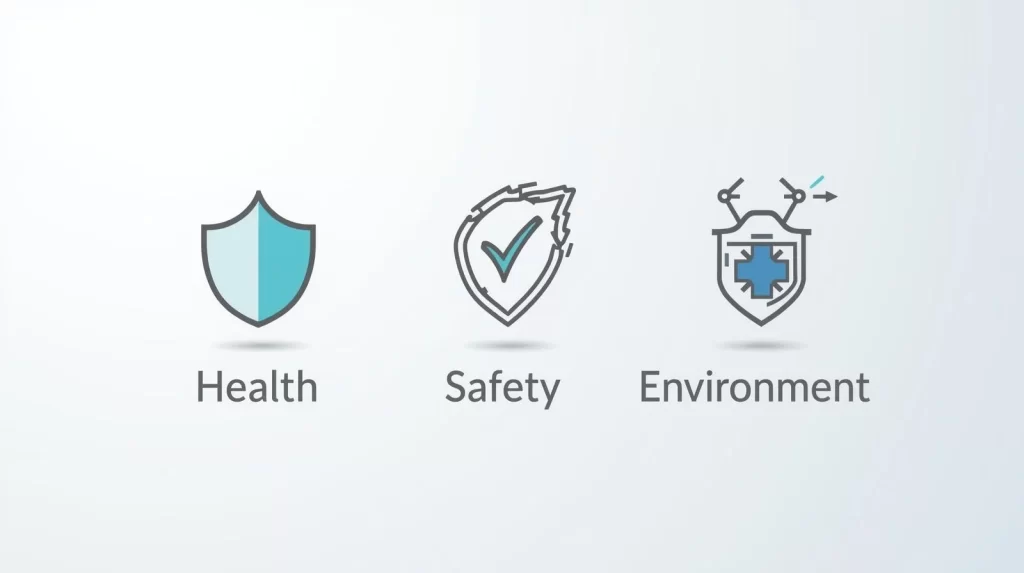
What Is HSE and Why Does It Matter?
The term (HSE) Health, Safety, and Environment is becoming increasingly valued in every modern organization. What is HSE, and why should every business leader and every team member be concerned?
HSE, the consideration of health, safety, and the environment, comprises three interconnected pillars to ensure that people remain safe, operations run efficiently, and sound principles of environmental protection are observed.
Together, they demonstrate a corporate commitment to conducting its business in a secure, ethical, and sustainable manner.
Regardless of the industry, whether it is construction, manufacturing, or corporate operations, a health, safety, and environmentally responsible workplace is more than just following regulations; it reflects a company’s values.
In this modern, data-driven world, technology plays a significant role in transforming HSE policies into measurable actions through health and safety software.
Understanding HSE Meaning in the Workplace
In a professional context, what does HSE mean? The term is used to describe an integrated framework comprising three essential elements.
- Health: the physical and mental well-being of workers.
- Safety: the avoidance of incidents and injuries.
- Environment: the decrease in the ecological footprint of the organization.
HSE management ensures that every decision considers health and safety in the workplace and the welfare of the environment. It strikes a balance in enhancing productivity without compromising safety and environmental sustainability.
The Role of HSE in Modern Business Success
Health, safety, and environment are now essentials for a business. In fact, having an effective health, safety, and environmental system is beneficial both for companies and their employees or workforces in tangible ways, as discussed below.
- Fewer accidents and disruptions.
- Better compliance and risk management.
- Increased morale and retention among staff.
- Improved public image.
- Cost savings due to reduced downtime and lower claims.
Investments in health, safety, and the environment are investments primarily in people, those who drive productivity. Employees working in a safe, healthy, and secure environment directly contribute to better business results.
What Is Health and Safety Software?
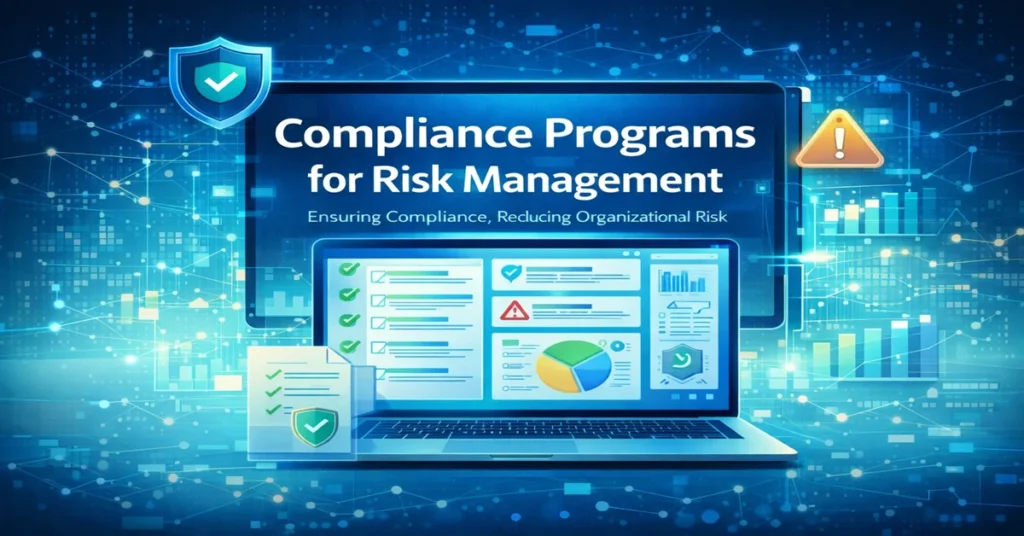
As regulations become increasingly stringent and workplaces become more complex, manual management of HSE becomes challenging; therefore, health and safety software is necessary.
So, what is health and safety software really? A digitized system where all HSE-related processes, from incident tracking to compliance monitoring, are stored centrally.
Health and Safety Software Features:
- Tracking incidents and analyzing the root cause.
- Inspections and checklists for safety.
- Management of corrective action.
- Records of training and certifications.
- Monitoring environmental aspects and sustainability metrics.
Through simplified digital workflows, this software streamlines unmanageable HSE procedures, enabling companies to continue operating with compliance, transparency, and proactivity.
How HSE Management Software Improves Oversight and Accountability
HSE management software, if well-designed, serves as a central storehouse for all safety, health, and environmental data. It means visibility, consistency, and accountability are maintained at every level of the organization.
The following are the key advantages of HSE management software.
- Complete a thorough risk assessment: Identify and prioritize dangerous conditions based on their severity.
- Automated alerts and reminders: Never allow missed deadlines for inspections and renewals.
- Performance dashboards: See trends in incidents and compliance.
- Audit ready: Store online records in preparation for easy review during a regulatory audit.
- Teamwork: Let divisions handle real-time sharing of updates and responsibilities.
HSE management software, in general, replaces reactive responses with proactive prevention, enabling top management to make the most informed decisions, as data informs these decisions.
Why Organizations Need a Health & Safety Management Solution
The legal aspect is one side of workplace safety; the other is an aspect of organizational culture toward excellence. In every industry, whether manufacturing, construction, healthcare, or technology, the safety, health and environment of people, and property are never an option.
However, when we consider the complexities of present-day workplaces, the manual control of everything becomes a significant challenge.
This is when a health & safety management solution becomes necessary, as it focuses businesses on their safety processes, accountability, and differentiation, creating a culture of awareness and prevention rather than reaction.
Instead of the hassle of handling spreadsheets, emails, and manual reports, companies can rely on a centralized system that automates all their HSE programs and simplifies every step.
Why Digital Solutions Matter in Safety Management
Nowadays, organizations are facing a fast-paced world of constant regulatory changes, diverse workforces, and expanding operations. Manual safety processes alone consume a significant amount of time and increase the risk of error and non-compliance.
Health & safety management solutions tackle these challenges by bringing structure, visibility, and efficiency to the entire safety management process. Below are ways in which such systems transform an organization’s safety management.
- Streamline workflows
- Enhance accountability
- Facilitate learning
- Provide insights
The transformation into digital enables organizations to move away from traditional compliance-driven models to ones that are proactive in terms of prevention and are invested in cultures of safety and sustainability.
What Defines an Effective HSE Software?
HSE management software is a complex task that requires a balance between user-friendliness and functionality; it must have sufficient complexity and be accessible enough to everyone within its network.
The following makes a stronger safety, health, and environmental platform.
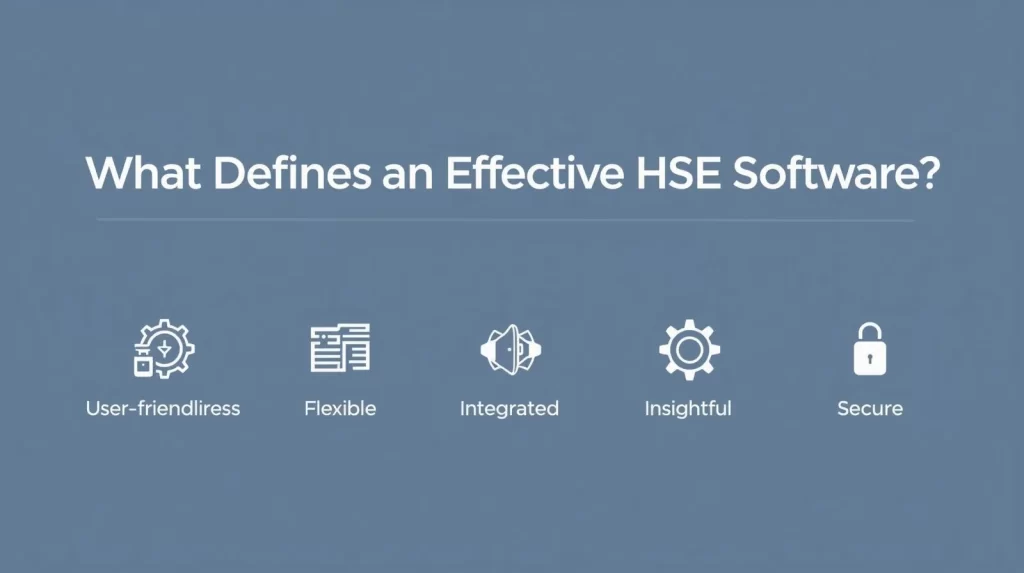
- User-friendliness: The system should be designed to allow employees, supervisors, and managers to easily navigate through the application without requiring extensive training.
- Flexible: It should adapt to varying organizational frameworks, scaling up as the company grows.
- Integrated: The system should seamlessly integrate with HR, maintenance, and operational software, allowing data to flow smoothly across departmental lines without disruption.
- Insightful: The system should have built-in analytics converting raw data into actionable insights for ongoing improvements.
- Secure: The protection of sensitive team members and environmental data should be given the highest priority.
At the end of it all, a good health, safety, and environment management system does not just digitize forms, it changes the way organizations think about risk and how decisions are made. It strengthens the culture of safety, which would be part of everyday work rather than an annual audit exercise.
Managing Health, Safety, and Environmental Compliance with Software
Compliance is the very foundation that supports any HSE strategy. For multinational or multi-site organizations, the sheer volume of local and international regulations presents a significant challenge in ensuring compliance.
Here shall come the magic touch of HSE management software. Automating compliance processes enables regulatory adherence to become a continuous process, rather than a sporadic review as it currently occurs. Here’s what you need to know:
- It monitors regulations in various regions and industries, thereby ensuring the organization’s alignment with ever-changing standards.
- Automatically keeps record of compliance activities, thus eliminating the need for manual recording.
- Sends alerts for non-conformance or overdue tasks in real-time.
- A digital audit trail keeps all action reports and approvals in one place.
It’s easier and less burdensome to meet compliance requirements when you integrate compliance into your daily work, thereby alleviating the burden of administrative duties. With this result, safety professionals can focus on creating safer workplaces and greener operations.
Digital Transformation and the Future of HSE
The future of workplace safety is digital, and it has already begun. From Internet of Things (IoT) devices to AI-driven analytics for risk assessment, there’s nothing that organizations can’t leverage to monitor and manage risks in real-time.
For example, smart sensors measuring air quality in factories, wearables determining worker fatigue, and predictive analytics warning of potential hazards before they escalate, all contribute to the changing definition of managing Health, Safety, and Environment (HSE) programs.
Foresighted rather than reactive, companies use this new technology to prevent accidents. HSE management software serves as the foundation of digital transformation, integrating all these technologies into a unified system.
Industry Applications of HSE Management
Safety and health are universal principles, but are applied uniquely in each industry. In construction projects, the primary focus is on physical safety and site inspections. At the same time, healthcare institutions place more emphasis on infection control and ergonomics.
Below is an overview that demonstrates how HSE differs across the various sectors.
| Industry | HSE Focus | Example Practice |
|---|---|---|
| Construction | Fall prevention, site safety, and environmental effects. | Proper training, job prep, and monitoring tools. |
| Manufacturing | Equipment safety, waste management, process optimization. | Proper training, job prep, and monitoring tools. |
| Energy | Hazardous waste management, emission control. | Real-time environmental monitoring systems. |
In these sectors, the fundamental truth is that it is the shared responsibility of maintaining health, safety, and a safe work environment.
Building an HSE Culture: The Human Element
Not even the most sophisticated software could have ever come close to replacing honest commitment. True HSE success begins with its people; technology provides the tools, but it is the workforce that enacts policies.
There must be open communication, where everyone is encouraged to speak up and where proactive behavior is recognized and rewarded, to foster a strong HSE culture. It really shifts safety from being a rulebook to being a value that they share. Strong collaboration in healthcare between departments plays a key role in improving safety and outcomes.
With the feelings of respect and protection by their organization, team member engagement and morale improve. In turn, makes for a safer and more engaged workforce and organization.
Common HSE Challenges and How Software Solves Them
In today’s rapidly growing industries, it is essential to understand what HSE stands for and its impact on operations. Health, safety, and environmental considerations form the basis on which employees, communities, and ecosystems are protected.
Yet, even with all the standards in place, many individuals have struggled to manage these areas. Here’s what you need to know:
- Due to the inconsistency of data collection, inaccurate risk assessments have been made by such processes.
- Manual treatment systems have sometimes resulted in missed inspection schedules.
- In most cases, back-and-forth communication between departments fails to yield a quick response.
The HSE eliminates inefficiencies by eliminating data entry, providing real-time alerts, and centralizing all HSE health, safety, and environment-related information.
Therefore, it can facilitate seamless collaboration and communication among safety and health personnel, enabling teams to have thorough transparency into all aspects of their operations.
The Cost of Ignoring HSE
Not being overly cautious with health, safety, and environmental compliance doesn’t inflict punishment on a company; on the contrary, it places people’s lives and reputation at risk. Even a single preventable accident can cause critical injuries, loss of work, and loss of future income.
However, such organizations would demonstrate themselves to be robust, accountable, and future-oriented by investing comprehensively in a health and safety management solution.
Incorporating technology and accountability into everyday operations fosters trust within a business among its employees, customers, regulators, and investors.
How to Maintain Health, Safety, and a Secure Working Environment
Ensuring and maintaining HSE excellence requires not only policies but also a system within which every team member plays a role in this aspect. Organizations can create a healthy, safe, and secure work environment through a combination of cultural and technological approaches within their organizations.
The following steps outline how to achieve a healthy, safe, and secure work environment.
- Make clear statements on HSE policies that align with company goals and adhere to the best practices of international standards.
- Encourage accountability by empowering employees to take ownership and report any issues that could impact safety.
- Utilize technology in integrated HSE management software to monitor risks and ensure transparency.
- Review and revise protocols on an ongoing basis as new hazards and regulations emerge.
- Encourage open channels of communication to foster a culture where everyone collaborates to create a safer workplace.
By providing the proper HSE software to support these steps, you transform compliance into a process of continuous improvement; safety becomes part of everyday work habits rather than just an occasional audit requirement.
Conclusion
HSE is not just a name for compliance in every industry; it stands for the obligation to protect life and preserve the environment. As businesses grow bigger and more complex, risks also increase, and with them, health, safety, and environmental compliance require innovative and connected solutions.
With automated reporting, real-time data visibility, and central management, HSE management software enhances the capabilities of teams to maintain health, safety, and the environment while ensuring efficiency and sustainability.
Jadian’s Health & Safety management solution will enable you to achieve your goals today and in the future, whether they be to increase compliance, protect your workforce, or mitigate environmental hazards.
Discover how Jadian transforms your HSE strategy into measurable success through a single, easy-to-follow use case. Contact us today to learn more!
FAQs
What does HSE stand for?
HSE stands for Health, Safety, and Environment, and serves as a framework for organizations to prioritize team member protection, prevent accidents, and demonstrate environmental responsibility.
What does HSE mean in business?
In business terms, HSE refers to the management of workplace risks and the proper maintenance of healthy, safe, and environmentally sustainable operations.
What is health and safety software?
An application program designed to automate incident reporting, manage training schedules, conduct inspections, and track compliance.
How does HSE management software support compliance?
In HSE management software, health, safety, and environmental compliance are ensured by automating documentation and monitoring regulations, while maintaining records ready for audit.
Why choose Jadian’s Health & Safety management solution?
The features of Jadian’s health and safety management solution encompass all programs and processes for safety, health, and the environment, with a focus on increasing efficiency, accountability, and long-term safety performance for the business.