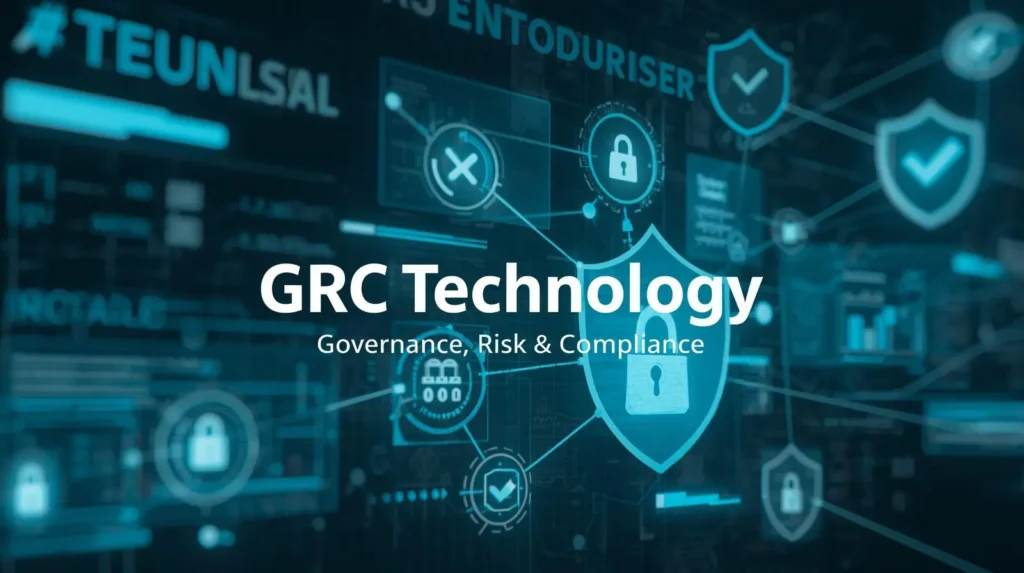
By the year 2026, risk, compliance, and governance will have ceased to be a back-office issue within organizations. They are tactical sources of confidence, strength, and development. GRC technology has become the central point of modern business operations, facilitating adaptation to uncertainty and compliance with the increasing demands of regulations.
The guide defines the term GRC technology, outlines the development of GRC technology solutions, and discusses why sophisticated GRC technologies have turned out to be a necessity for future-ready organizations.
What Is GRC Technology?
GRC technology can be described as coordinated software solutions where companies can govern risks and comply in an automated manner. GRC technology integrates policies, risks, and regulations into a single, structured system, separating them from the traditional separation of the three.
So, what is the actual definition of GRC?
Simply, GRC’s meaning is divided into three related concepts:
- Governance: How leadership creates direction, accountability, and oversight.
- Risk Management: The identification and control of threats and uncertainties.
- Compliance: The way laws, standards, and internal policies are adhered to.
The GRC technology facilitates the union of these three areas in order to make informed, traceable, and consistent decisions.
What Does GRC Technology Look Like in Practice?
The fundamental merit of the GRC technology is integration. GRC platforms consolidate information and processes rather than having spreadsheets or disconnected tools operating in silos.
Common GRC technology solutions are:
- Policy management that is centralized.
- Scoring and mitigation tracking of risks.
- Robotic quality assurance and auditing.
- Remediation procedures and incident reporting.
- Live leadership visibility dashboard.
The integration is such that when there is a change in one area, like a new regulation, associated risks, controls, and policies are automatically updated.
The difference between manual GRC and automated GRC technology
Speed, accuracy, and scalability are the largest discrepancies between manual GRC and GRC technology. Manual operations are dependent on human skills and disintegrated systems.
| Area | Manual GRC | GRC Technology |
|---|---|---|
| Risk tracking | Spreadsheets | Centralized risk engines |
| Compliance | Periodic checks | Continuous monitoring |
| Reporting | Static reports | Real-time dashboards |
| Accountability | Informal | Clearly assigned ownership |
| Scalability | Limited | Enterprise-wide |
The GRC technology is automated and minimizes human error and enhances consistency, and improves audit readiness.
Why Is GRC Technology No Longer an Option?
What it all points to is straightforward: the regulatory complexity and the risk of doing business have become faster than can be served by manual systems. GRC technology enables organizations to act on a real-time basis instead of reacting to problems that have already taken place.
Due to the proliferation of regulations and the growth in cyber threats, organizations that do not have formalized GRC technologies in place are more expensive, reputational, and disruptive with regard to operational integrity.
What is the Reason why GRC Technology is a Strategic Business Enabler?
The current GRC technology is not only concerned with compliance but also actively aids in smarter business choices. Risk and compliance data are interrelated, and hence, the leadership is given active feedback instead of reactive reports.
The GRC Technology to the Rescue of Better Decision-Making
The executives can:
- See the exposure of risk among the departments.
- Realize areas of compliance gaps immediately.
- Invest in areas where the risk is the greatest priority.
- Match strategy with regulatory realities.
This makes GRC a preventive role rather than a proactive role.
What is GRC Technology and How Does It Enhance Organizational Resilience?
Resilience is based on preparedness and visibility. GRC technology is enhanced through:
- Risks are identified early
- There is constant monitoring of controls.
- Incidents precipitate systematic reactions.
- Lessons learnt contribute to governance.
This system is closed-loop and minimizes surprises and enhances stability in the long term.
Which Industries that GRC Technologies Help the Most?
Though all the organizations are beneficiaries, adoption of GRC technology in the organization is more prominent in:
- Financial services
- Medical and bio sciences.
- Energy and utilities
- Technology and SaaS
- Supply chains and manufacturing.
Such industries have complicated regulations and significant risks in operation, and advanced technology solutions of GRC are necessary.
CRM Technologies Trends 2026
By 2026, GRC technologies will have evolved as a response to compliance needs into related proactive and intelligent platforms. It is shifting to anticipation, automation, and real-time insight.
What Is the Future of AI in GRC Technology?
The main conclusion is that AI makes it possible to provide predictive risk management instead of historical reporting. Artificial intelligence examines trends in data sets in order to determine potential risks before they become serious.
AI-driven GRC technology can:
- Foresee compliance breakdowns.
- Determine risky uncharacteristic behaviors.
- Automatically prioritize high-impact risks.
- Cut down on the manual risk assessment.
This goes a long way in enhancing efficiency and oversight.
Why is Predictive Risk Analytics a Game Changer?
Predictive analytics enable organizations to shift to what is possible to happen in the future.
Benefits include:
- Early warning indicators
- Scenario planning of strategic planning.
- More effective risk mitigation allocation.
- Fewer regulatory fines.
Advanced GRC technology solutions will use predictive risk analytics in 2026.
What Is the Future of Cybersecurity Centralization for GRC Technologies?
Hack risk has become one of the leading business issues. Cybersecurity monitoring and controls are also becoming more common in modern GRC technology.
This includes:
- Mapping of cyber threats against business risks.
- Making security controls compliance-related.
- Immediate vulnerability monitoring.
- Incident response tracking
The outcome is a single perception in regard to operational, regulatory, and cyber risk.
What Is Real-Time Compliance Monitoring?
Continuous compliance monitoring substitutes the periodical audit with real-time compliance monitoring. Regulatory alignment is now a process that is tracked by GRC technologies during its occurrence rather than in the past.
Key capabilities include:
- Automated control testing
- Ongoing gathering of evidence.
- Real-time notifications about non-compliance.
- Live audit readiness
This method will greatly minimize compliance expenses and unpleasant surprises.
The Adoption Change in Cloud-Based GRC Technology
Flexibility and scalability are turning cloud-native GRC technology solutions to be the standard.
Cloud-based platforms offer:
- Faster deployment
- Lower infrastructure costs
- New regulations keep being updated.
- Simpler connection with present systems.
By 2026, on-premise GRC systems will be seen as an exception and not the norm.
What are the essential elements of GRC Technology Solutions?
With knowledge of the elements of GRC technology, organizations can consult and implement the appropriate solutions. Every element has a particular role to play in the integrated framework.
Governance Management: What Part Does Technology Play in Leadership Oversight?
Governance modules contribute to the formulation of responsibilities, policies, as well as strategic objectives.
Common features include:
- Management of policy lifecycle.
- Board reporting tools
- Performance tracking
- Accountability mapping
This makes the governance decisions documented, measurable, and strategy aligned.
Risk Management: What is Risk Identification and Control?
GRC technology is analytical in nature and is based on risk management tools.
They typically include:
- Risk identification models.
- Prioritizing and scoring models.
- Mitigation tracking
- Residual risk reporting
Leveraged GRC technologies apply data analytics to optimize changes in risk scoring.
Compliance Management: Automation of Regulatory Compliance?
The compliance modules will render the regulations into actionable controls.
Capabilities often include:
- Regulatory mapping
- Automated control testing
- Audit management
- Evidence repositories
This minimizes the use of manpower and enhances regulatory confidence.
What Does the GRC Technology Do to ESG, Sustainability, and Ethical Governance?
The management of ESG, sustainability, and ethical governance requirements is becoming a structured, audited approach that is being implemented using GRC technology.
With increasing environmental and social regulations, organizations must have the same discipline regarding ESG as they do towards financial and operational risk.
Why ESG Became a Major GRC Technology Use Case?
The requirements of Environmental, Social, and Governance (ESG) are no longer voluntary. Investors, employees, shareholders, and other stakeholders now demand quantifiable and explainable ESG performance.
The main forces behind the ESG into GRC technologies are:
- Compulsory sustainability reporting.
- Financial risk regulation in terms of climate.
- Laws of supply chain transparency.
- Governance accountability in pressure from investors.
- Ethical and social impact reputational risks.
In the absence of GRC technology, ESG data tends to be disjointed, incongruent, and hard to substantiate.
What is ESG Risk Management by GRC Technology?
Contemporary GRC technology does not consider ESG as an independent initiative but rather a risk category. The ESG risks, like the operational or financial risks, are identified, assessed, and monitored through the same frameworks.
Examples include:
- Climate risks to operational continuity.
- Work practices associated with adherence mechanisms.
- Supplier ethics are determined using a third-party risk module.
- Board supervision is captured as governance processes.
This makes the ESG risks visible at the executive level and relates to enterprise risk management.
What Does the GRC Technology Do to Enhance ESG Reporting and Transparency?
Accuracy of reporting is one of the largest challenges of ESG. GRC technology solutions consolidate the data, controls, and evidence of ESG to make credible disclosures.
Key capabilities include:
- Framework-congruent monitoring of ESG metrics.
- Diagnostic evidence – Automated.
- Version-controlled reporting
- Audit-ready documentation
This will decrease the use of manual spreadsheets and enhance trust in the published sustainability reports.
What ESG Frameworks can be supported by GRC Technologies?
On the one hand, more sophisticated GRC technology platforms are being built to accommodate various ESG standards so that organizations do not have to put in the same amount of work.
Frameworks that are supported are:
- GRI (Global Reporting Initiative)
- SASB
- TCFD
- CSRD
- Internal sustainability indicators.
GRC technologies make compliance easier and consistent by aligning the controls with various frameworks.
What is the Strength of GRC Technology in Enhancing Ethical Governance?
The main governance functions are ethics and integrity. GRC technology assists in organizing ethical expectations and tracking compliance throughout the company.
This includes:
- Codes of conduct management
- Conflict-of-interest disclosures
- Whistleblower-reporting systems.
- Tracking investigation and remediation.
These tools can assist companies in shifting towards active cultural administration rather than responding with ethics.
Why ESG Integration is important to GRC Technology in 2026
ESG will not be on the fringes of enterprise risk discussions by 2026. Companies that do not incorporate ESG in GRC technologies will be hit by regulatory, financial, and reputational implications.
The use of GRC technology to incorporate ESG allows:
- Uniform data throughout the departments.
- Intense responsibility of ESG ownership.
- Reduced reporting risk
- Increased congruence in operations and values.
This makes GRC technology a support of responsible and future-ready organizations, as opposed to a compliance niche.
What are the GRC Technologies’ Relationships with Business Systems?
Connection with the core business systems is critical to the effectiveness of GRC technology. Isolated tools limit visibility and utilization.
Which Systems are usually combined with GRC Technology?
GRC technologies of today are used in integration with:
- ERP systems
- HR platforms
- IT service management tools
- Cybersecurity platforms
- Financial systems
Integration also makes data flow automatic and minimises duplication and errors.
Why Integration Means Data Accuracy and Trust
When systems are connected:
- Data updates in real time
- The controls are an indication of actual operations.
- Reporting becomes reliable
- The insights are relied upon by decision-makers.
This renders GRC technology a reliable organizational reality.
What are the Problems that Organizations Have in using GRC Technology?
Irrespective of the advantages, GRC technology is hard to implement without proper planned change management. Knowledge of prevailing challenges enhances success.
Why Not All GRC Implementations Work?
Failures often result from:
- Poor scope definition
- Over-customization
- Absence of executive sponsorship.
- Insufficient user training
Without organizational commitment, technology cannot be used to resolve governance problems.
What Can Organizations Do to Overcome Adoption Resistance?
Adoption is all about people and not platforms.
Best practices include:
- Effective value communication.
- Role-based training
- Executive advocacy
- Phased implementation
These measures will ensure that GRC technologies are not overlooked.
The Question is: How do Organisations select the Proper GRC Technology Solutions?
The choice of GRC technology involves harmonisation of business requirements, risk profile, and regulatory environment. It has no one-size-fits-all solution.
What Are the Important Buyer Questions to Ask?
Organizations must consider: Before selecting a platform, it must ask:
- Will it help us to comply with our regulatory needs?
- Is it scalable to the growth of the business?
- What is the strength of analytics?
- Does it fit into our systems?
- Is it an intuitive user experience?
Defined answers will prevent expensive errors.
The importance of Future-Readiness in GRC Technology Selection.
An enterprise GRC should be future-enabled and able to support:
- AI-driven analytics
- Continuous compliance
- Cyber risk integration
- Cloud scalability
Investment in flexible GRC technology solutions would guarantee long-term value.
What Will the Future of GRC Technology be like in 2026?
Outside the year 2026, GRC technologies will become more intelligent decision-support systems. The trend to automation will increase, although human control will be needed.
New trends are:
- Autonomous control testing
- Cross-enterprise risk environments.
- ESG integration
- Advanced scenario modeling
GRC technology will continue to develop in response to the complexities of the business.
Final Thoughts: Why GRC Technology Matters in 2026
GRC technology has evolved from a compliance tool into a strategic capability. Organizations that invest in modern GRC technology solutions gain resilience, visibility, and confidence in an increasingly complex world.As 2026 approaches, the question is no longer whether to adopt GRC technologies, but how quickly and effectively organizations can integrate them into everyday decision-making with Jadian’s proven GRC solutions.
Frequently Asked Questions
What does GRC technology mean simply?
GRC technology is a computer-based system that helps organizations manage governance, risk, and compliance within a single framework.
What is the meaning of GRC?
GRC implies Governance, Risk, and Compliance.
What is the significance of GRC technology solutions?
They minimize risk, enhance compliance, and aid effective decision-making.
What is the compliance value of GRC technologies?
They automate controls, track regulations, and render audit-ready reporting.
Does GRC technology only apply to large enterprises?
No. Mid-sized organizations can now enjoy scalable and cloud-based GRC technologies.
What is the role of AI in enhancing the GRC technology?
AI allows risk prediction, automation, and smarter prioritization.