
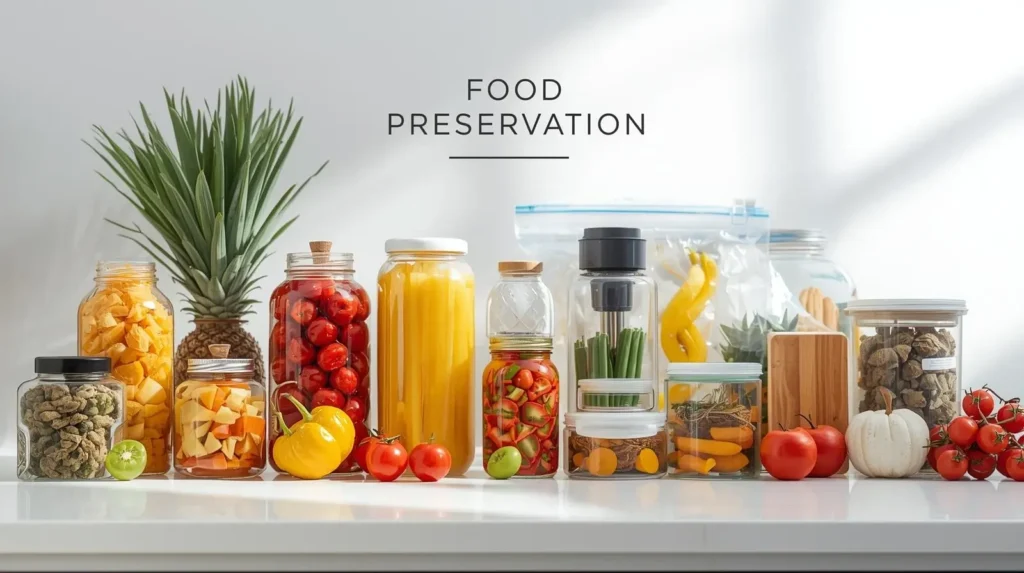
The problems of food waste, increasing grocery prices, and climate change have reminded people to reconsider the way they store and consume food. There is one easy way out. It is food preservation.
Food preservation makes food safe, fresh, and extends its shelf life. It helps reduce waste, save money, and promote environmental conservation.
This guide explains the concept of food preservation, its importance, the mechanisms involved, and the most environmentally friendly methods for preserving food safety at home.
What Is Food Preservation?
Food preservation involves delaying the spoilage of food so that it remains edible for an extended period. It shields food against bacteria and molds, as well as chemical alterations leading to food deterioration.
Simply put, food preservation allows food to be kept fresh and edible for days, months, or years.
What does food preservation entail?
Food goes bad because of:
- Microorganisms
- Air and moisture
- Heat and light
- Natural enzymes
These factors are controlled by food preservation. It involves the use of temperature, moisture, acidity, and oxygen to slow down or prevent spoilage. This enables food to be stored safely to be used later.
Why Should We Conserve Food?
Waste reduction, money savings, and safeguarding the health of the population are the benefits of food preservation. It also helps in food sustainability and security.
Without preservation, a majority of fresh food would spoil in a couple of days.
Why do we have to conserve food in modern life?
Today, people:
- Buy food in bulk
- Live far from farms
- Need food stored for weeks
- Want to reduce grocery costs
- All this is achieved through food preservation.
It also helps:
- Prevent food poisoning
- Maintain nutrition
- Have seasonal food on hand
- Reduce landfill waste
Why Does Food Preservation Matter?
Food preservation is closely tied to the importance of safety, sustainability, and food security. It assists in feeding the populace and conserving resources.
Food that is preserved helps the communities to survive shortages, calamities, and in the off-season.
So what is so great about food preservation?
Food preservation supports:
- Health: It inhibits bacterial development
- Economy: It lowers food costs
- Environment: It eliminates food waste
- Convenience: It saves time
- Nutrition: It maintains food for 24 hours a year
It also aids in the minimization of food waste and carbon emissions.
How Does Food Spoil?
Food is spoiled due to microorganisms, air, and enzymes that decompose it. This is accelerated by heat and moisture.
Food becomes unsafe and distasteful because of spoilage.
What causes food to go bad?
Food spoils because of:
- Bacteria and fungi
- Oxygen exposure
- High moisture
- Enzymatic reactions
- Warm temperatures
The causes are addressed by preservation means.
The Process of Food Preservation
The preservation of food is done by reducing or preventing the spoilage factors. It regulates temperature, humidity, acidity, and oxygen.
Each method applies a different approach.
What alters in food preservation?
Preservation methods:
- Kill or slow bacteria
- Remove moisture
- Block oxygen
- Add acidity or salt
- Lower temperatures
These measures maintain the stability and safety of food.
What are the Primary Preservation Methods of Food?
Some of the ways of preserving food include cooling, drying, fermentation, and preservation by sealing. All methods regulate spoilage differently.
There are those that are modern, and others that are traditional.
What are the most popular ways of preserving food?
Here are the major types:
| Method | How it works | Best for |
|---|---|---|
| Refrigeration | Slows bacteria | Fresh produce |
| Freezing | Stops microbes | Meat, fruits |
| Drying | Removes moisture | Herbs, fruits |
| Canning | Seals food | Vegetables |
| Fermentation | Uses good bacteria | Kimchi, yogurt |
| Pickling | Uses acid | Vegetables |
| Salting | Draws out moisture | Fish, meat |
| Smoking | Dries and flavors | Meat, fish |
Preservation of Food by Refrigeration
Refrigeration retards bacterial growth. It preserves food for days or weeks.
The simplest and most widespread way is to do it.
How to Store Food in the Refrigerator?
Follow these tips:
- Store food at 4°C or below
- Use airtight containers
- Separate raw and cooked food
- Label leftovers with dates
- Eat within safe time limits
Freezing Food: How to Preserve?
Freezing halts bacteria by reducing the temperature. It is able to store food for several months. It also preserves flavor and nutrition.
How to freeze food safely?
- Use freezer-safe containers
- Remove air before sealing
- Freeze food quickly
- Label with dates
- Do not refreeze thawed food
Storing Food Through Drying
The drying process eliminates moisture that supports the growth of bacteria. It makes the food shelf-stable. It is among the antique techniques.
How do you dry food?
Dry food by:
- Sun drying
- Oven drying
- Using a dehydrator
Drying works best for:
- Fruits
- Herbs
- Vegetables
- Meat
How Does Fermentation Preserve Food?
Protecting food involves good bacteria to ferment. These organisms produce acidic substances that inhibit the growth of pathogenic microbes.
It also improves digestion.
What foods are fermented?
Common fermented foods:
- Yogurt
- Kimchi
- Sauerkraut
- Kefir
- Kombucha
Such foods have a longer shelf life and acquire probiotics.
Pickling Fruits and Vegetables: How Does Pickling Preservation Work?
Pickling involves the use of vinegar or brine to make an acidic medium. This kills harmful bacteria.
What foods can be pickled?
Pickling works for:
- Cucumbers
- Carrots
- Onions
- Eggs
- Beets
What is Canning and How Does it Preserve Food?
Canning sterilizes foods and preserves them in air-tight jars. This ensures bacteria do not get in.
It enables foods to take years to spoil.
What foods can be canned?
- Fruits
- Vegetables
- Sauces
- Soups
- Beans
What is Eco-Friendly Food Preservation?
Environmentally friendly ways minimize waste and energy consumption. They are based on the workings of nature. They also avoid plastic.
Which are the most sustainable approaches?
Environmentally friendly practices are:
- Fermentation
- Drying
- Pickling
- Root cellaring
- Canning in glass jars
There is minimal waste and use of electricity in these methods.
How to Store Food Without Plastic?
Plastic can be substituted with glass, metal, and cloth. They are safer and reusable.
Which storage would be free of plastic?
- Glass jars
- Stainless steel containers
- Beeswax wraps
- Cloth produce bags
- Ceramic containers
How Long Can Preserved Food Last?
Preservation of food can take anywhere from days to years, depending on the process.
Storage conditions matter.
Shelf life by method
| Method | Shelf life |
|---|---|
| Refrigeration | 3 to 14 days |
| Freezing | 6 to 12 months |
| Drying | 6 to 12 months |
| Canning | 1 to 5 years |
| Pickling | 6 months |
| Fermentation | Weeks to months |
What Are Some of the Food Preservation Errors?
A lot of individuals ruin food by not storing it properly. Foods such as preserved ones rot.
What are some of the mistakes you can make?
- Using dirty containers
- Not labeling food
- Storing food too warm
- Mixing raw and cooked food
- Ignoring expiration dates
Storing Preserved Food Safely
Preserved food can be stored safely to avoid contamination.
Of importance is temperature and hygiene.
Safe storage tips
- Keep dry foods in cool places
- Store jars in the dark
- Use clean utensils
- Check for mold
- Discard spoiled items
What Is the Role of Food Preservation in Reducing Food Waste?
Preservation includes prolonging the life of food. This prevents the wastage of food.
It also saves money.
How is this beneficial to the planet?
Landfills produce methane as a result of food waste. Preserving food:
- Lowers emissions
- Saves water
- Reduces farming waste
- Protects natural resources
Introduction to Home Food Preservation
No special equipment is required. You can start small.
Beginner steps
- Choose one method
- Use fresh food
- Follow a tested recipe
- Store properly
- Track dates
How Does Food Preservation Protect Nutrition and Flavor?
When it is properly carried out, food preservation can be used to preserve both nutrition and flavor. It is believed that preserved food is less healthy, which is not always the case.
By preserving food at the optimum level of freshness, food is likely to retain more nutrients compared to food that spends days in its fresh state.
The fresh produce is deprived of vitamins once it is picked. It is possible that within a couple of days stored in the fridge, leafy greens may lose more than half of their vitamin C. Immediately freezing or drying them preserves their nutritional value.
Various preservation techniques have dissimilar influences on nutrients:
- Low temperatures preserve most vitamins in freezing because chemical degradation is inhibited at low temperatures.
- Drying eliminates water, but not minerals and fiber.
- Probiotics may be formed during fermentation, and vitamins B and K can be raised.
- Canning involves the use of heat that may destroy some of the vitamins, but makes the minerals easier to absorb.
Preservation is also a form of protection of flavor. Dried fruits are sweeter when they are at the point of optimum ripeness. Seated vegetables are especially fresher than store produce that takes days to reach the store. Fermented foods are rich in deep flavors and are not possible through any other method.
Preservation of food does not imply that food should be made inferior. It is concerned with preserving food at its prime to be used in the future.
What Is the Benefit of Food Preservation and Food Security?
Preservation of food enables food to be made available whenever it is most necessary. That is why it has been utilized by all the civilizations in history.
Food security refers to the availability of adequate and safe food that is nutritious. This is largely facilitated by preservation.
Fresh food is only accessible in season in many parts. Without the conservation, individuals would end up starving in winter or during dry seasons. Foods that are preserved, like dried grains, pickles, and canned fruits, can enable the family to consume food even when the crops are not at harvest.
Emergency preparedness is also supported by food preservation. In case of natural disasters, power cuts, or supply chain issues, the preserved food will ensure that people remain fed in case fresh food is not available.
At the international level, preservation helps to minimize food loss during transportation. Perishable goods may go bad on their way to stores. Canned food can last longer on trips and reach a greater population.
Preservation helps alleviate starvation, enhance stability, and assist societies by increasing the shelf life of food.
How Can Food Preservation Save Money at Home?
Preservation of food assists families in increasing their food supply. It avoids wastage and enables individuals to shop in large volumes.
By preserving food, you waste less and get more value for what you purchase.
You can:
- Freeze leftovers
- Dry herbs before they spoil
- Can surplus vegetables
- Pickle extra produce
These are the simple steps that change what they would have wasted on meals of tomorrow.
It is also cheaper to purchase food when it is in season. When in large supply, strawberries, tomatoes, and vegetables are cheaper. Maintaining them gives you the privilege to enjoy low prices all year round.
Impulse spending is also minimized by preserved food. As soon as you have meals prepared in your freezer or your pantry, you order less take-out and purchase fewer groceries.
Long-term food preservation can save hundreds or thousands of dollars annually.
What Is the Relationship Between Food Preservation and Sustainability?
Environmental damage is minimized through food preservation, which minimizes the amount of food waste. Reducing the amount of waste and the amount of resources used is achieved.
By wasting food, the same water, fuel, land, and labor that were involved in producing food are wasted.
Preserving food:
- Reduces landfill waste
- Lowers methane emissions
- Saves water
- Decreases farming pressure
- Reduces packaging waste
Single-use plastics are also avoided by using eco-friendly preservation techniques, such as drying, fermentation, and using glass jars.
Preservation preserves the planet by ensuring that food is used longer.
What Are the Best Preserved Foods?
A wide variety of foods can be preserved. Others prefer some methods better.
Here are examples:
| Food Type | Best Preservation Method |
|---|---|
| Fruits | Freezing, drying, canning |
| Vegetables | Freezing, pickling, fermenting |
| Meat | Freezing, drying, smoking |
| Fish | Freezing, smoking |
| Herbs | Drying |
| Dairy | Fermenting |
| Grains | Dry storage |
The appropriate approach enhances safety and quality.
How to Choose the Right Food Preservation Method
The most appropriate technique would be based on the type of food and the duration of storage.
Ask yourself:
- How much time am I supposed to keep this?
- Do I have freezer space?
- Do I want shelf-stable food?
- Am I avoiding electricity?
Under short storage time, refrigeration is effective.
In the case of long-term storage, it is preferable to freeze, dry, or can.
What Is the Relationship between Food Preservation and Food Safety?
Food preservation makes food safe by inhibiting or retarding the growth of unfriendly bacteria. This eliminates food poisoning and severe illness.
It is believed that fresh food is always safer. However, in the real world, improperly preserved food can turn out to be unsafe within a short duration of time. Meat, dairy, and cooked grains, as well as cut fruits, grow bacteria rapidly. Conservation strategies regulate the environments, favouring the growth of these microbes.
One of the most effective safety tools is cold temperatures. Bacterial growth is slowed down almost to zero by refrigeration and freezing. This helps people to have additional time to consume food safety before it goes bad. Freezing is particularly a good method since it virtually eliminates microbial activity.
Another significant safety technique is drying. Bacteria cannot live without moisture. Microbes do not grow when the water is removed from the food. This is the reason why we can keep the dried fruits, jerky, and herbs for many months without them spoiling.
Fermentation preserves the food by stimulating good bacteria. Such useful microbes generate acids that destroy harmful organisms. Food items such as yogurt, kimchi, and sauerkraut are safer after some time, as the bad bacteria cannot live in an acidic environment.
Pickling is also used to enhance food safety by placing vinegar or salt brine. This renders a habitat in which harmful microorganisms are unable to survive. Pickled vegetables are safe even when the temperature is at room temperature ,provided they are well sealed.
One of the highest food safety conditions is canning. The food is cooked in order to kill bacteria, and then it is covered with an airtight container. This will block the entry of new microbes. Properly canned foods have a shelf life of years.
Cross-contamination is also avoided by food preservation. The food is stored in closed containers, which ensure that it is out of reach of germs, insects, and airborne bacteria. This is particularly significant in hot climates where food decays quickly.
Safe food handling is also supported by the preservation of food. Marked, dated, and closed containers allow a person to trace the time of food preparation and the storage duration.
Food safety is even more significant in houses where children are elderly or individuals with a compromised immune system. The risk of severe foodborne illness in these susceptible populations is minimized by preservation techniques.
Preservation of food ensures that the food is safe and nutritious. This renders food preservation one of the most effective instruments for ensuring health security.
What Can Be Done to Make Food Preservation a Daily Life?
Preservation of food does not require it to be complex. It can be incorporated into everyday practices.
Start by:
- Freezing leftovers
- Storing cut vegetables
- Drying herbs
- Pickling extra produce
Gradually, these small habits will lead to reduced waste and increased meal efficiency.
Frequently Asked Questions of Food Preservation
What is food preservation?
Food preservation refers to the act of ensuring food is kept safe and longer.
Why is food something we need to save?
Our food is stored to minimize wastage, to save, and to avoid food poisoning.
Why is food preservation so important?
It promotes food security, health, and sustainability.
What are the most effective ways of preserving food?
The most effective ones are freezing, drying, fermenting, and canning.
What is the natural way of preserving food?
Apply drying, fermentation, and pickling.
Is food preservation safe?
Yes, with clean tools and proper storage.
Is there a loss in nutrition of preserved food?
Certain processes decrease the nutrients, whereas the majority of vitamins are retained by a variety of techniques.
What is the shelf life of preserved food?
The period may take weeks to several years based on the approach.
Is it possible to keep food without electricity?
Yes, dry, fermented, pickled, and root cellar.
How can food be most environmentally friendly when preserved?
The most sustainable is fermentation, drying, and glass jar canning.