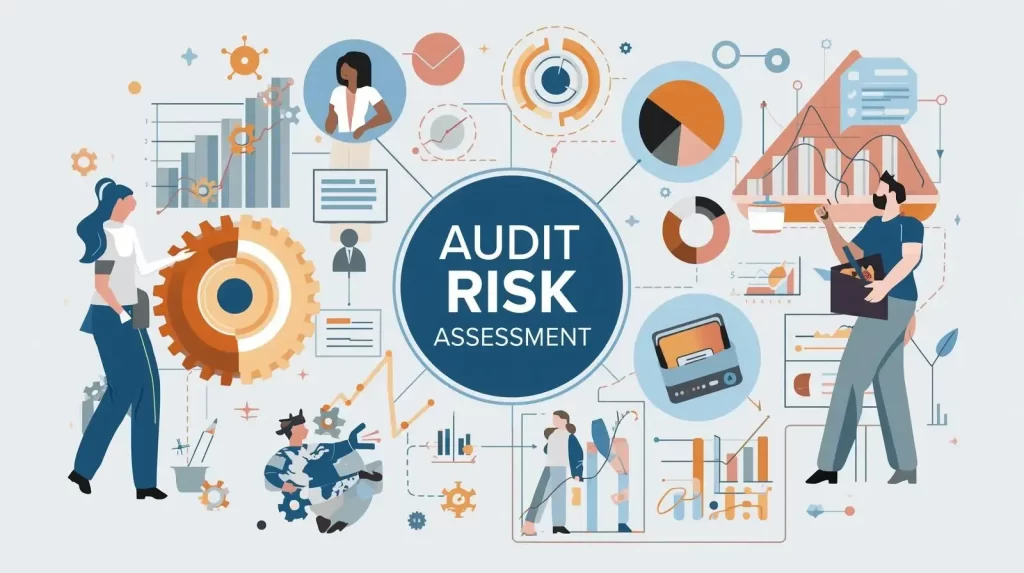
The concept of auditing is both critical and complex. Auditors have a huge and critical task in ensuring the accuracy and reliability of the financial statements they produce and making their company able and trustworthy.
Mastering auditing and assessing its risk not only encompasses safeguarding a business’s reputation, but it also supports its financial integrity.
In this blog, we will discuss the audit risk assessment and its intricacies. From processes and best practices, providing auditors with a helpful guide to making sound financial statements that stakeholders can rely on.
Why Audit Risk Assessment is Crucial for Effective Audits
An audit risk model is the foundation of every successful auditing process. It’s an internal audit checklist that auditors consider their bible for every financial statement they make.
These models adhere to various accounting frameworks, including SOC 2, HIPAA, and ISO 27001, assisting auditors in internalizing and responding to potential threats that could compromise the overall effectiveness of the auditing process.
Every risk assessment phase lets auditors pinpoint their mistakes that can skew the reliability of the statements made.
The pressing goal of every audit risk assessment is to identify, evaluate, and assess every risk and issue in the financial statements so that proper monitoring and control mitigation is done.
An audit risk model combines three critical components: inherent risk, control risk, and detection risk.
Inherent Risk
Inherent Risk refers to the inherent vulnerability of financial statements to the risk of misstatement, which occurs regardless of any existing internal control.
This risk arises from the type of business, industry, or geographical location a business is in.
Whether the business provides services or sells goods, the transactions it conducts within the industry and other external factors, such as industry regulations, all contribute to this risk.
Control Risk
Coming from its name, a control risk originates from the lack of a company’s internal control auditing system.
This can lead to misstatements that were not detected on a timely basis, and not being able to prevent financial errors or fraud along the way.
Manual auditing processes are likely more prone to this risk. In modern accounting times, auditing process software offers more control.
Detection Risk
The failure of early financial misstatement detection through the entirety of the auditing process is the origin of this risk.
This risk discusses the procedures an auditor uses that cannot be detected and could become material.
It is essential to understand that it is crucial to learn about these risks, as they directly influence the flow of planning, allocating, and the credibility of the produced audit reports of a business.
Many older auditing processes frequently encounter these risks due to their reliance on manual methods.
However, with modern auditing increasingly shaped by AI and other automation tools, human error is reduced, enhancing efficiency and lessening auditing risks.
Audit management software is now entering the accounting market, giving a platform to predictive analytics in auditing processes and flagging anomalies in real time.
What is Audit Risk? A Deep Dive into Its Components
A financial audit risk is the potential that an auditor misstates a company’s financial reports as credible when, in reality, mistakes exist.
These unreliable conclusions affect the trust of stakeholders, such as investors and business creditors, in the core of a company.
These fault detection and control faults occur when errors are reflected on financial reports but are not caught or presented during an audit assessment.
The common formula of an audit risk is usually expressed as
We have identified the three categories of risks that arise during the auditing process.
These risks represent the areas overlooked where material misstatements or other errors go unnoticed.
To further understand how these risks affect an auditing process, here are some real-life examples:
Inherent Risk Examples
Countries prone to devastating geographical and weather events, such as hurricanes or typhoons, are likely exposed to inherent risks.
When an auditing center is located in a place prone to typhoons, disaster might strike anytime, and the disruption these events cause poses a significant risk for the auditing process.
Control Risk Examples
Companies or businesses that do not have an established hierarchy of roles are more prone to fraud.
This poor separation of responsibilities for important financial tasks, such as payroll processing, can expose and reveal problems in auditing.
Detection Risk Examples
Given the inherent nature of detection risks, when an auditor relies solely on sampling, this can lead to potential misstatements in financial statements.
Overlooking accounting rules just to pass an auditing process and making a business appear financially viable can also be considered a detection risk.
These examples provide and illustrate the whole picture of how each of these risks can manifest and affect the internal audit planning process and the whole assessment.
Audit Risk Models: How to Assess and Mitigate Risk in Audits
Auditors use the Audit Risk Model (ARM) as a practical framework used by external auditors to quantify risk exposure.
ARM’s categorization helps in evaluating the three types of risk found in an auditing process: inherent, control, and detection.
By using this model for analysis, auditors can tailor-fit solutions or strategies that can help in mitigating risks in auditing.
Accounting and auditing companies now have access to various automation tools that help them provide smarter solutions than a human brain could comprehend.
This advancement in technology, especially when it comes to auditing, provides a way to make the process more accurate than before.
Here’s how AI and machine learning are transforming auditing models:
- Automatic Misstatement Detection: With the use of automated tools, anomaly detection can be easily programmed in a financial statement.
- Pattern Prediction: The use of automated audit risk models provides auditors with predictions of high-risk areas they need to focus on based on historical data.
- Enhancing Operation and Precision: Accuracy in fraud detection is achievable with the use of AI and predictive machines through continuous monitoring.
Step-by-Step Guide to the Audit Risk Assessment Process
A strong audit risk assessment is consistent and reliable.
During the risk assessment process, auditors determine how risks found can negatively impact the financial statements of a business.
The assessment process involves the analysis of financial data, external influences, and the overall operation process, where there are potential risks.
To conduct a successful audit risk assessment, the following steps should be taken:
- Preliminary Risk Identification
- An audit should meet its objectives and scope, ensuring that everyone understands its purpose. The identification of industry-specific risks is a must.
- Prior audit findings can become a basis for assessments. There should be a review of prior audit findings for comparison.
- Thorough Audit Analysis
- After examining prior patterns of audit risks, regulatory requirements, and inventories, verify if the given information exists.
- Understand the nature of each risk given and its weight to know what needs to be done and how to go about it.
- Performance Observation
- Based on the examination of the risks and other externalities that can negatively affect an audit, determine if the risk mitigation procedures are being followed.
- After judging if they are being followed, assess their effectiveness in reducing the harmful aspects present in the audit.
- Final Reporting and Inquiry
- Document the repeated patterns and findings present in the audit. This is useful and can be used as a reference for future audit risk assessments.
- Obtaining useful information from important persons involved in the business being audited. This can be considered as additional information for recommendations for future audit risk mitigation.
Auditors implement control risk auditing and risk assessment procedures to strengthen the reliability of the audit, validating the financial dependability of the business.
Audit Planning and Risk Assessment: Aligning Strategy with Risk Levels
The audit planning aligns a business’s auditing objectives and the risks they face by focusing audit resources on the areas of the business where they pose a major threat.
In understanding and ensuring that the audit function is reliable and a strategic financial partner of a business, here is the process to ensure compliance for both:
Comprehending Auditing Objectives and Risks
To reconcile objectives and risks, first understand the audited business’s core mission and goals and the risks that could hinder them.
This phase of the process entails engaging with individuals who possess extensive knowledge of the business.
Senior managers are typically the best individuals to discuss potential threats, as they have a deep understanding of the business.
Building a Risk-Based “Audit Universe”
An “audit universe” refers to guidelines for auditable areas, processes, and projects that are built or updated to show the business’s strategic goals and its associated risks.
This part of the realignment phase ensures that the audit plan safeguards the areas where the company’s success matters the most.
Give Emphasis on High-Risk Auditing Areas
Auditing risks are assessed based on their prospective impact and the probability that they might occur again in the next audit.
The audit plan is then reorganized to allocate more time and attention to these problematic areas.
For example, if a business recognizes technological advancement as its key business strategy, audits will heavily focus on cybersecurity and IT management risks.
Improve and Tailor Existing Auditing Procedures
Every audit strategy benchmarks a high-level and detailed audit plan, comprising specific procedures, timelines, and other resources.
There are existing auditing procedures that you can customize, based on the hierarchy of risk levels.
Usually, higher-risk areas may require it. Despite their potential negative consequences, resolving them is straightforward.
Continuous Alert Monitoring
A business’s financial environment is an ever-changing one, so audits are not a one-time-only event.
Auditors have the enormous responsibility to continuously be on alert and monitor the rapid changes in the risk landscape.
As an auditor, you can use auditing tools such as auditing data analytics and auditing software that can help in adjusting an audit plan in the case of emerging risks or in achieving business goals.
Communicate the Importance of An Audit Risk Plan
A crucial step in aligning risk with strategy is the constant communication on how an auditing plan supports a business’s goals and helps in navigating hazards.
This phase assures the stakeholders, which includes the senior management, that they fully understand the value of an audit function apart from compliance.
Create a Risk Register and Management Dashboard
After a risk assessment, you will want a way to fully picture the financial data you have produced.
This is the job of the risk register, where the information created in the risk assessment can be fully described, with the following details:
- Detailed descriptions of each risk are found.
- How often does this risk occur?
- The potential impact on the business if the risk occurs.
- A summary of the proposed risk mitigation plan, as well as when they will be remedied.
Once all risks are documented, a risk management plan is crucial to raise awareness of the findings of the assessment.
A risk management dashboard includes risk trend charts that display changes over time and a risk portfolio chart that compares various risks to illustrate their impact on a business.
Meet with Seniors
Always consider what business leaders and those who take on senior roles have to say.
In the internal audit planning process, these people review ongoing risks and the new ones, too. They approve the key controls or determine if mitigation plans actually have an impact on the business.
Be sure that the stakeholder approves of all the plans, as they are experts in the company’s auditing process, making completing an audit quick and precise.
By accepting a strategy that aligns with the risk approach, the audit function goes beyond mere compliance.
It’s a move to financially put a business out there and secure its value in the market, enabling it to achieve its long-term objectives.
Best Practices for Audit Risk Management
An effective audit risk analysis follows established risk assessment best practices that transform routine compliance into useful tools that strengthen the financial auditing of your business.
Perform a Pre-Audit Checklist
Before starting any auditing work, run through the following checklist questions:
- Is this audit relevant to any part of an approved audit plan?
- What business risk does this audit work address?
- What does the audit schedule look like?
- Are tasks delegated properly between team members?
- What auditing controls were made for the previous audit? What was the outcome?
- Are any nonconformities remediated? If so, what were the actions taken?
- Are there any policies, regulations, and frameworks that need to be involved in the audit process? Do they need to be reviewed?
Thoroughly Examine Risks
Review the current risks at hand with the ones identified. Make sure the scope of your audit plan clearly includes the predetermined risks.
Thereafter, categorize them using written procedures or regulations in scope for review. List all activities, materials, functions, and controls that will be verified and reviewed.
An assessment plan should be reviewed alongside a senior leader to obtain buy-in and ensure that all people needed to perform an assessment can participate.
Specify Auditing Borders or Threshold Levels
It’s important to define the severity of areas of concern in the auditing plan. In the internal audit planning process, we can categorize the levels of impact of the risks defined.
Low Severity Audit Risk
These risks are minor and pose only a minimal threat to the overall audit procedure. Remedies for these risks are often minor, such as improvements to stated materials.
An example of this includes minor control monitoring risks or other isolated cases that affect the audit procedure.
High Severity Audit Risk
These findings, as opposed to low-severity ones, have a significant impact and need immediate attention. But while they can have detrimental effects, they are easily resolved.
These high-severity findings, for instance, can reveal a business’s non-compliance with internal operational requirements through a specific process.
Critical Severity Audit Risk
These risks are the most threatening problems, which signal that they are an immediate and significant problem to the business.
Examples of these are internal issues that can cause substantial financial loss to the business or violations of regulations or laws, such as non-tax compliance.
Craft a Concrete Audit Objective and Schedule
Define an auditing schedule and clear objectives based on the expected outcomes from the pre-audit checklist.
A summary of activities that will happen each day of the process is needed, along with the people assigned for each task, to ensure that roles are set properly.
The Role of AI and Automation in Modern Audit Risk Assessment
There is no doubt that AI and automation tools are leading and revolutionizing the world of audit risk assessment and planning.
Here are the ways they can modernize and make audit risk analysis easier and precise:
- Reducing Detection Risk: With the help of tools, like auditing software, that can help in frequent monitoring of data, the once rigorous work can now be easier with a reduced chance of an error being missed.
- Automated Financial Reporting: Audit planning and risk assessments are made with enhanced efficiency with the help of AI, which analyzes data from previous assessments and produces reports that show reliable results.
- Accuracy of Data: With the use of AI predictive analytics, data produced can improve in terms of accuracy, making audit reporting reliable for each and every stakeholder of a business.
The best audit management software now integrates the use of AI and other automation tools to spot inconsistencies in everyday business transactions and strengthen vendor risk management audits.
Real-World Examples of Audit Risk in Business Audits
If you’re not well-versed in financial transactions and jargon, it may not occur to you how important risk management audits are in businesses.
Here are some real-life business scenarios where this can manifest:
- Financial Audits: Normal banks almost always encounter high inherent risks due to the differing complexities of loan portfolios. There are different environments to consider, which can affect business audits.
- IT Business Audits: Cybersecurity threats can increase the presence of control risk, especially in technology-focused firms.
- Small-Medium Enterprises: A combination of inherent and control risks can be present in SMEs. With these types of businesses still in their birth pains, risks are inevitable. The use of internal audit checklists can help in managing compliance.
How Vendor Risk Management Fits Within Audit Risk Framework
Vendor risk management audits are crucial in the business environment we have today.
There can be third-party audit risks that can open businesses, especially small and micro ones, to compliance setbacks, possible fraud, or operational failures.
To reduce risks, auditors must always:
- Assess Vendor Contracts: Look into dates and other important information that can possibly affect future audit processes.
- Evaluate Vendor Compliance: Research and verify certifications of vendors that your businesses transact with, as this can become a potential business risk.
- Integration of Vendor Risk Assessment: Combine the assessment of vendors into the overall audit risk management of your business.
Challenges in Audit Risk Assessment and How to Overcome Them
The process of audit risk assessment can face setbacks, too. It can be within the auditing team or other factors that, as an auditor, you cannot control.
Here are some common audit risk planning challenges and the ways they can be solved:
- Lack of Data: This can be controlled with the help of automated tools in collecting financial data of the business.
- Biased Evaluation: Internal auditing can come with subjective opinions about the business that can affect the assessment. Standardized risk models can help solve this issue.
- Internal Miscommunication: As an auditor, there can be collaboration with business partners that can become unclear without proper documentation. A clear audit support, along with client collaboration, can solve this problem.
The use of audit management software can address these problems by streamlining communication and automating every workflow.
The Future of Audit Risk Assessment: Trends and Innovations
Some of the emerging audit risk assessment technology trends include:
- The Use of Predictive Analytics: This can help in anticipating risks before they happen.
- Automated Risk Assessment: With the help of automated tools, the monitoring of every audit and every financial transaction can be seen in real-time.
- AI-powered Technology: Integrating AI into every auditing framework process can improve fraud detection and other compliance audits.
The future of auditing will soon rely mostly on automation and AI-powered insights that will help in making risk management more forward-thinking.
Conclusion
Audit risk assessment is the backbone of every successful audit of a business, organization, or company.
When we leverage the use of existing models, processes, and best practices, partnered with emerging AI and automated tools, auditors are sure to provide audits that are accurate, compliant, and trustworthy.
Frequently Asked Questions
What is audit risk?
An audit risk is the chance that auditors will produce an incorrect judgment due to misstatements that are undetected.
How does the use of AI improve audit risk assessment?
The use of AI can accelerate the process of auditing while improving accuracy, reducing detection risk, and using predictive risk identification.
Why is vendor risk management important in audits?
Vendors can introduce compliance and operational risks, making it necessary for audit management.
How are audit risks classified?
Audit risks are classified into three main components: inherent, control, and detection.
What futuristic tools help in audit risk management?
Audit management software integrates the use of AI, predictive analytics, and automated tools in planning, risk assessment, and reporting.