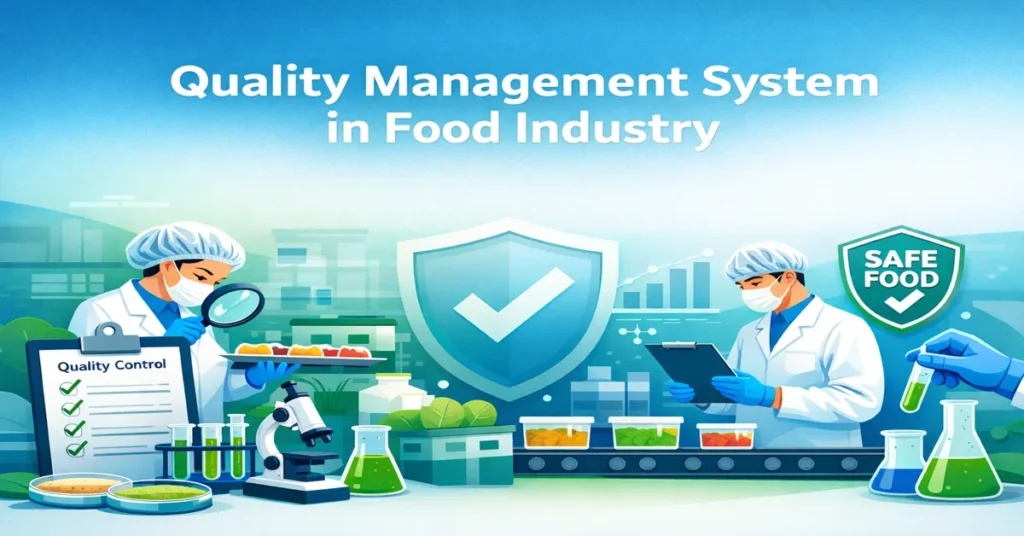
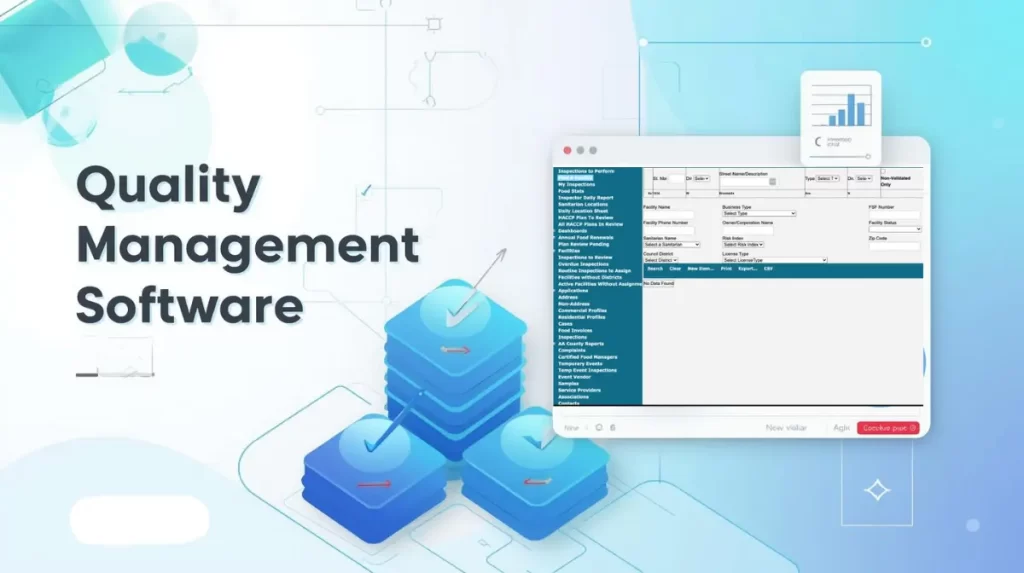
To ensure organizations remain consistent and up their game, reducing operational risks and maintaining standards, Quality Management Software comes in handy. Quality Management System aids in centralizing compliance, documentation, and continuous improvement by connecting everything in one digital system.
Enterprise quality management system software is a tool that is extremely helpful in today’s fast-paced world. It boosts processes and workflows of an organization. It improves planning, tracking, and supports quality processes. Instead of manual workflows, tools are more automated and standardized. In return, these organizations have better visibility into audits, training, and corrective actions.
Quality Management System fosters connection among people, data, and procedures in real time. Organizations can expect reporting that is faster, clearer, and more precise. Risks are decreased, but in the event of an issue, they are identified earlier and thus resolved more efficiently.
With the help of Quality Management System, organizations are able to operate with more confidence. They are able to streamline compliance and quality control as their processes become consistent across departments. This gives them customers who are satisfied and with higher trust and reliability in their organization.
What is Quality Management Software?
Quality management software helps organizations manage and improve quality processes. It is a digital system that centralizes data and streamlines processes. This tool, which organizes what organizations need, replaces manual and traditional tools for documents or audits, providing a holistic view and enabling better decision-making.
Organizations use this software for quality management systems to centralize necessary data into one place. In return, procedures are more standardized and automated, decreasing the possibilities of errors from traditional tools such as spreadsheets or paper-based tracking.
Ensuring compliance and consistency across operations is at the heart of quality management system software. Through tracking of training records, inspections, and incident reports in real-time, tasks are ensured that they are completed on schedule. This is done through automation of workflows. Moreover, built-in reporting makes sure issues are brought into light before they grow.
Enterprise quality management system software fosters sustainable improvements and better decision-making for organizations. From data dashboards, organizations are able to identify trends and performance gaps immediately. Organizations are then able to collaborate faster with shared access to information. This entails products that are safer, workflows that are smoother, and higher customer trust.
Types of Quality Management Systems
Quality management systems come in different types. Organizations must identify their needs and goals to determine which type will be most appropriate and beneficial to them. Each type has a specific focus, and organizations may choose more than one type of quality management system. The perfect fit depends on an organization’s operations and regulations.
- Total Quality Management (TQM)
This type prioritizes long-term success through customer satisfaction. TQM is more comprehensive and structured that involving a company-wide quality culture to meet the needs of customers by improving internal operations.
TQM works best for organizations that prioritize teamwork, consistent processes, and giving satisfaction to their customers. It supports sustainable cultural change more than just compliance.
These sectors can benefit most from applying TQM:
- Hospitality and tourism
- Healthcare
- Banks
- Retail
- BPOs
- Manufacturing
- Logistics
- Six Sigma
Six sigma is a type that is highly disciplined and data-driven. Organizations can benefit from this as they are provided with tools and techniques that minimize defects, reduce variation, and primarily improve processes.
The fundamental goal of applying Six Sigma is to get process performance to a state where defects are extremely rare to occur. Its primary focus is variation and defect reduction.
These sectors can benefit most from applying Six Sigma:
- Electronics manufacturing
- Automotive production
- Food and beverage processing
- Pharmaceutical manufacturing
- Lean Manufacturing
On the other hand, lean manufacturing maximizes customer value while minimizing waste. Its primary focus is waste elimination. It is a systematic methodology originating from the Toyota Production System (TPS) and has become fundamentally a mindset that aims to reduce non-value-adding activities from processes and workflows.
Lean Manufacturing aims to deliver what the customer wants in the shortest time, with the highest quality, and with the least amount of resources.
Lean has 5 core principles:
- Specify value
- Identify the value stream
- Establish flow
- Implement a pull system
- Pursue perfection
These sectors can benefit most from applying Lean Manufacturing:
- Automotive and parts manufacturing
- Textile and apparel manufacturing
- Furniture and consumer goods production
- Construction project management
- Retail distribution centers
- Lean Six Sigma
Lastly, lean six sigma is more of a hybrid approach, combining the benefits of lean manufacturing and six sigma to create a powerful system that is efficient and effective for sustainable process improvement.
It is fundamentally based on the idea that maximum efficiency or speed cannot be achieved if there are many defects in the process, or highly variable. Therefore, variation cannot be reduced effectively if there are unnecessary steps and the process is full of waste.
From the complementary strengths of lean manufacturing and six sigma, lean sigma is structured to make the process flow better and then make the process output better.
These sectors can benefit most from applying Lean Sigma:
- Electronics assembly
- Aerospace production
- Healthcare systems and laboratories
- IT service operations
The Purpose of Quality Management Software
The primary purpose of Quality Management Software is to centralize, manage, and control all quality-related documentation and ensure compliance to industry standards. Traditional systems such as paper files or records that are dispersed are eliminated with the help of a quality control management software.
Complex, unorganized systems are eliminated with QMS as it provides a single, secure platform for all necessary procedures, work instructions, and specifications. The organization is ensured with employees that are always working with the current, approved versions of documents – reducing errors and lifting burdens from audits.
A software for quality management system serves to streamline quality processes that are critical by automating workflows, improving efficiency and speeds of operations. The software automatically routes non-conformance reports, corrective and preventive actions, and training approvals to the appropriate people. It then minimizes human errors and ensures tasks are done on time.
Quality management software prioritizes and reduces risks. It automates monitoring of tasks and deadlines. Key purposes include:
- Tracking regulatory requirements
- Managing training records
- Documenting incidents and audits
Quality management system software provides important insights for continuous and sustainable process improvement. Its key function is to collect, analyze, and report on quality data. Organizations can benefit from real-time dashboards and reports on key performance indicators (KPIs) that it generates.
Recurring problems are identified and root causes are pinpointed by making quality data transparent and measurable. Better decisions are then made that are fact-based and optimize processes.
How does QMS Help You?
Now we know what QMS is, its different types, and what its purpose is, the next question is how it serves people or organizations. Why is it important to apply this in daily life? Why is it relevant in today’s world?
Firstly, best enterprise quality management software keeps you organized and in control. With a surplus of data and information, it may get complex to keep track and confusion may take over, making you inefficient and lose important files.
Quality management system helps organizations storing documents, audits, and action plans in one secure place. Organizations can locate the files they need easily and know where to find key information that they need in an instant.
Best enterprise QMS helps organizations maintain compliance and meet deadlines. Automating alerts and workflows makes sure organizations are on track with their work. Daily tasks are supported such as:
- Scheduling audits and inspections
- Tracking training completion
- Managing corrective actions
Furthermore, quality management system software helps in sustainable improvement. With QMS, better performance is expected with the use of real data. It provides dashboards that can show trends and recurring issues. These reports guide smarter decisions and enable quicker solutions. Achieving sustainable improvement becomes simple and more consistent.
What Are the Benefits of Quality Management Software?
- Improves efficiency and reduces manual work
The main advantage of using software for a quality management system is that organisations are able to automate repetitive tasks. By decreasing time used for doing routine quality tasks and centralizing records, organizations can put more focus on problem solving and adding value.
- Strengthens compliance and lowers operational risks
Organizations are ensured that processes are consistent and follow-ups are timely. Organizations can meet legal requirements and improve their reputation. There are less audits and deadlines that are missed, better document control, and clear accountability tracking.
- Boosts decision-making and customer trust
With QMS that provides real-time data, it is able to reveal trends and hidden issues as well. Organizations can then act faster with accurate reports. They are able to create proactive solutions rather than reactive. Consistent quality delivery ensures that customers are satisfied and organizations are more confident.
When should you transition to using a QMS?
- Manual tracking of information becomes slow and full of errors.
When information gets tough to track using spreadsheets and paper files, it might be time for the organization to use software for EQM software. Sticking to manual tracking may cause missed deadlines or lost data, causing errors in the system.
Team members might start to struggle in managing audits, documents, and crafting corrective actions. This means it might be time to look for a software that automates and centralizes data. This means the organization needs to transition to using the best EQM software.
- Increase of demands for compliance
Organizations may struggle to keep track of growing regulations, making it hard for them to comply with them. These growing regulations call for the need for better documentation and tracking. Triggers may include more frequent audits, new industry standards, and expanding training requirements.
An organization that starts to transition to using software for quality management system is able to keep up with this growing demand. QMS ensures tasks are kept organized and completed on time.
- Grow strains existing organization processes
An organization that is growing also means new teams, locations, or products, which also adds complexity to processes. Real-time dashboards from a QMS allows for visibility and more control. A QMS supports scaling while maintaining consistent quality.
How to Select The Best Quality Management Software?
The first step to select the best quality management software is understanding your organization’s needs and goals. These should be aligned with the quality management system software that you choose to ensure that this works to your advantage.
Identify the aspects that need improvement within your organization and the compliance requirements. This identification narrows choices so that the software can focus on meeting these goals. Some areas that can be focused on are audits, training, or corrective actions.
The quality management system software that organizations choose must be tailored to fit into the organization as well. It should be easy for teams to adopt, compatible with the current systems the organization has, customizable according to existing workflows, and capable of reporting and analytics. The software for a quality management system must be considered based on its features, usability, and integration capabilities.
A quality management system software that is good for an organization grows with the organization and offers reliable support. Cost must be compared between systems, along with implementation timelines and training resources. Demos and trials must be considered to ensure that the software is appropriate for the different needs of an organization.
Conclusion
Overall, quality management system software is essential for organizations that aim to improve on its consistency and efficiency. It is a sustainable way to grow your organizations and improve internal processes.
Quality control management software provides organizations a system that centralizes data, automates workflows, and reduces errors. Organizations can then focus more on solving problems and improving processes instead of doing repetitive tasks and managing paperwork.
Choosing the type of quality management system is important as well to make sure it caters to the organization’s needs and future goals. TQM, Six Sigma, or Lean Six Sigma are types that organizations can use as it supports different goals. Choosing the appropriate type helps organizations reduce risks, improve quality, and gain higher customer satisfaction.
Quality management software offers long-term benefits and sustainable improvement for organizations. Organization processes and workflows are streamlined, decision-making through real-time data is made better, and there is stronger compliance and reduced operational risk. These advantages lead to higher customer trust and satisfaction.
Jadian quality management system software is not just a tool, but also a strategic investment that prioritizes quality culture and drives sustainable success.
FAQs
What is quality management software?
QMS is a digital tool that helps in managing and improving quality processes. It allows data centralization, automating of workflows, and replacement of manual systems.
How does quality management software help organizations
Organization processes and workflows are more organized and in-control as QMS stores documents, audits, and action plans in one secure place. Repetitive tasks and other alerts are automated which ensures compliance, reduction of errors, and faster, data-driven problem-solving.
What are the benefits of using quality management software?
Organizations can be more efficient in their workflows with QMS as it automates tasks and strengthens compliance. Real-time dashboards are able to spot trends and recurring issues, enabling proactive solutions and smoother workflows. These benefits result in higher customer satisfaction and trust.
How to choose the best quality management software?
Organizations should identify their needs and goals first. They can then choose from the different types of QMS to identify which one suits their organization best.